Tom Raymondson Photography


  • tomraymondson.photo
  • Photographic Projects
    • Ukiah Theatre Sign
    • 2025 Calendar
    • Collection
    • 2024 Calendar
    • 2023 Calendar
    • 2022 Calendar
    • Weather
    • Calendar Again . . . Again
    • Lunch atop a Skyscraper
    • Postcard
    • The Making of a Photograph
    • Calendar Again
    • Circles
    • 2019 Calendar
    • Windows
    • Phantom Businesses
  • State Galleries
    • Alaska
    • Arizona
    • California
      • Mendocino County
      • Northern CA Coast
      • Northern CA Inland
      • Southern CA
    • Colorado
    • Hawaii
    • Montana
    • New Mexico
    • Oregon
    • Texas
    • Utah
  • International Galleries
    • Canada
    • Caribbean
    • Europe
  • Thoughts
  • About
  • Contact
  • Photography Clubs


  • Important

    To me.

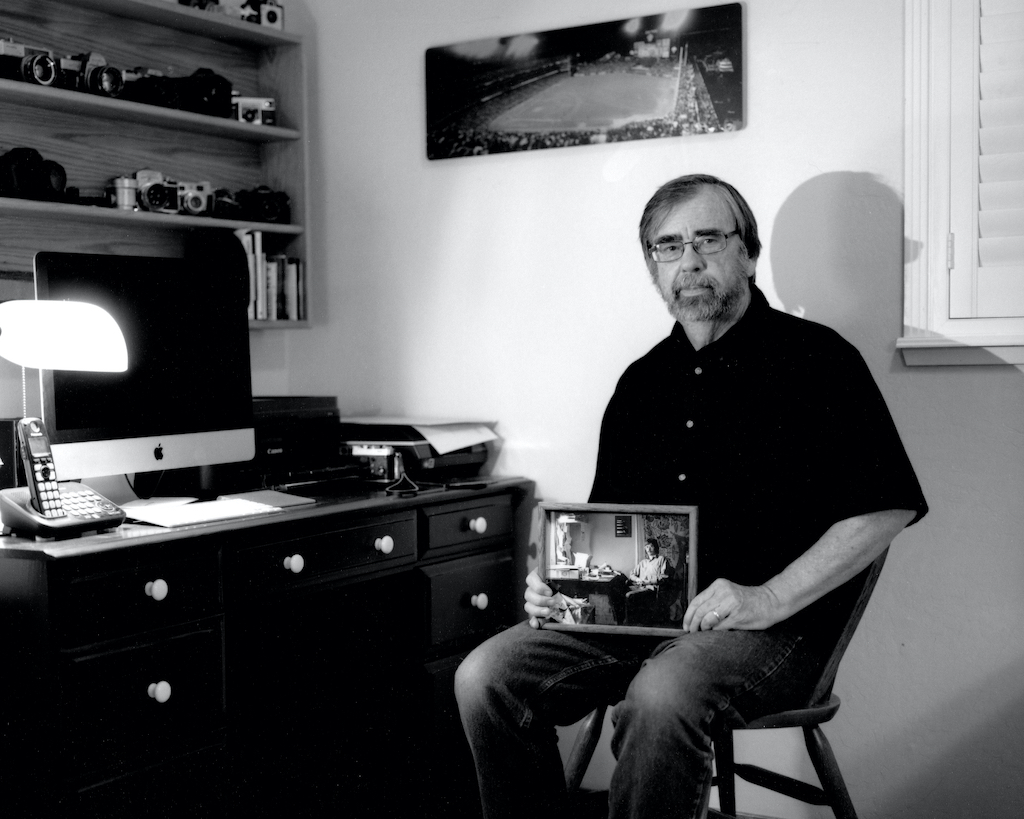
    The Ukiah Photography Club’s theme for February 2022 is “something important in your life”. Hmm . . . my family, but they are camera-shy or unavailable. The cats? No, I mostly tolerate them. Baseball? Nothing happening there. Jazz? Perfect, but I have only one decent photo of Pat Metheny and no clear opportunity for more. So it has to be . . . photography. But how do you photograph photography? Another hmm . . . my cameras! Not all of them, just the ones for which I have a special connection. I can rephotograph them, this time with the Fuji X-Pro2 with the 90mm lens, stopped down to f16 to maximize depth-of-field, on a tripod. This is a good opportunity to refine my research on each of these cameras and to consider why they are important to me.
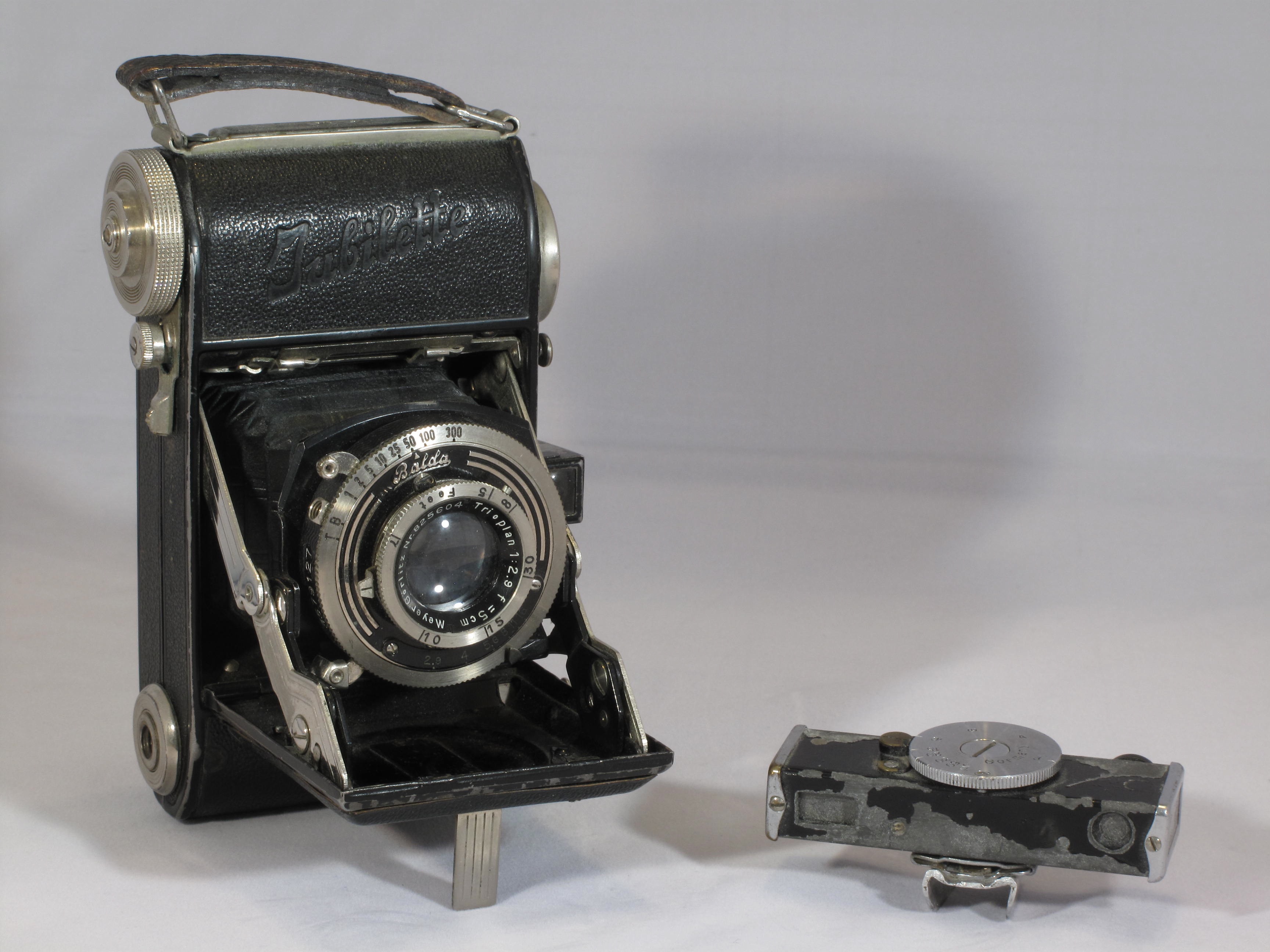
    Balda Jubilette – Made in 1938 in Dresden, Germany. 35mm film; 50mm triplet Meyer-Görlitz lens (Serial No. 825604); f2.9 to f16; Compur leaf shutter (Serial No. 3579127) made in 1935 or 1936; 1 to 1/300 plus B and T; minimum focus 5 feet; left-hand shutter button; no double-exposure prevention; auxiliary non-coupled rangefinder.

    This was my father’s camera (probably acquired used late 1940’s or early 1950’s). He took hundred of rolls of color slides during the 1950’s and 1960’s, usually on vacations.
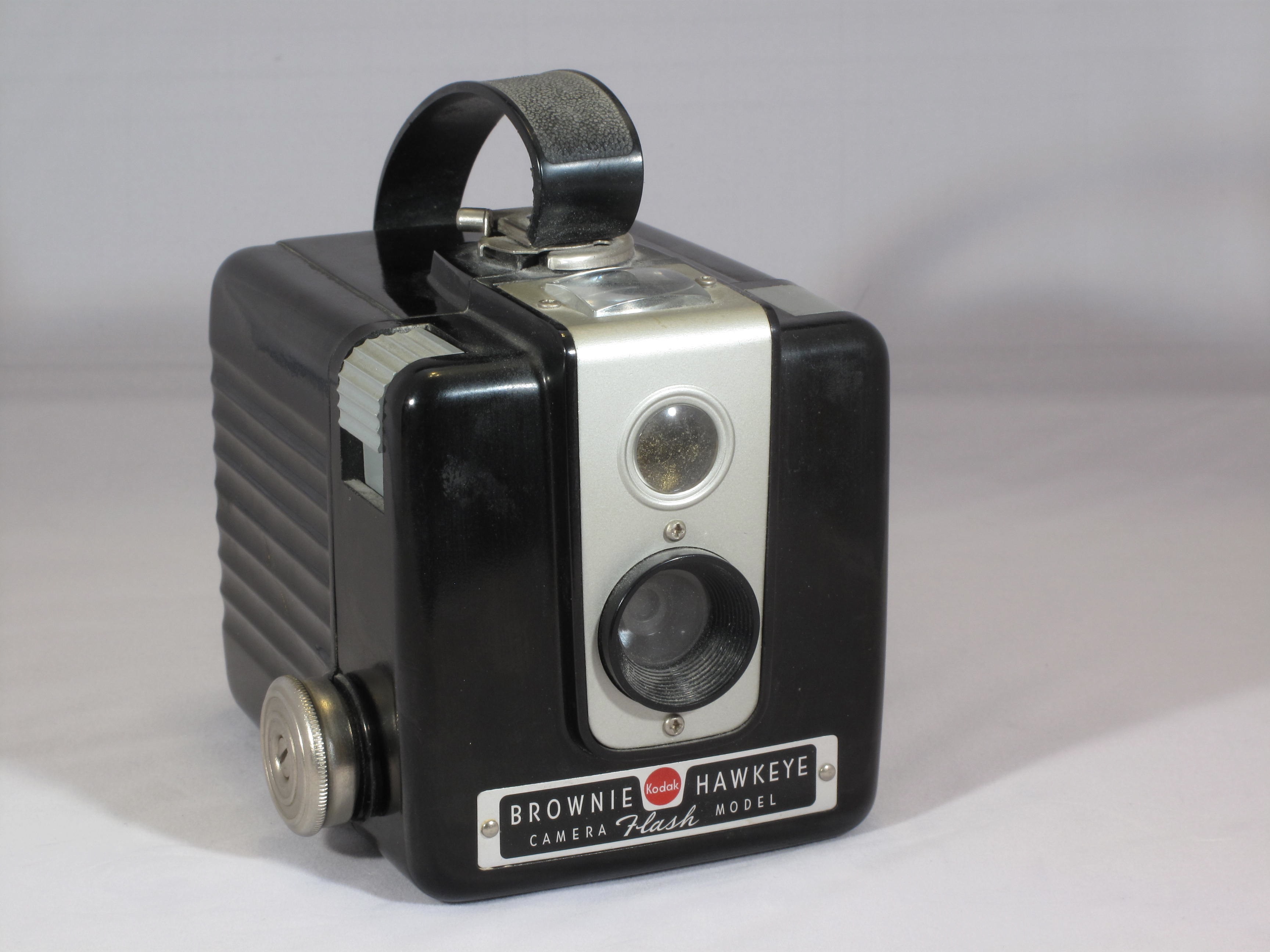
    Kodak Brownie Hawkeye Flash with Kodalite Flashholder – Made in the early 1950’s in Rochester, NY. 620 film; 1 element uncoated 81mm miniscus lens; approximately 1/40 plus B; aperture fixed at f15; fixed focus 5 feet to infinity; no double-exposure prevention.

    This was my mother’s camera. She took all the birthday party photos.
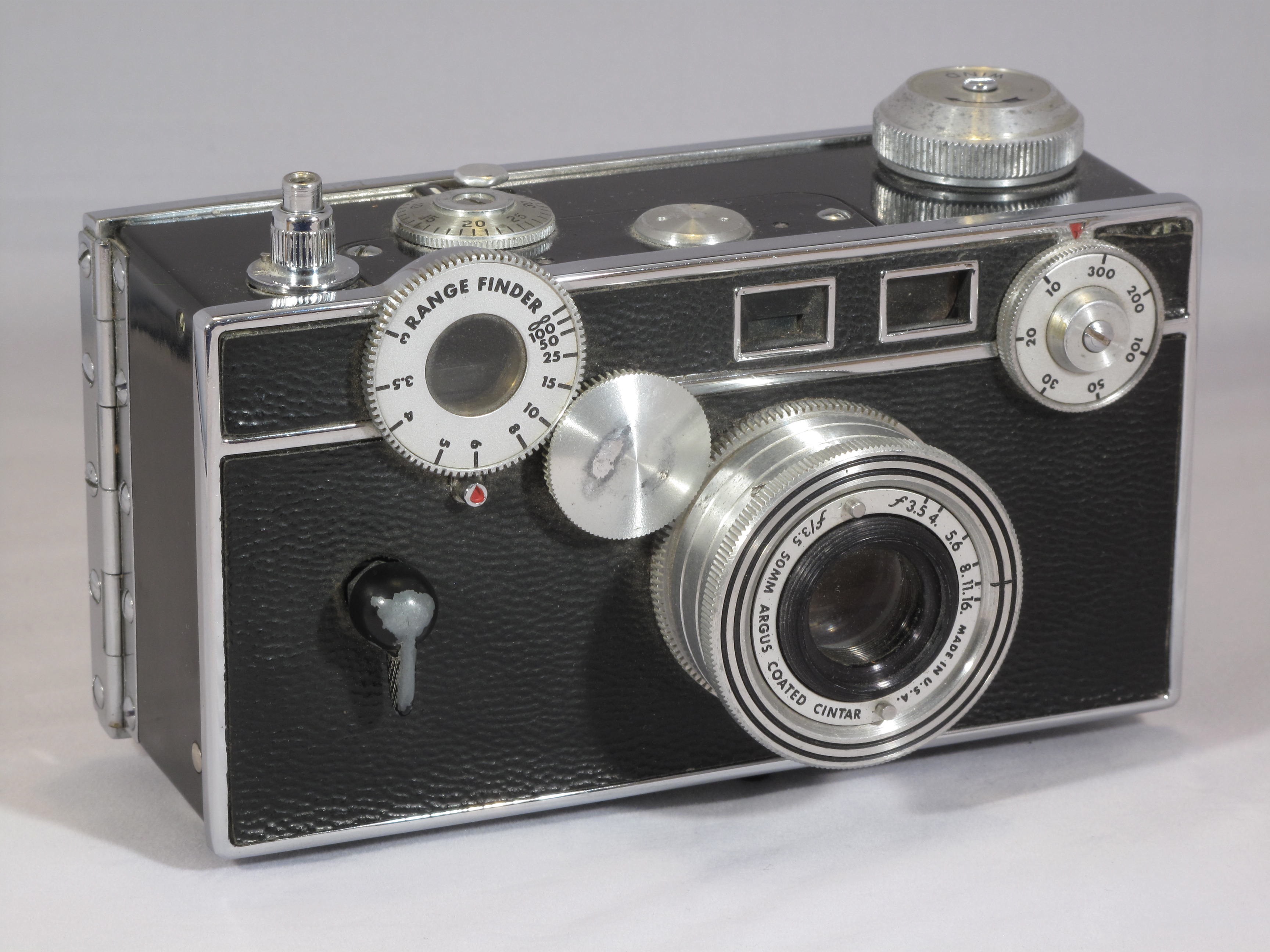
    Argus C-3 (“The Brick”) – Made in 1949 in AnnArbor, MI. 35mm film; 3 element coated 50mm Argus Cintar (additional lenses could be interchanged); three-blade leaf shutter; 1/10 to 1/300 plus B; f3.5 to f16 continuously adjustable; coupled rangefinder (separate viewing window); 3.5 feet to infinity; no double-exposure prevention.

    This camera belonged to my father-in-law and is the source of most of the pictures of my wife when she was little.
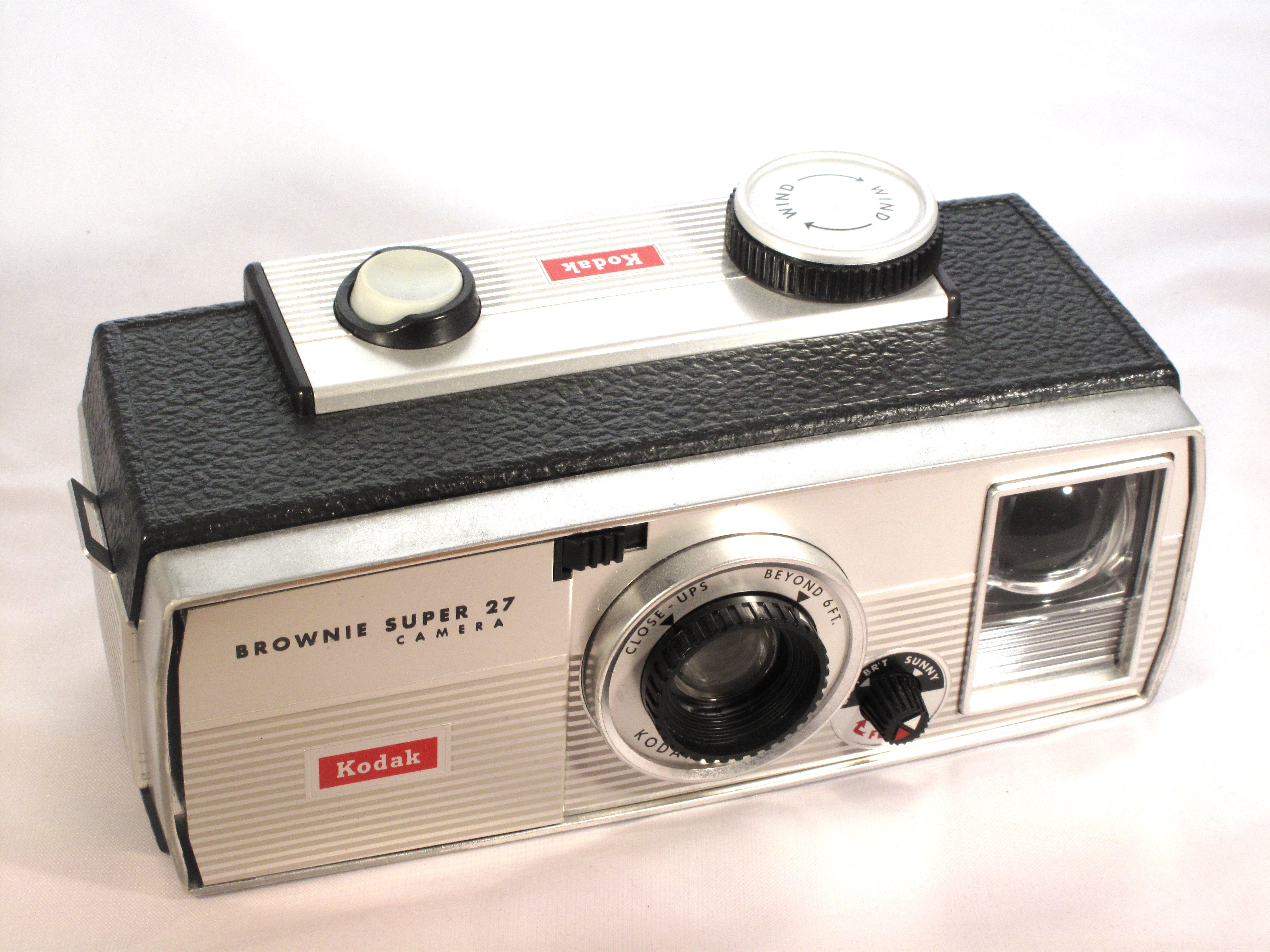
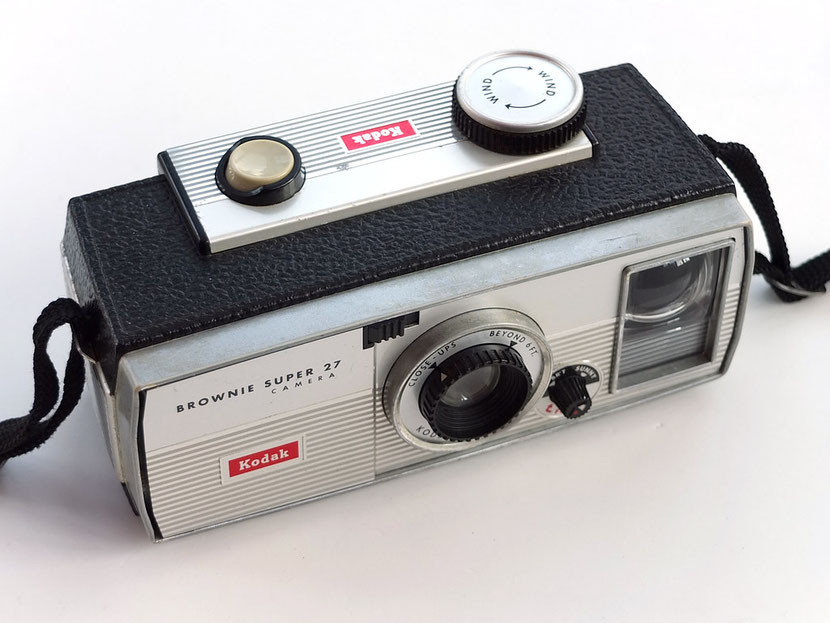
    Kodak Brownie Super 27 – Made from 1961 to 1965 in Rochester, NY. 127 film; three-element plastic uncoated Kodar lens; f8 and f13.5; 1/40 and 1/80 sec; two focus ranges: 3.5 to 6 feet, and greater than 6 feet; hidden flash holder for AG1 bulbs; 2AA cells (for flash only).

    Here we have my first camera . . . well, not this one, exactly – mine disappeared decades ago so I picked up one at a garage sale, The original was a Christmas gift when I was in eighth grade. I thought the pop-open flash door was so cool.
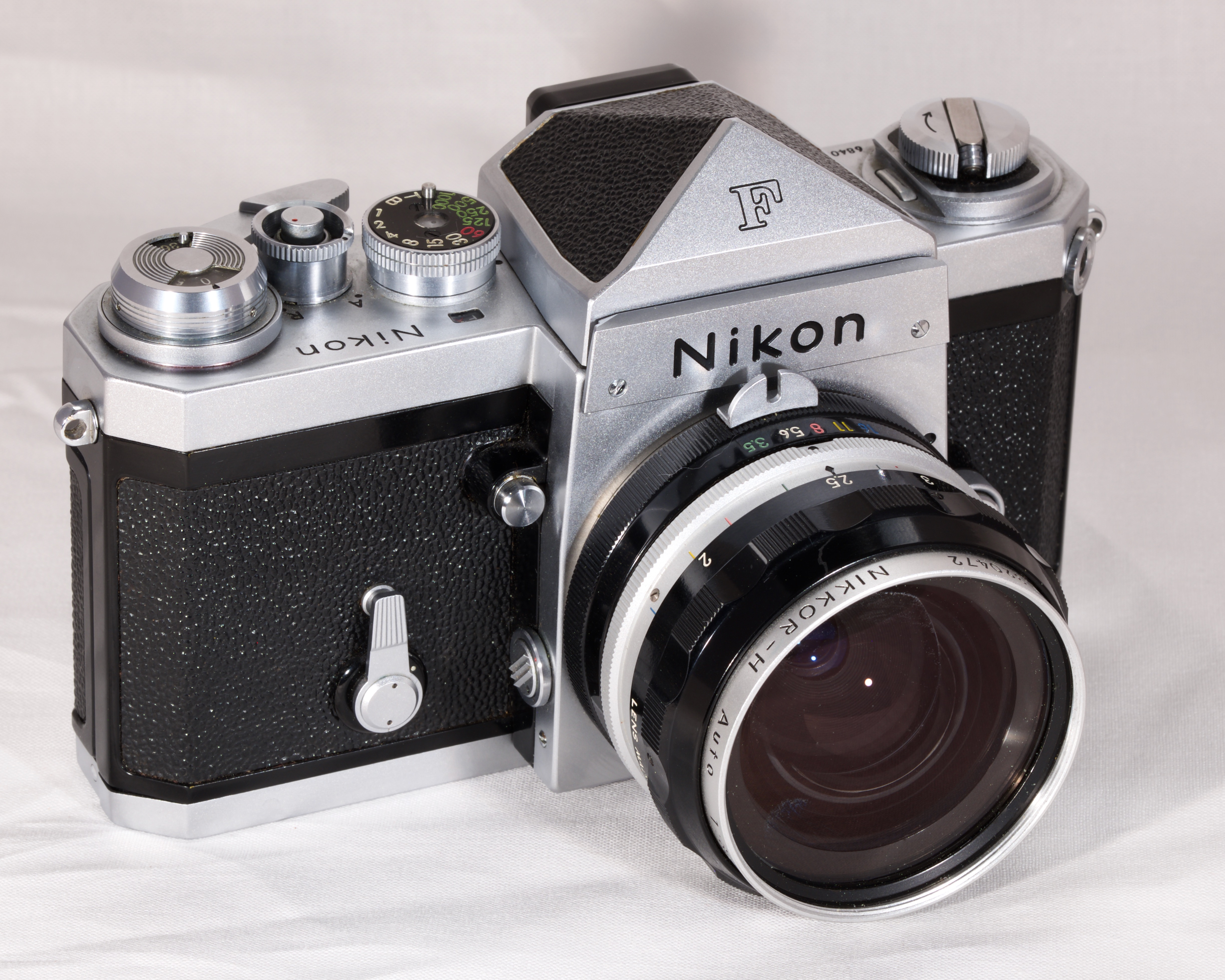
    Nikon F with Nikor-H 28mm lens. Camera (serial No. 6840319) made in 1967, lens (serial No. 320472) made in 1961 or 1962, both in Japan; 35mm film; titanium-foil focal plane shutter; 1 to 1/1000 plus B and T; f3.5 to f16 in full stops; self-timer; depth-of-field preview; mirror lock-up; interchangeable prism and focus screen; unmetered.

    The first SLR I ever used was identical to this one, borrowed from a friend in high school, although it probably had a 50mm lens. When I acquired this camera many years later I immediately recognized the “clunk” instead of the typical “clank” of other SLRs.
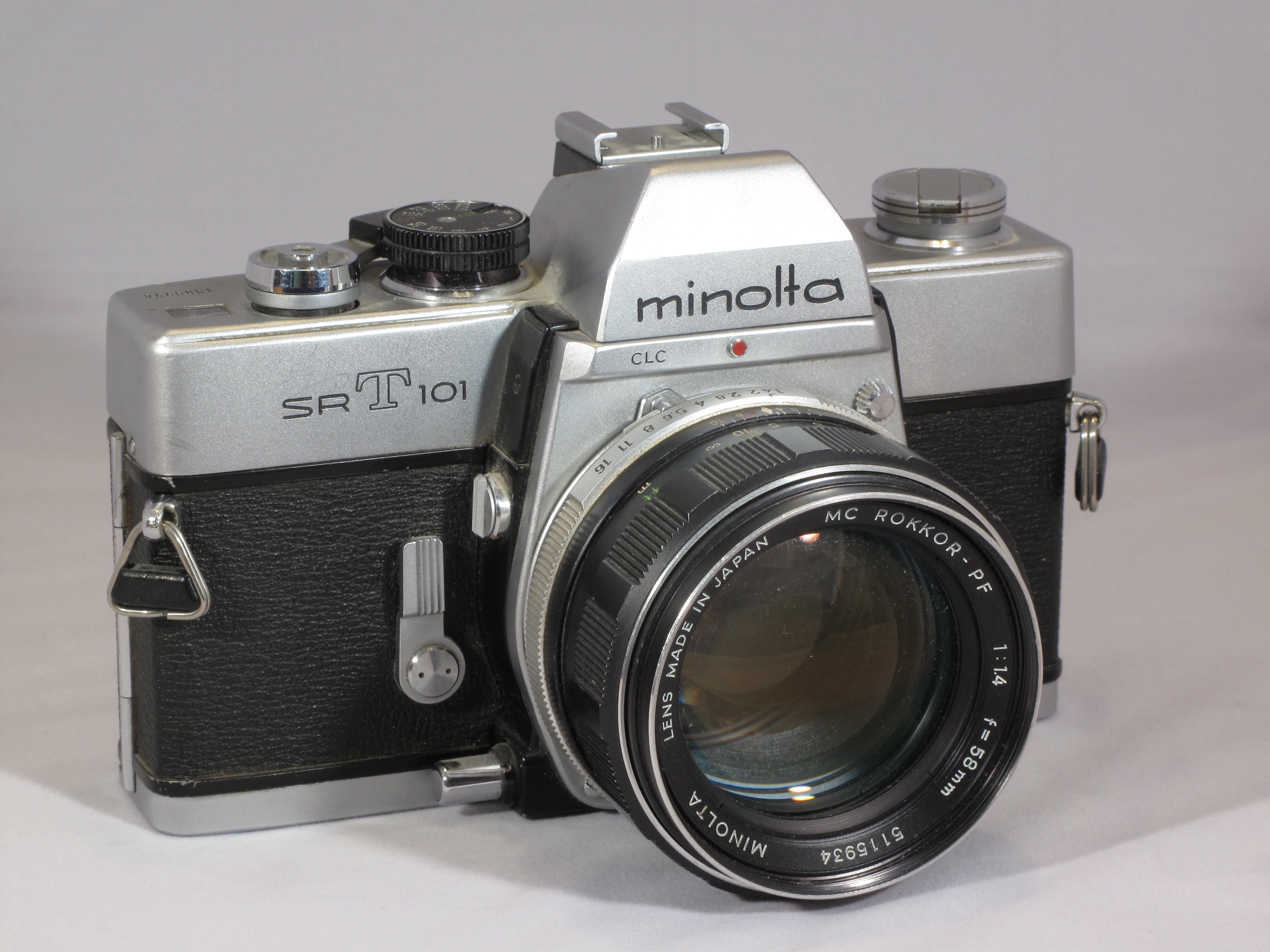
    Minolta SRT-101 with 58mm Minolta MC Rokkor-PF lens; camera (Serial No. 1309774) and lens (Serial No. 5115934) made in Japan and purchased new in 1968; full-aperture TTL match-needle metering; cloth focal plane shutter; 1 to 1/1000 plus B; f1.4 to f16 in half stops; self-timer; mirror lockup; depth-of-field preview; PX625 mercury battery for metering only – no longer available, requiring alternate battery with exposure adjustment.

    My first real camera! I bought it direct from Japan along with a Minolta MC Rokkor f2.8 135mm lens (which I apparently no longer have) for something like $200 for the whole package – a LOT of money at the time. I had narrowed it down to the Minolta or a Pentax Spotmatic, which (I didn’t fully understand this at the time) had step-down metering – so I made the right choice. This locked me into the Minolta ecosystem for the next several cameras and lenses.
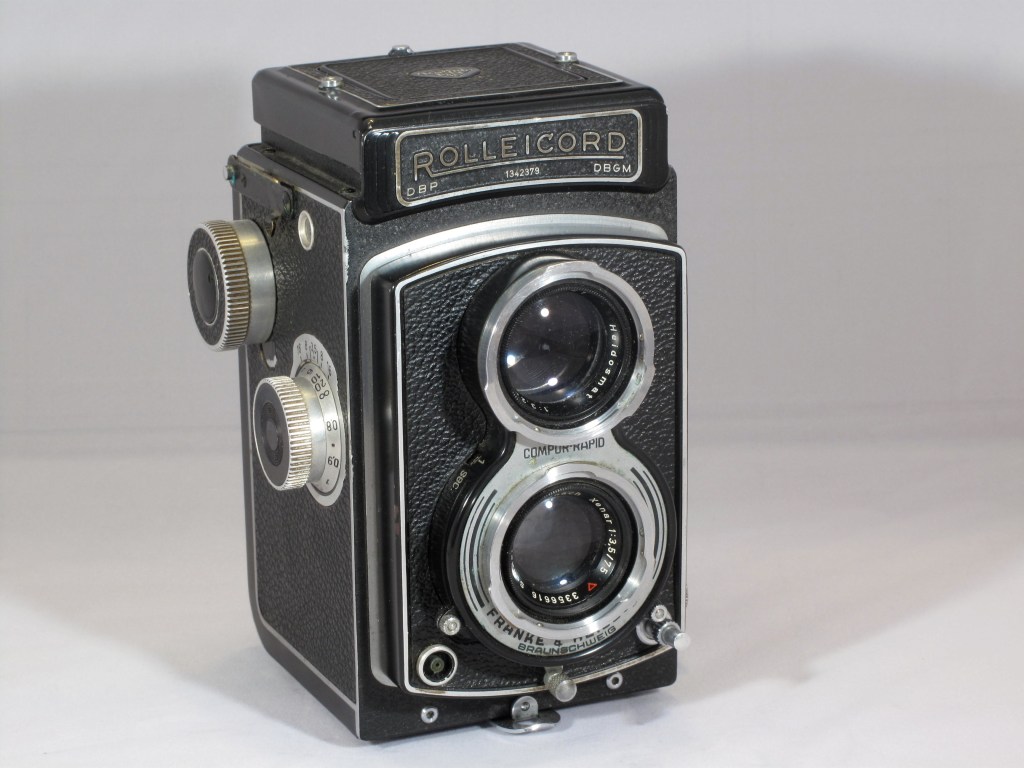
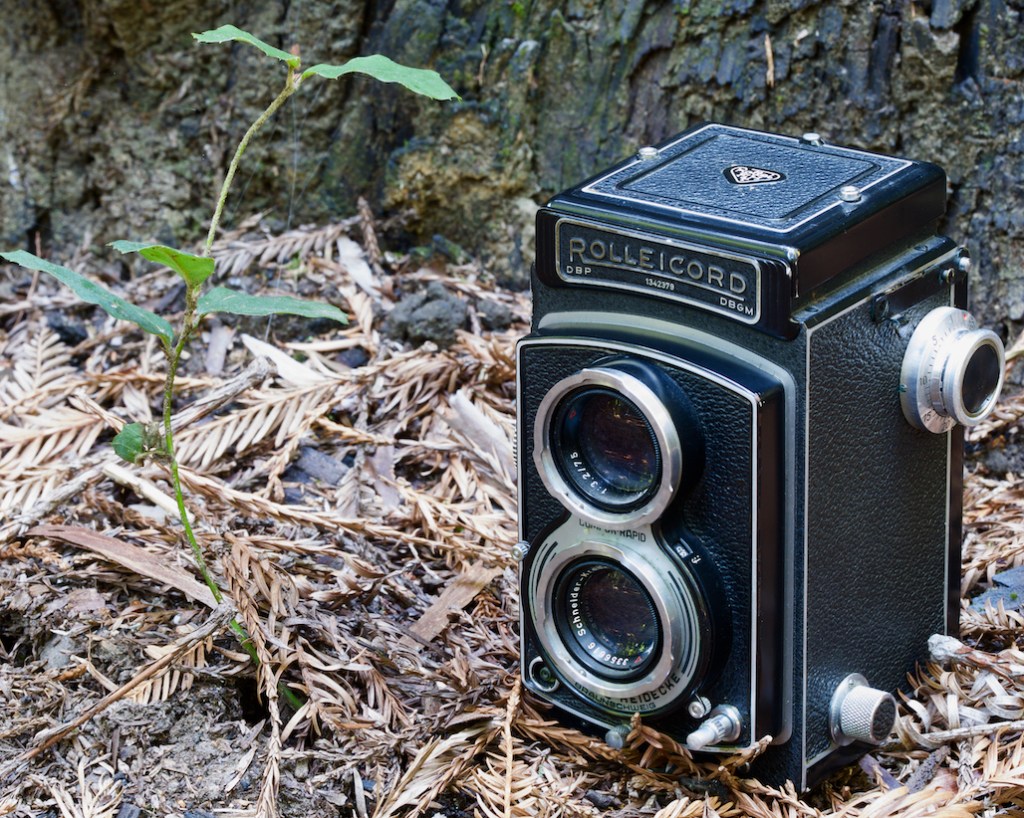
    Rolleicord III – Made in Braunschweig, West Germany; purchased new in Indonesia in 1953 by Hans; 120 film; 75mm Schneider-Kreuznach Xenar triplet lens (Serial No. 3356616), accompanied by 75mm Heidoscop-Anastigmat viewing lens (Serial No. 266821); Compur-Rapid X/CR001 leaf shutter; 1 to 1/250 plus B; f3.5 – f22; reversed image.

    This was a gift from Hans (I had just met him). Along with a borrowed Yashica Mat EM, it was my introduction to medium format.

    Fuji GW670III – This model was made in Japan from 1992 through ????; I bought mine new sometime in the mid-1990’s; fixed lens medium format rangefinder; 10 6×7 cm images on 120 film (provision for 5 exposure 120 and 20 exposure 220); 90mm EBC Fujinon 5-element lens; minimum focusing distance one meter; No. 0 interlens shutter; 1 to 1/500 sec plus T; f3.5 to f32; built-in lens shade; bubble leveI.

    This has been my go-to medium format camera, and pretty much put me off 35mm for two decades. Its companion is a Fuji GSW690III (6×9 cm image, wide angle).
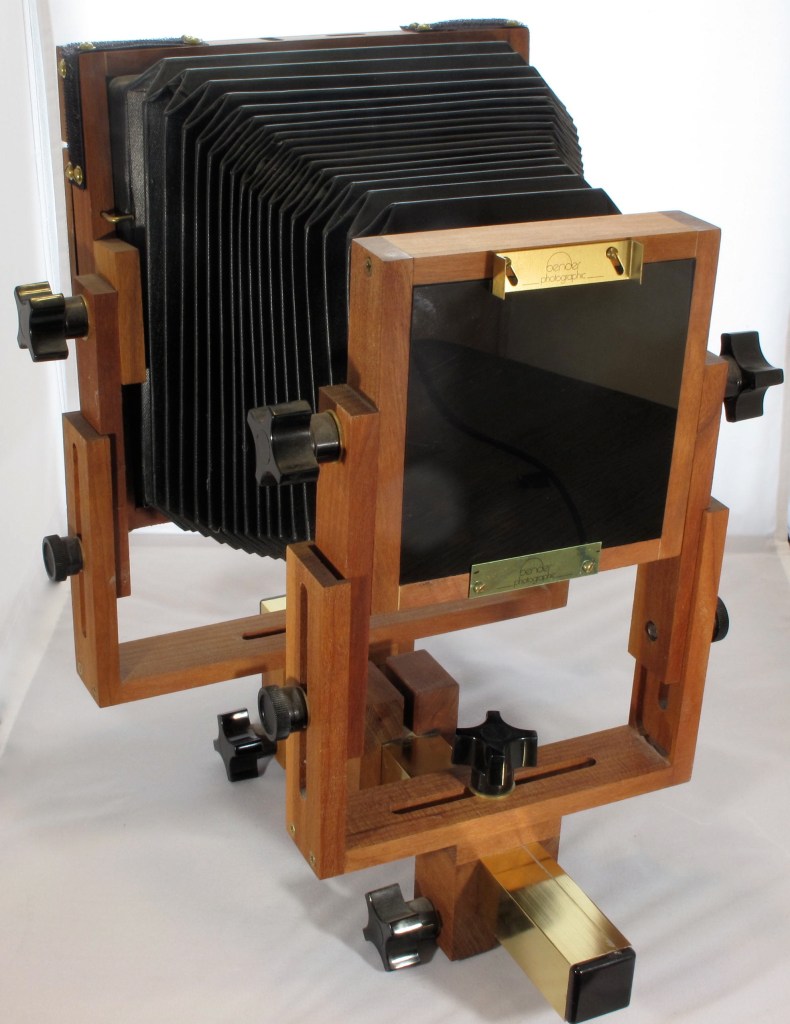
    Bender 4×5 – The kit for building a 4×5 monorail was available from the 1970’s through 2008; I built mine in the late 1990’s; front and rear movements; Caltar II-N 150mm lens (Serial No. 10698645) in a Copal No. 0 leaf shutter; 1 to 1/500 sec plus B and T; f5.6 to f64 continuously adjustable.

    Building this camera taught me far more about large format than the several books I had read. It quickly became evident that the Bender lacked precision and repeatability in its movements, significantly influencing my later purchase of a Sinar F1.

    Minolta CLE with Minolta M-Rokkor 40mm lens – Made in Japan from 1980 until 1985; purchased used in 2015; upgraded version of the Leica CL from 1973, a joint venture of Minolta and Leica (but the CLE was all-Minolta); compatible with Leica-mount lenses; 35mm film; electronic cloth focal-plane shutter; 1 to 1/1000 plus B with +/- 2-stop compensation in half-stop increments; f2 to f16 in half-stop increments; TTL aperture priority metering; minimum focusing distance 2.5 feet; self-timer; 2 S76 batteries (all functions).

    After reading James Tocchio’s glowing review I had to get one of these. Not only did it give me one of my favorite all-time photos but it also opened the door for the rediscovery of some of my older Minolta and Canon 35mm cameras.

    January 23, 2022

  • The Bohemians, by Jasmine Darznik (2021)

    Book review.

    Other than an apparently factual error in Chapter 6 – she used an “old Leica” in 1918 – this Dorothea Lange historical fiction was fascinating. The story fit into what I know about her actual life, focusing on her time as a portrait photographer in San Francisco, with the historically vague “Ah-yee” or “Chinese Mission Girl” fleshed out as “Caroline Lee”. It seemed a little hurried when it raced past the Migrant Mother episode to Dorothea’s and Caroline’s closure meeting in Paris years later, and I would have liked a little film/developer information (or at least speculation) to go along with the frequent references to her Graflex. Four out of five f-stops. (A new Lange bio has just been release and I’m sure I will be reading it soon.)

    December 31, 2021

  • Corner Gallery, Ukiah

    Finally (2021).

    Along with baseball and jazz, photography is my passion. I love shooting film with classic cameras and spending the day in my darkroom pursuing the perfect print (yet to be achieved), but I also go digital when convenience or airport security dictate. Landscapes and architectural details catch my eye, and oh do I wish there were trains in Ukiah. This year’s photos are mostly pre-pandemic, including one that is literally the last I took before the shutdown and a couple that are reach-backs reimagined.

    August 12, 2021

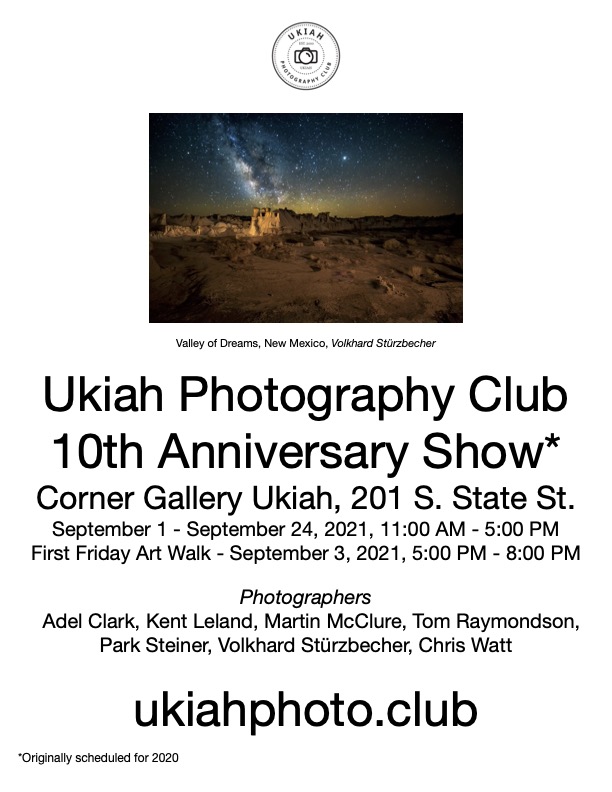
  • Ukiah Photography Club 10th Anniversary Show

    In our 11th year.

    August 2, 2021

  • Camera Collecting

    A funny thing.

    First of all, why? (Because.)

    Secondly, what? Everything? Only Minolta? Old? (well, of course). Duplicates? Buy? Trade? Receive out of nowhere (“I’ve got this old camera – do you want it?). Decorations? Shooters? It’s about the photo, not the camera, stupid! And why are cameras black so they show all of the dust?

    The stories – oh, the stories. My dad’s Balda Jubilette, me squinting into the sun waiting f-o-r-e-v-e-r for him to take the picture. My Mom’s Kodak Brownie Hawkeye, which produced only tilted photos; the Rolleicord later owned by a member of the Dutch resistance in World War II; my first SRT-101.

    Camera collecting is a funny thing.

    May 11, 2021

  • My First Camera

    Where it all started.

    My first camera was a Kodak Brownie Super 27, a Christmas gift from my parents when I was 13 years old in 1963. What really appealed to me was the flash compartment for AG-1 bulbs (this was pre-flashcubes) with a pop-open door, much like the hidden Corvette headlights which I also thought were very cool at the time. The Super 27 was a viewfinder camera taking square images on 127 film (hence the “27” in its name). It was made in the USA from 1961 through 1965. The Kodar lens had only two apertures – “SUNNY” / “FLASH” (f13.5) and “CL’DY BR’T” (f8). There were two focus zones, “CLOSE-UPS” (3.5-6 feet) and “BEYOND 6FT”. The shutter had two speeds, 1/80 when the flash door was closed and 1/40 when open. Winding the film cocked the shutter, preventing double-exposures. I only used black & white film because color was too expensive for my allowance – until my family took a vacation to Crater Lake and I was amazed by the deep blue of the water, so I had to go to the gift shop for some color film. I did my first panorama, two shots that I later overlapped in my photo album, which I still have. The camera disappeared sometime after I started shooting 35mm. Years later I found a Super 27 at a garage sale and it holds a proud place in my camera collection.

    April 11, 2020

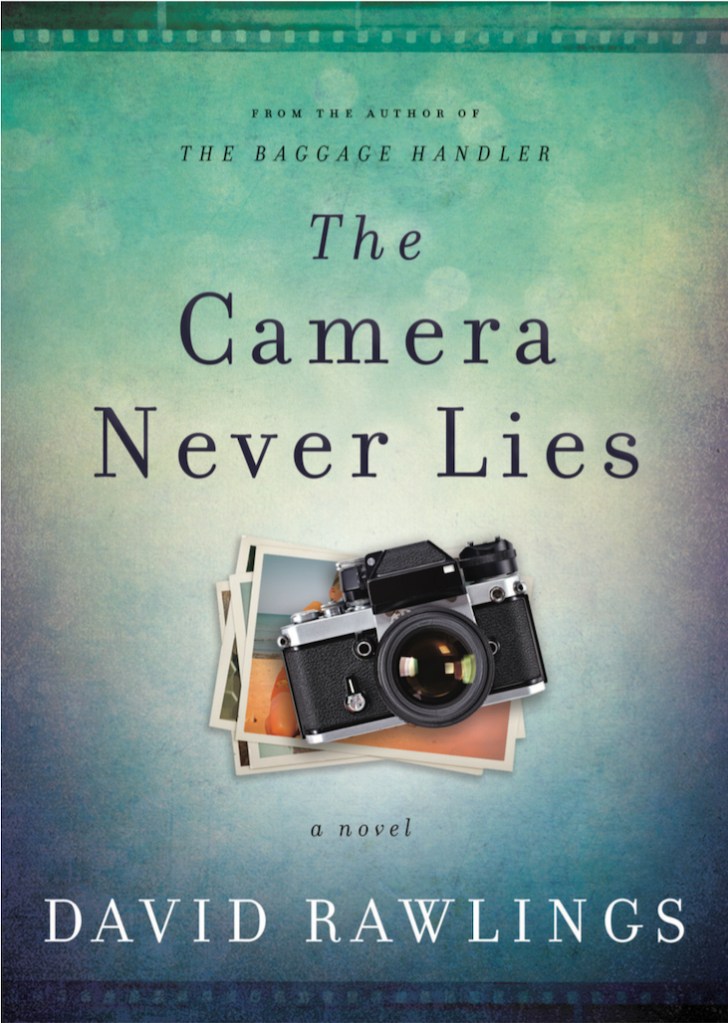
  • The Camera Never Lies (2019), by David Rawlings

    Book review.

    This could have been better. The first problem came before I even opened the book – a cover photo of a Nikon F2 (with the logo erased) representing what we soon find out is an Olympus Infinity HS-10 (not a real camera, as far as I can tell, although there were lots of Olympus Infinity cameras with various words, letters, and/or numbers, all plastic point-and-shoots, not “heavy, black, and silver” as described here). And what’s with all the talk of “clarity” (not sharpness, not contrast, not saturation) before anything is established about the magical qualities of the camera. And how does a 35mm cassette show that it came from an old, not a new, camera? The editor must have been daydreaming when he passed over all of the Old Spice references – one would have been enough. The story concept is intriguing, how “the camera never lies” but the author overplayed his hand when the pictures started changing, sometimes right before the characters’ eyes, like something from Harry Potter or Back to the Future. One f-stop (out of five).

    February 9, 2020

  • Plus-X

    An old film.

    In response to Shooting a Forty Year Old Roll of Plus-X Film from Casual Photophile:

    I’m holding a roll of Plus-X in its original unopened box, dated Oct. 1953. Unopened until . . . now! I had to find out if it was in one of those cool yellow cans . . . it is! But what’s this? The cap is light brown. And the film canister is dark brown with yellow lettering. Nowhere is there any indication of film speed (it would have been ASA back then) other than “fast” (my memory of Plus-X from the 1970’s is 125). The canister is more robust than current models. If I shot this (it probably should go in the Argus C3 that I’ve never used) I would guess at some combination of increased exposure and development. For now, though, it will go back on the shelf, definitely next to the C3.

    January 25, 2020

  • Rollei

    A life well-lived.

    Here’s my Rollei story. My wife was a nurse in a medical office. Although I’m sure she treated all patients with kindness and professionalism, one gentleman in his 90’s was her favorite. He always had stories of his adventures, first as a member of the Dutch resistance during World War II and then as a professional photographer across many continents and decades. He often invited her to drop by his home and to bring her husband (me) whom he knew was interested in photography. She finally took him up on his offer. We arrived on a Saturday morning and he was a gracious host. At some point he pulled out a Rolleicord III, his personal camera (he used a Leica for work). He handed the Rollei to me and explained the buttons and knobs and answered all of my questions. When I gave it back to him he said “No, you keep it”. I told him I couldn’t possibly do that – we had just met. He insisted (I suspect it had something to do with Suzanne being his favorite nurse) and I ended up leaving with the camera. He was an avid sailor (still, at that age) so the only way I could think of to repay him was to make a nautical photograph with the Rollei and then present it to him (the photograph, I now know, wasn’t very good, and besides, it was a fishing boat). The camera reminds me of a life well-lived. I need to shoot it again (dim viewfinder and all). I know the ‘flex has more prestige than the ‘cord, but I wouldn’t make that trade.

    December 17, 2019

Previous Page Next Page


Loading Comments...
 

    • Subscribe Subscribed
      • Tom Raymondson Photography
      • Already have a WordPress.com account? Log in now.
      • Tom Raymondson Photography
      • Subscribe Subscribed
      • Sign up
      • Log in
      • Report this content
      • View site in Reader
      • Manage subscriptions
      • Collapse this bar