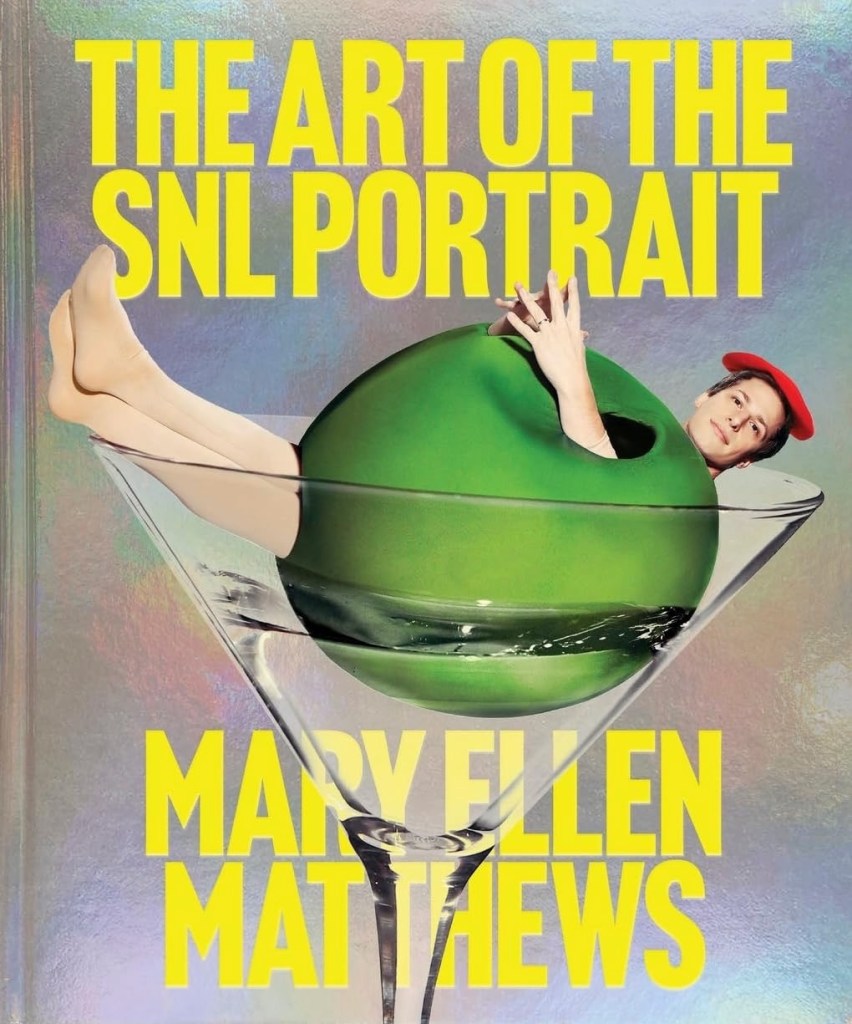
The Art of the SNL Portrait by Mary Ellen Matthews
Book review.
First, a confession: about this collection of celebrity portraits, which were shown as “bumpers” (for three seconds before commercials) on Saturday Night Live – well, mostly these are people I’ve never heard of. Mick Jagger – check; Martin Short – check; Steve Martin – check. Who the hell is Bad Bunny? I’d have to comb through the rest to find a handful that, maybe, left some fleeting imprint on my consciousness. Must have something to do with the fact that 11:30 is way past my bedtime. The pictures are stunning – but, remember, I’m not a fan of digital manipulation and these images absolutely scream Photoshop. The photographer is Mary Ellen Matthews and she has a crew for god’s sake. A few favorites: Alec Baldwin (oh – I know him) as the Godfather; some guy and his dog raising their paws; some gal as Gilda Radner; a The Birds spoof. No camera info or other technical information and not even an acknowledgement that at some point the photographers (initially Edie Baskin) must have switched from film to digital. I get the feeling that I was not the target audience for this book. Two f-stops (out of five).
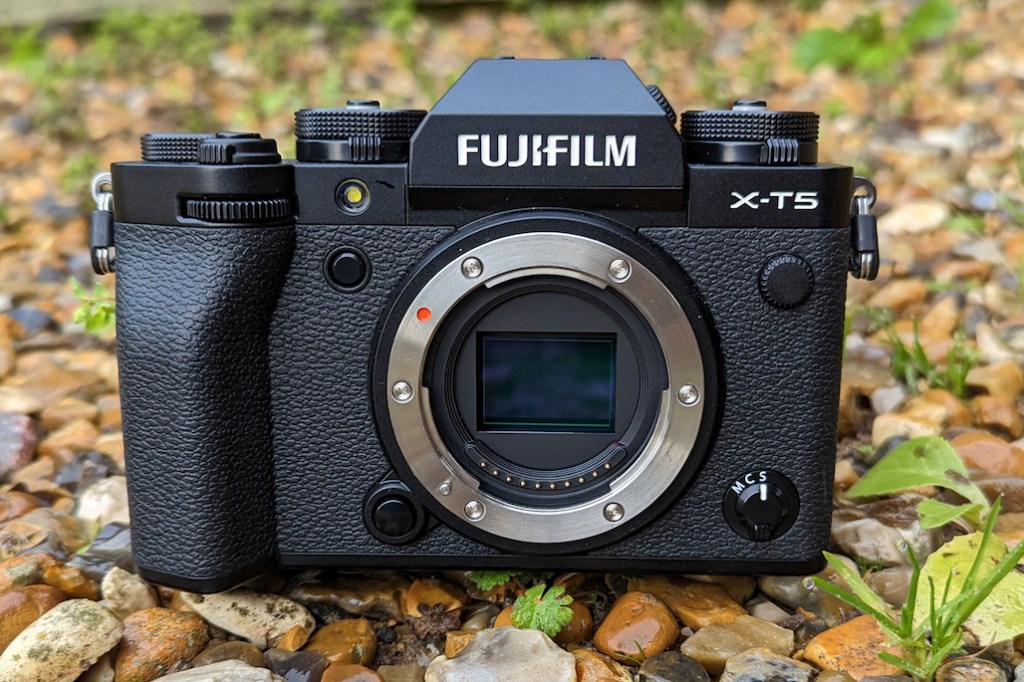
The Fujifilm X-T5, a 40mp APS-C, may be one of the most significant cameras I have ever used: I can feel it pulling me away from film photography.
How did I get here? It started with my favorite film camera, the Fuji GW670III, and its sibling, the GSW690III. These medium format rangefinders have given me some of my very best photographs and pretty much put me off 35mm. Even after the disappointing GF670, I had a continuing interest in cameras from this company that eventually led me to the X100F, a fixed-lens compact, which (I thought) would be merely my digital backup when convenience or airport security intervened. It served that purpose well until our 2019 European trip called for more versatility than I could achieve with only a 35mm-equivalent lens, so I purchased an X-Pro2 with a 135mm-equivalent. It was a great match – same sensor, same battery, same controls, same menus. It was very much not a step toward system-building – I would definitely (I again thought) stick with just the one lens. Still, in the back of my mind I realized that a wide-angle lens would make the X100F superfluous.
But then the bird shots from members of the Ukiah Photography Club, along with a nice used discount from KEH, enticed me into a 600mm-equivalent zoom, and suddenly I was system building. A 45mm-equivalent macro soon followed, and I realized that I had been sucked in like so many years ago with Minolta. Still, I continued to see myself as primarily a film photographer.
It crept up on me slowly, so at first I didn’t really notice: I was shooting less film. Carrying a tripod and standing in the darkroom became more of a burden as my back didn’t always cooperate. Image stabilization would solve the tripod problem and processing on a computer didn’t involve standing. And then there was that dormant GF670 with pretty high resale value. Add in my two digital cameras and I could cover the cost of the X-T5 plus a wide-angle, this one a 24mm-equivalent. Now I did have a complete system.
The X-T5 is a wonderful camera: dials and buttons where God intended them to be, solid construction, superb image quality.
What do you do when you have an expensive new toy? You play with it! On our recent Arizona trip – car, no plane: in the past that would certainly mean film – I shot only digital, and with a little click click click I had some great photos.
Is film dead? I hope not. I have an extraordinary darkroom plus a lot of film in the frig and the freezer. I have beautiful classic cameras, both 35mm and medium format (not to mention large format, but that’s a different story). I’ll be going digital on our upcoming Texas trip (flying), but after that I need to make a concerted effort to shoot film.
The first step of the solution is color. Not sure what I have (most of my film is in Fort Bragg). I’m thinking there’s a roll of Portra 400 35mm. Something along the coast. Tripod close to the car (or maybe, if I’m using a short lens, skip the tripod). Send it off to The Darkroom and then finish on the computer. I can do this.
After that, some T-Max 100 in one of the Fuji rangefinders. I can do this.
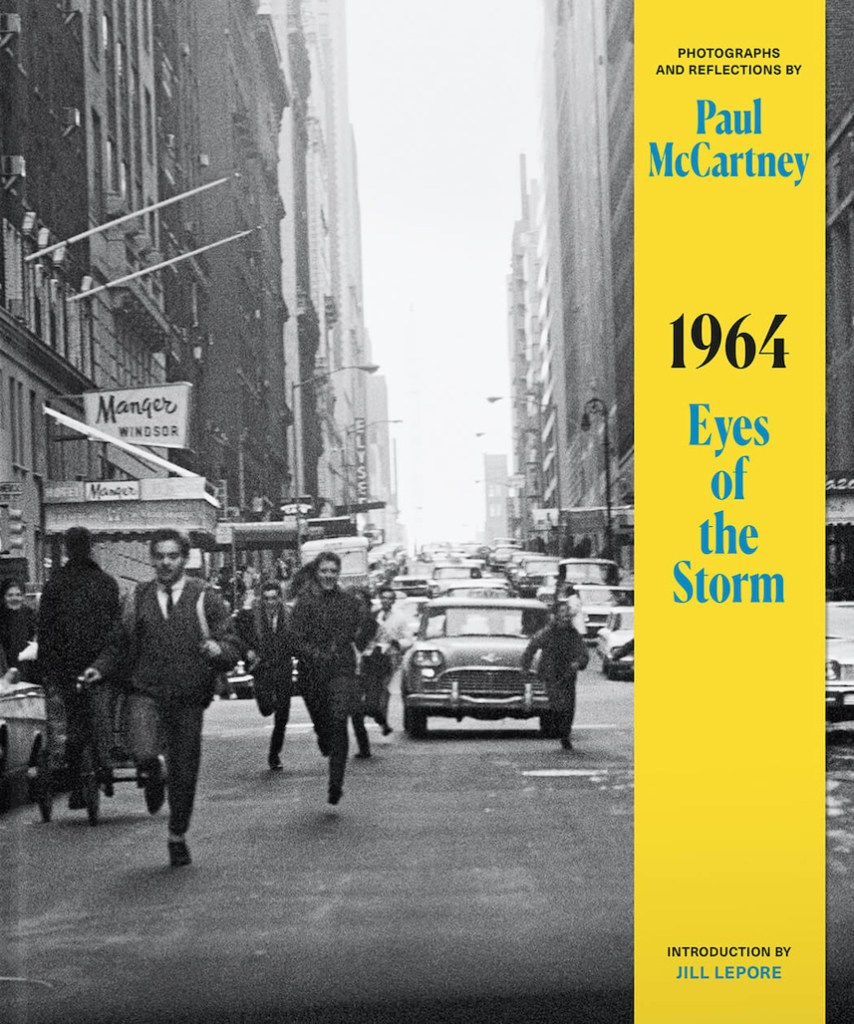
1964, Eyes of the Storm:Photographs and Reflections
By Paul McCartney (2023)
Paul McCartney took some snapshots and he gets a book and an exhibit. Right. But hold on . . . these are more than snapshots. These photographs from, despite the title, 1963 and 1964 are . . . pretty good! This is looking out when we (those of us of a certain age) were looking in: well-chronicled events – the Beatles arriving in New York, the crazy crowds, Ringo and his drums precariously perched for the Ed Sullivan Show; but also what we didn’t see – John in his pre-John Lennon glasses, the views from within the cars and trains and planes, the tedium of the hotel rooms. It’s a fun look at the fashions and hairstyles of the time (their hair was considered long – really?). Everybody smoked. They were so young – early twenties, but they looked like teenagers.
There are numerous references to Paul’s Pentax, but not the specific model. It must have been an unmetered pre-Spotmatic. Also, no mention of the lens, but 50mm was pretty much standard back then. He would ask the professional photographers for advice on settings – they were apparently helpful because the proof sheets all look properly exposed. He shot Kodak Tri-X with its distinctive grain and Ilford HPS Hypersensitive Panchromatic (never heard of that one before). In Miami he broke out the Kodachrome.
Could Paul McCartney have been a visual artist instead of a musical artist? These photos show that he had an eye for composition and light. There are frame-in-frame and rule-of-thirds shots, some striking spotlight performance images, and pre-Vivian Maier mirror pictures. Yes, I think he could have, probably as a street photographer, but I also think he made the right choice.
Particularly intriguing are the photographs of the photographers, who are pretty evenly split between shooting Rolleis and Nikons, with the occasional Leica. (One fan held a Polaroid camera with the print coming out the bottom. No phones.)
The strength of these photos is their cumulative narrative – excitement, sometimes chaos, and everything new new new. That said, a few individual images stand out: George poolside with a ciggie, a drink, and a girl; New York buildings and billboards with vertical verticals achieved without camera movements; and the one that Paul said deeply disturbed him, the extremely sharp and ungrainy (must have been the Ilford film) police officer’s gun and ammo, something he had never seen in England.
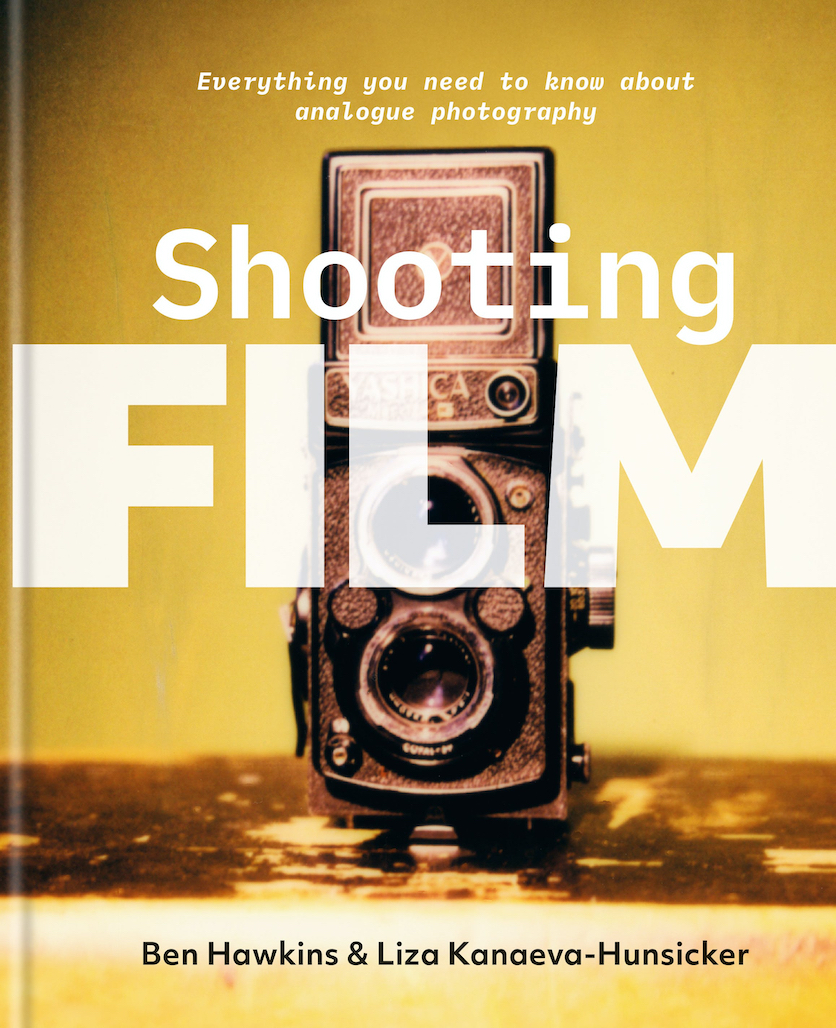
Shooting Film: Everything You Need to Know About Analogue Photography, by Ben Hawkins (2022)
This sounded like a fun diversion for me – a new book about film photography written, apparently, for younger people who have discovered film as a new . . . diversion? Maybe it would remind me of some finer points that I have overlooked, but more likely just confirm what I already know. I was not expecting so many curious choices, partial or inadequate explanations, and outright errors – nothing that would ruin someone’s photography, but enough to suggest that the book needed amore attentive editor. To wit . . .
Am I the only person annoyed by “analogue”? How about “film”?
The cover photo is out-of-focus and off-color. This is apparently a nod to Lomography, the embrace of, well, out-of-focus and off-color. Must be a generational thing.
On page 19 the author implies that Leica only makes digital cameras (but on page 44 he makes it clear that they also still make film cameras).
Page 20 – A Canon AE-1 Program is labeled as a Canon AE-1.
Page 25 – No, on most large format cameras the dark slide does not take the place of a shutter.
Page 35 – No, the Minolta X-700 was not the last Minolta manual focus camera (maybe he meant the last major Minolta manual focus camera). The X-700 was introduced in 1981, the X370s in 1995.
Page 38 – Maybe this is an Englishism – what he calls back-to-front I would call left-to-right (talking about a TLR viewfinder).
Page 45 – No, the Minolta CLE was not made in collaboration with Leica. The earlier CL was, but by the time of the CLE the two companies had ended their partnership.
Page 56 – This is a really bad look – holding a negative with a thumb planted in the surface. The author should read his own book – on page 158 he cautions to only handle negatives by the edges.
Page 70 – Titanium scissors? I’ve cut negatives for over half a century with any available pair of scissors – never a problem.
Page 102 – No, for Sunny 16 its the reciprocal of the film speed, not the film speed.
Page 118 – Advice to permanently leave a UV filter on your lens omits the possible downsides, image degradation and increased flare.
Page 118 – This is very much my opinion, but I would say that if you have one black & white filter it should be orange. Yellow doesn’t make enough difference to make a difference.
Page 132 – Creative light flaws – no thanks.
Page 142 – “Deving” for “developing”? Is that how the kids talk these days?
Page 143 – The author failed to mention that the reel that comes with the Paterson Super System 4 is inferior to third-party reels with a larger lip.
Page 143 – No, film drying clips are expensive photo-specific pieces of equipment that can be replaced by much cheaper bulldog clips from an office supply store.
Page 146 – The author fails to mention that an enlarger is incomplete without a lens, which is typically a separate purchase and may have more influence on print quality than the enlarger.
Page 148 – It is not necessary to leave a small border around the print. There are borderless easels that work just fine, a drying rack is more efficient than hanging prints (at least for RC paper, which most beginners would be using), and prints can be handled by the edges or with cotton gloves to avoid fingerprints.
Page 149 – The author fails to mention the dry-down effect. That first print may turn out to be a disappointment.
Page 189 – The author fails to distinguish between match-needle metering and truly manual control.
The author recommends a 50mm lens for portraits. Something in the 80mm range would be better (we’re talking 35mm cameras here).
And finally, the input from several photographers, particularly Liza Kanaeva-Hunsicker, was not helpful. Most of the photographs were unappealing.
A list of what the author got right would obviously be longer than this error list. I give the book two f-stops (out of five), mostly for the good intentions.
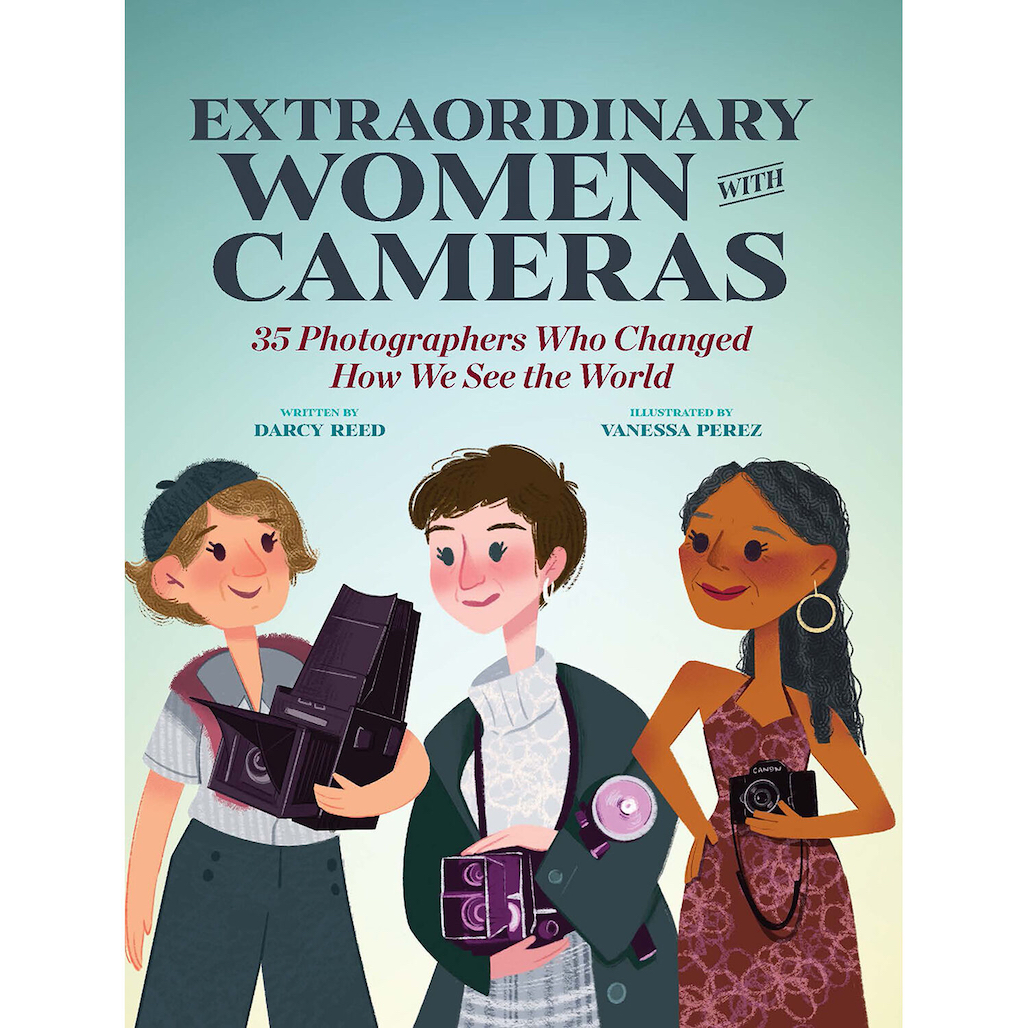
Extraordinary Women with Cameras: 35 Photographers Who Changed How We See the World, by Darcy Reed (2022)
I picked this up because it looked like a good recommendation for members of the Ukiah Photography Club who have granddaughters. It’s aimed at children ages 8 to 12. Here we have the obvious candidates – Dorothea Lange, Vivian Maier, Annie Leibovitz – but also others I’ve never heard of – Coreen Simpson? Rinko Kawauchi? Especially intriguing are the illustrations by Vanessa Perez – caricatures that emphasize Lange’s Graflex, Maier’s Rollei, and Leibovitz’s long blond (once) hair. I’ll show these to club members and see if they can identify them. [Later note: Maier and Leibovitz were easy, several recognized Lange but couldn’t come up with the name.]
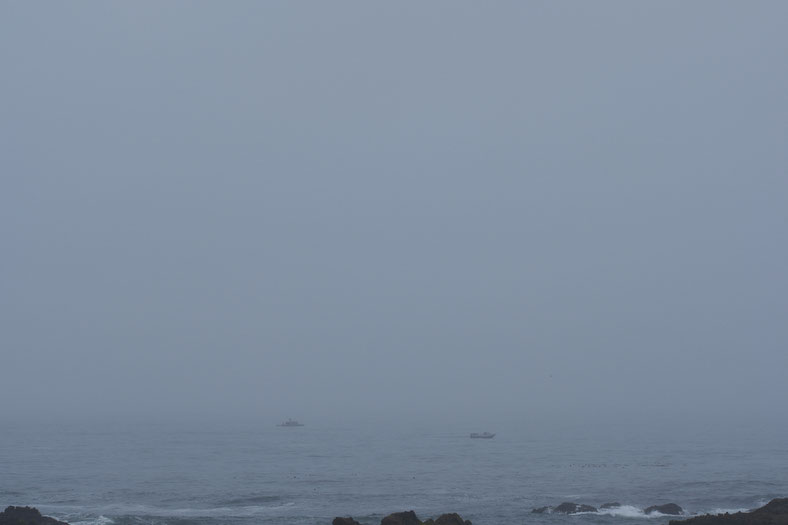
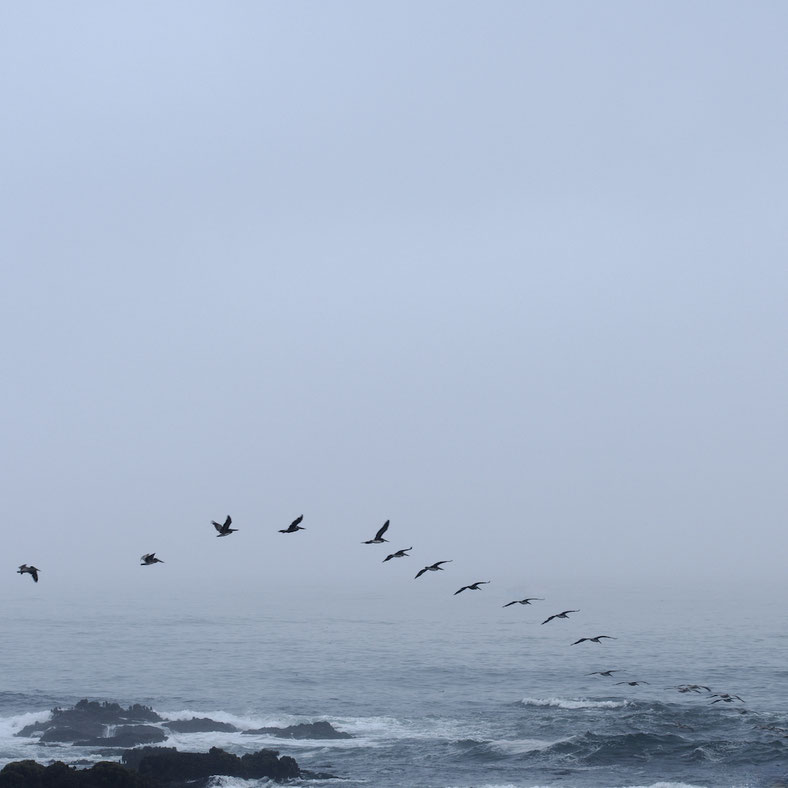
A photograph is usually thought of as an instant in time. But sometimes it can be part of a progression, a step in a series of decisions and actions that lead to the final image. This is my attempt to capture a “minimalist” photo for the Ukiah Photography Club’s August 2022 theme. Distant boats through the fog, with rocks in the foreground to add context. Meh.
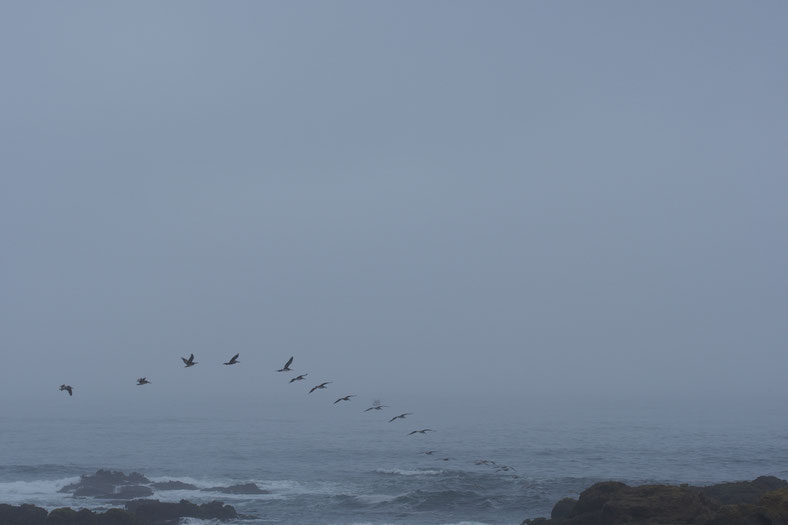
Then nature intervened – a flock of pelicans! Less minimalist but maybe more interesting. The boat behind the birds – distracting. The film photographer in me says it’s my fault, but this is digital, which has its own morality.
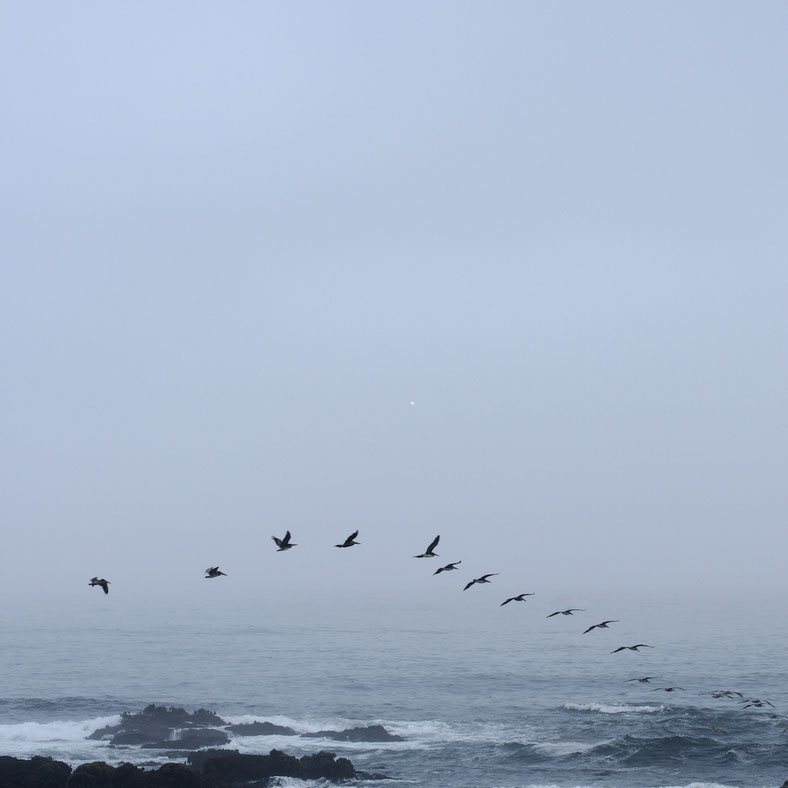
A little post-processing. Square to emphasize the vastness of the sky and because . . . square! Get rid of that boat. Lighten it up a little. A masterpiece!
Maybe not. It looks like there is a pelican missing on the left. Crop it tighter. Nice balance with the dark rocks on the left and the dark waves on the right. I like the way the water fades into the sky. I’ll show this to the Club.
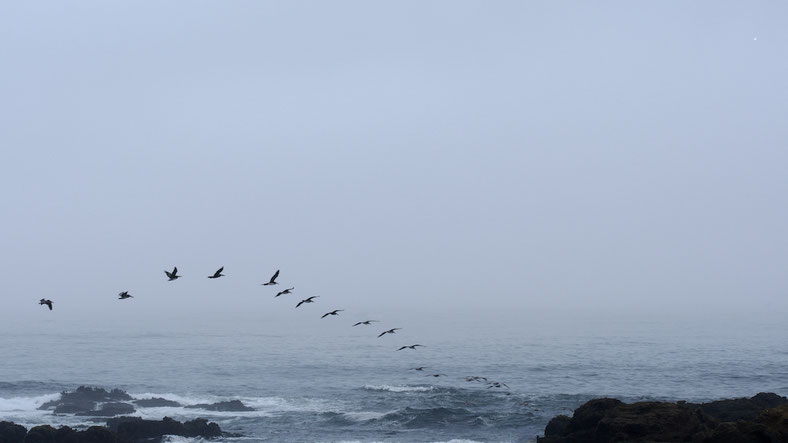
The “artist” in the group, the one with “talent” who claims to be from “Germany”, isn’t crazy about the square – too static, the birds lack a sense of movement. The consensus is that the crop is too tight. Maybe they’re right. Back to the drawing board (computer).
The left pelican no longer uncomfortably close to the edge. Flight with an apparent destination. The 16:9 aspect ratio stretches it out. The “artist” likes it!
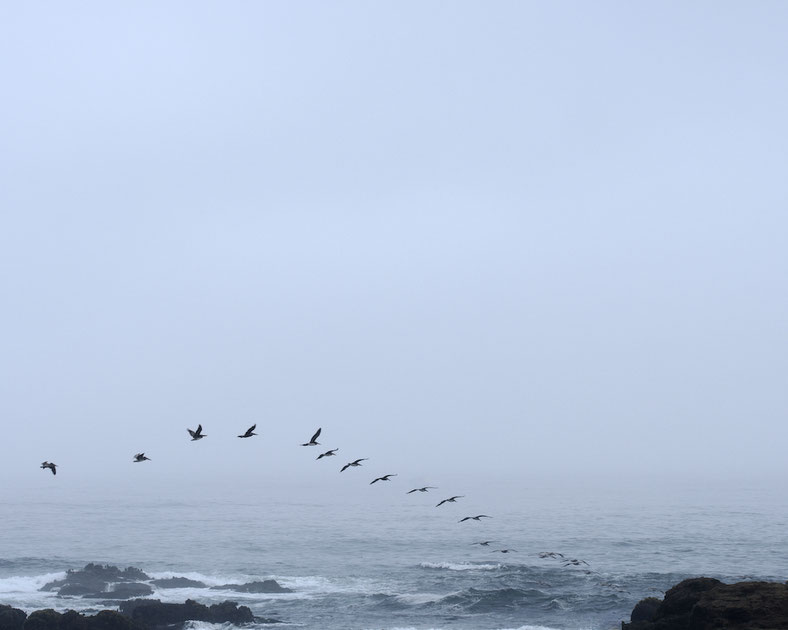
Who has the last say here? The dark chunk of rock on the right is too much. I still want the expansive sky. A more conventional 8×10 reduces rock and adds sky. Now the balance is between the dark rocks on both sides.We maintain the movement and the indistinct horizon. One more thing. Brighten it up a little more but maintain the cold coastal feeling. This is the final final (until I change it again).
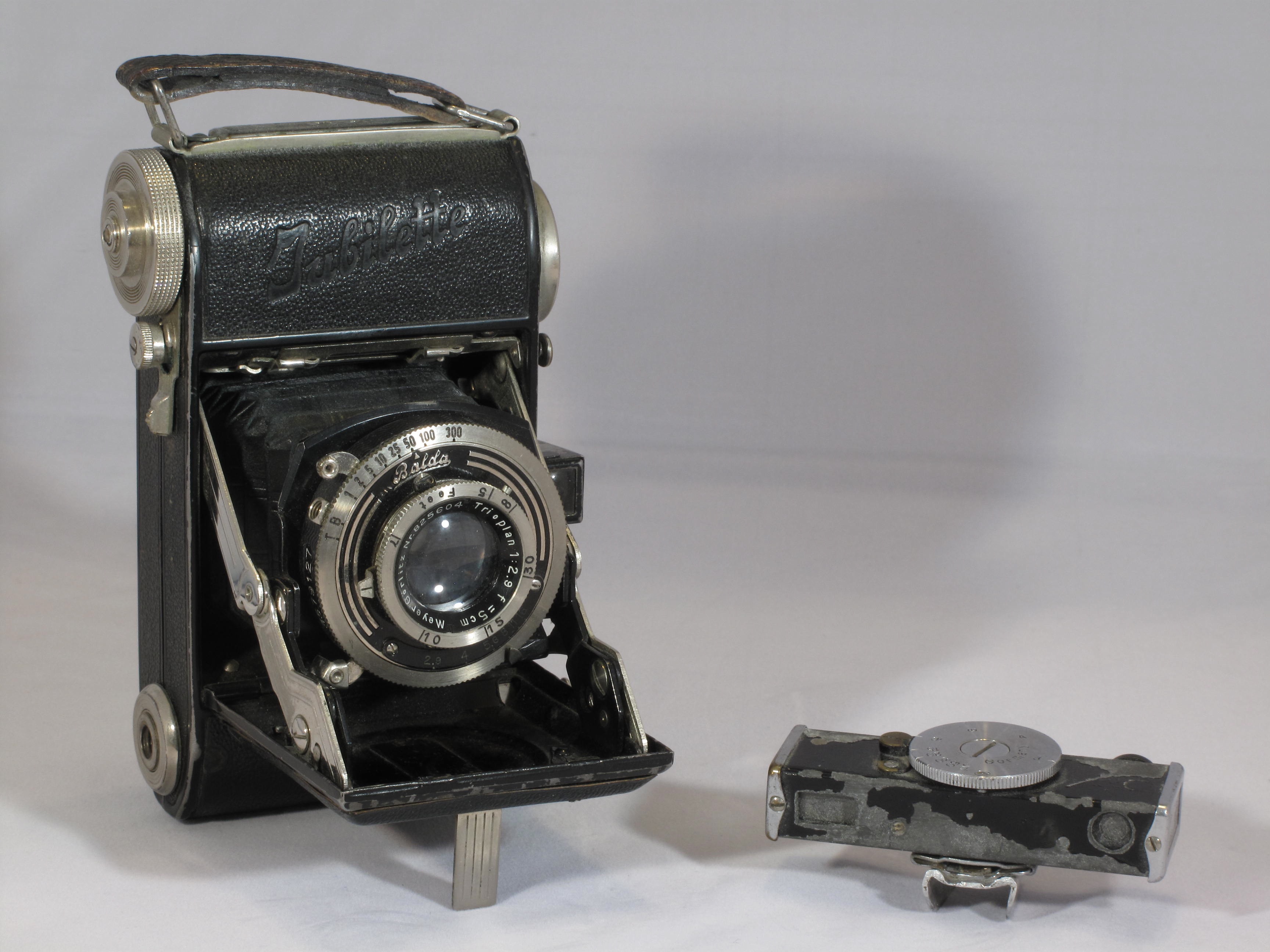
The Ukiah Photography Club’s theme for February 2022 is “something important in your life”. Hmm . . . my family, but they are camera-shy or unavailable. The cats? No, I mostly tolerate them. Baseball? Nothing happening there. Jazz? Perfect, but I have only one decent photo of Pat Metheny and no clear opportunity for more. So it has to be . . . photography. But how do you photograph photography? Another hmm . . . my cameras! Not all of them, just the ones for which I have a special connection. I can rephotograph them, this time with the Fuji X-Pro2 with the 90mm lens, stopped down to f16 to maximize depth-of-field, on a tripod. This is a good opportunity to refine my research on each of these cameras and to consider why they are important to me.
Balda Jubilette – Made in 1938 in Dresden, Germany. 35mm film; 50mm triplet Meyer-Görlitz lens (Serial No. 825604); f2.9 to f16; Compur leaf shutter (Serial No. 3579127) made in 1935 or 1936; 1 to 1/300 plus B and T; minimum focus 5 feet; left-hand shutter button; no double-exposure prevention; auxiliary non-coupled rangefinder.
This was my father’s camera (probably acquired used late 1940’s or early 1950’s). He took hundred of rolls of color slides during the 1950’s and 1960’s, usually on vacations.
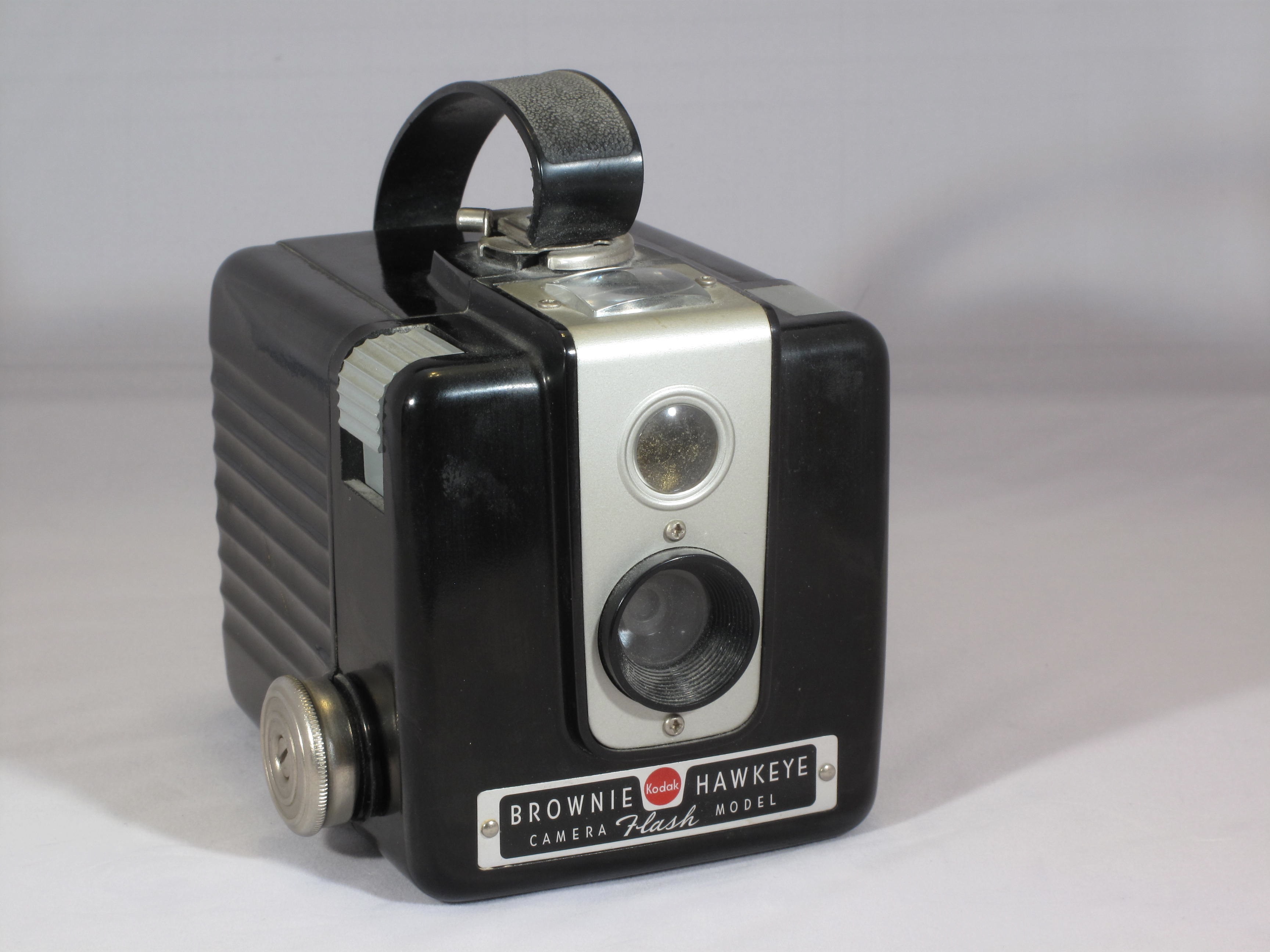
Kodak Brownie Hawkeye Flash with Kodalite Flashholder – Made in the early 1950’s in Rochester, NY. 620 film; 1 element uncoated 81mm miniscus lens; approximately 1/40 plus B; aperture fixed at f15; fixed focus 5 feet to infinity; no double-exposure prevention.
This was my mother’s camera. She took all the birthday party photos.
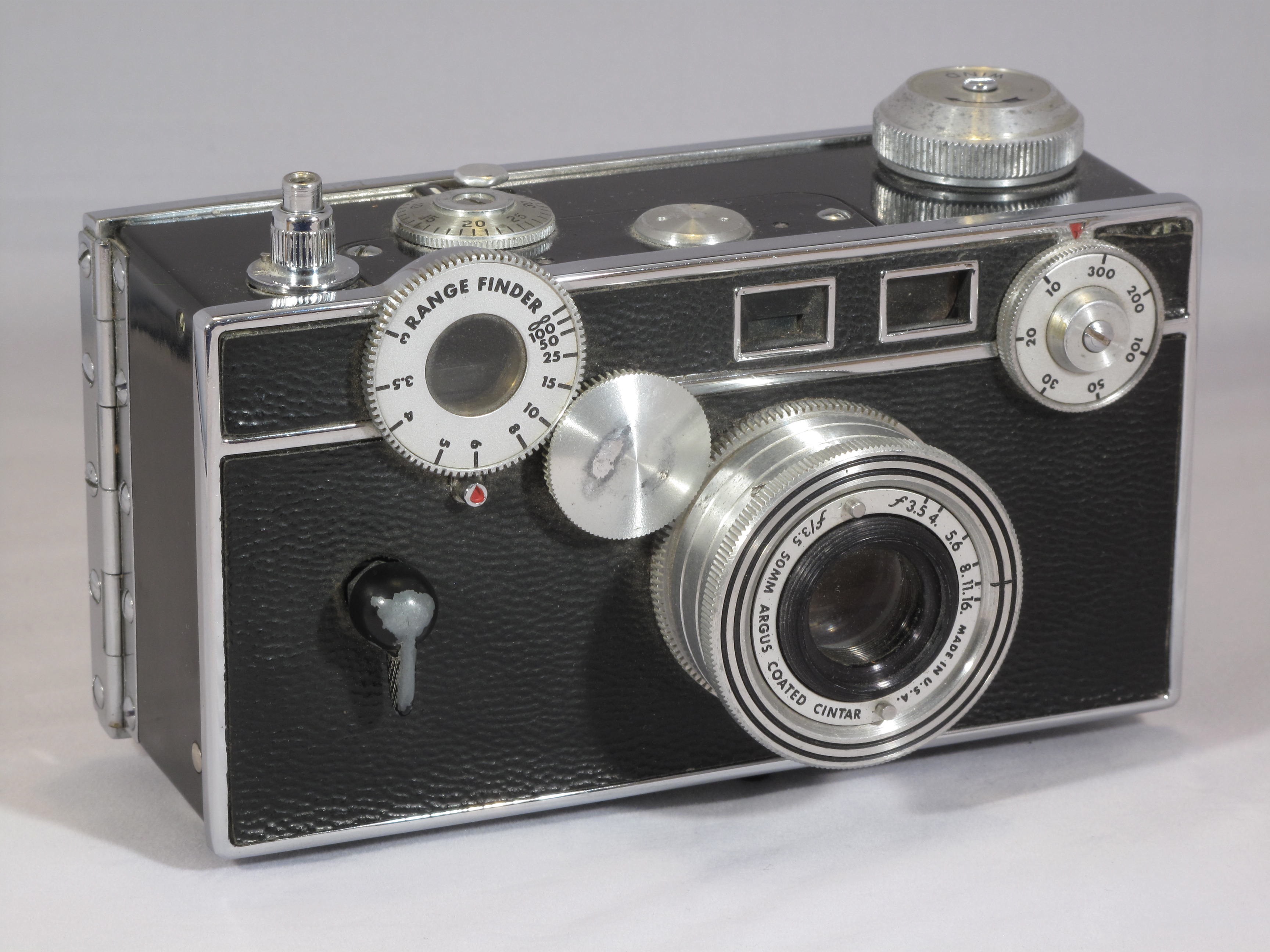
Argus C-3 (“The Brick”) – Made in 1949 in AnnArbor, MI. 35mm film; 3 element coated 50mm Argus Cintar (additional lenses could be interchanged); three-blade leaf shutter; 1/10 to 1/300 plus B; f3.5 to f16 continuously adjustable; coupled rangefinder (separate viewing window); 3.5 feet to infinity; no double-exposure prevention.
This camera belonged to my father-in-law and is the source of most of the pictures of my wife when she was little.
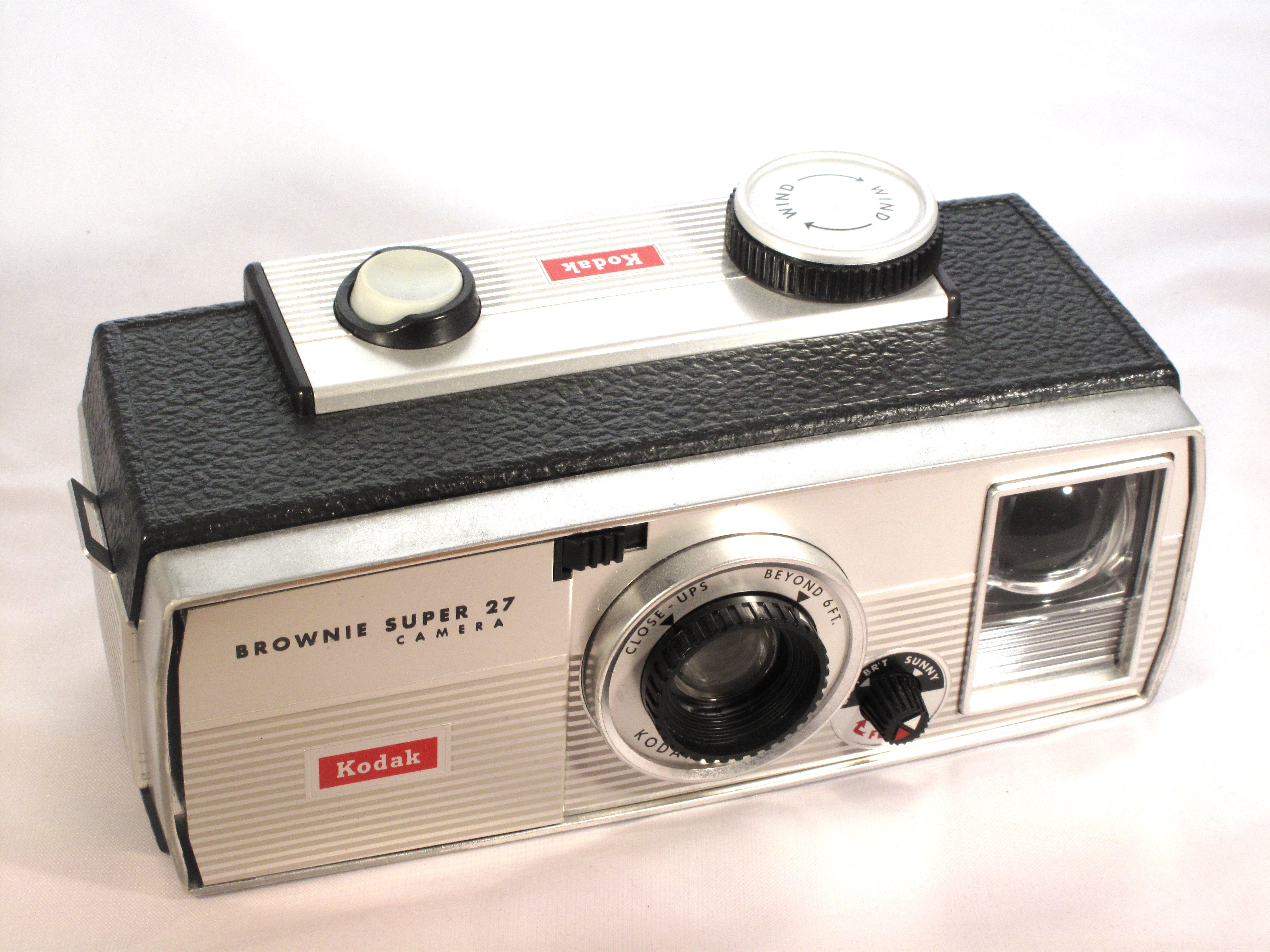
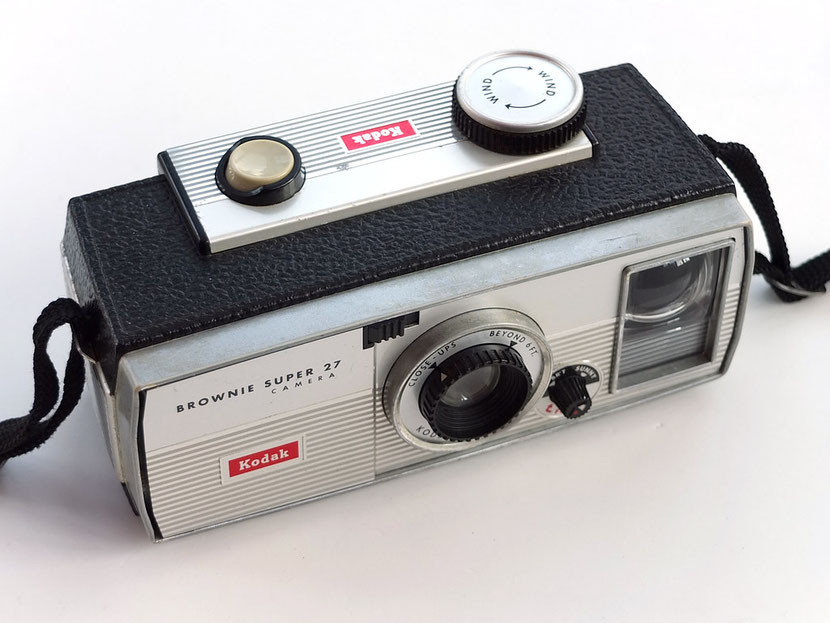
Kodak Brownie Super 27 – Made from 1961 to 1965 in Rochester, NY. 127 film; three-element plastic uncoated Kodar lens; f8 and f13.5; 1/40 and 1/80 sec; two focus ranges: 3.5 to 6 feet, and greater than 6 feet; hidden flash holder for AG1 bulbs; 2AA cells (for flash only).
Here we have my first camera . . . well, not this one, exactly – mine disappeared decades ago so I picked up one at a garage sale, The original was a Christmas gift when I was in eighth grade. I thought the pop-open flash door was so cool.
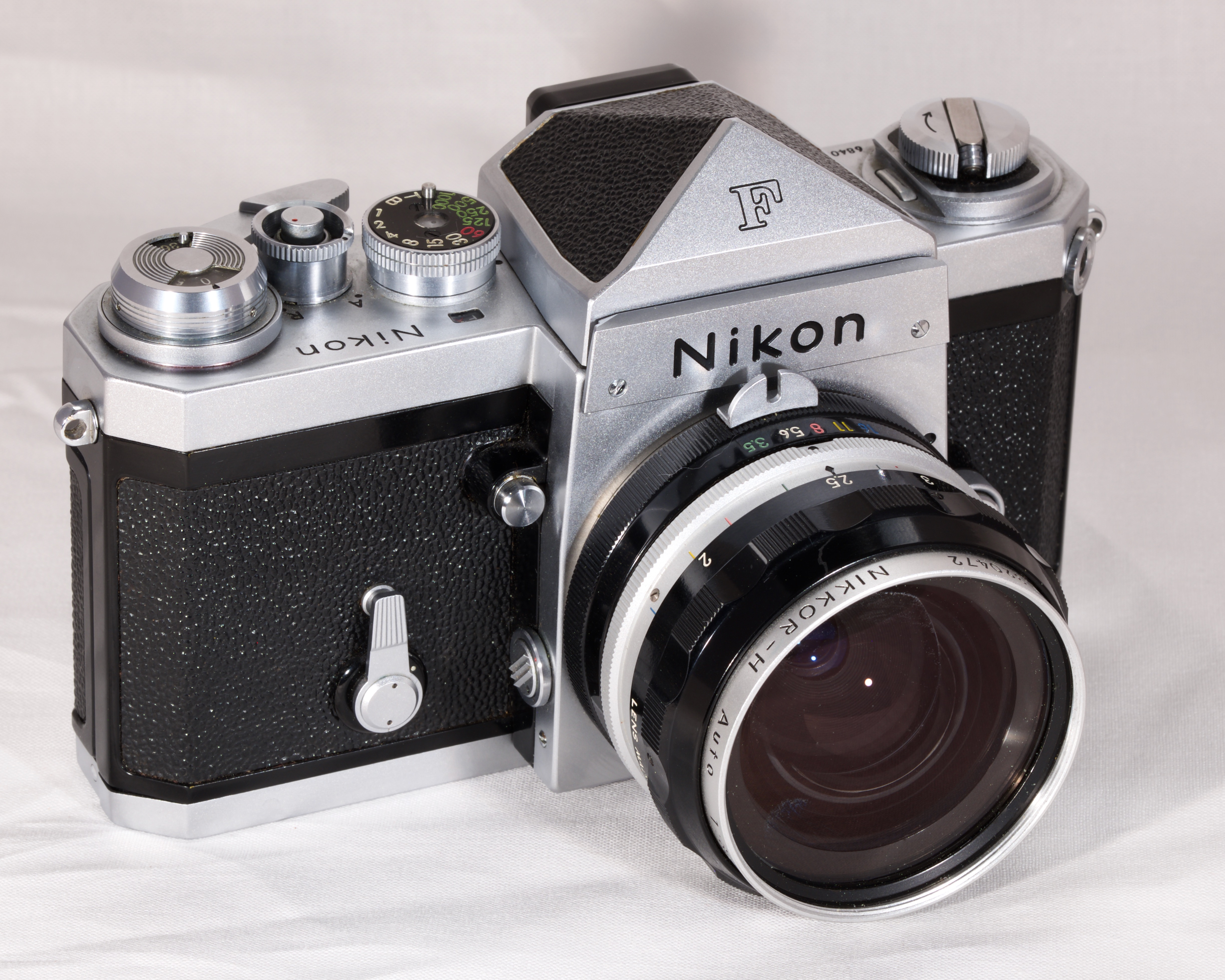
Nikon F with Nikor-H 28mm lens. Camera (serial No. 6840319) made in 1967, lens (serial No. 320472) made in 1961 or 1962, both in Japan; 35mm film; titanium-foil focal plane shutter; 1 to 1/1000 plus B and T; f3.5 to f16 in full stops; self-timer; depth-of-field preview; mirror lock-up; interchangeable prism and focus screen; unmetered.
The first SLR I ever used was identical to this one, borrowed from a friend in high school, although it probably had a 50mm lens. When I acquired this camera many years later I immediately recognized the “clunk” instead of the typical “clank” of other SLRs.
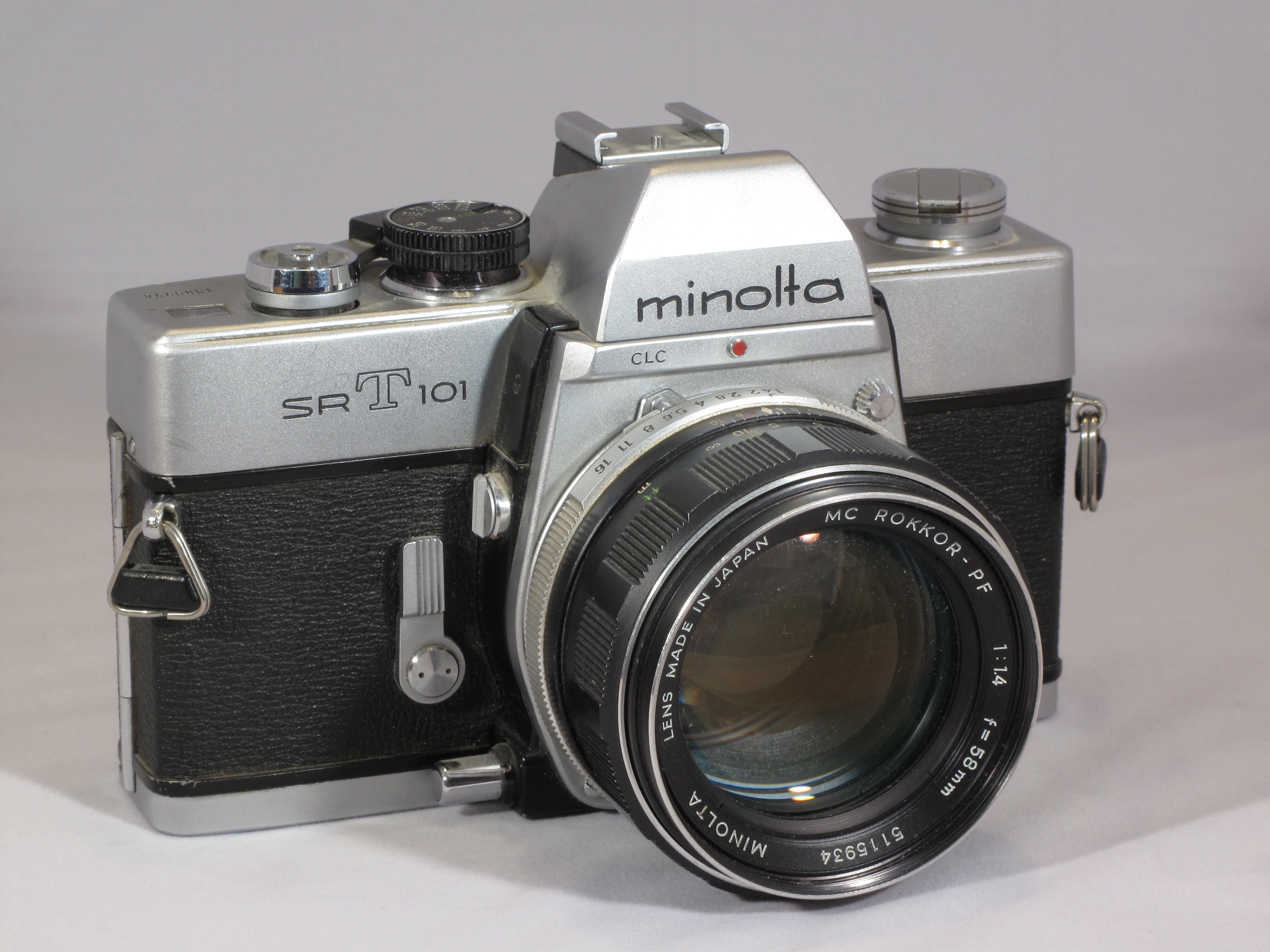
Minolta SRT-101 with 58mm Minolta MC Rokkor-PF lens; camera (Serial No. 1309774) and lens (Serial No. 5115934) made in Japan and purchased new in 1968; full-aperture TTL match-needle metering; cloth focal plane shutter; 1 to 1/1000 plus B; f1.4 to f16 in half stops; self-timer; mirror lockup; depth-of-field preview; PX625 mercury battery for metering only – no longer available, requiring alternate battery with exposure adjustment.
My first real camera! I bought it direct from Japan along with a Minolta MC Rokkor f2.8 135mm lens (which I apparently no longer have) for something like $200 for the whole package – a LOT of money at the time. I had narrowed it down to the Minolta or a Pentax Spotmatic, which (I didn’t fully understand this at the time) had step-down metering – so I made the right choice. This locked me into the Minolta ecosystem for the next several cameras and lenses.
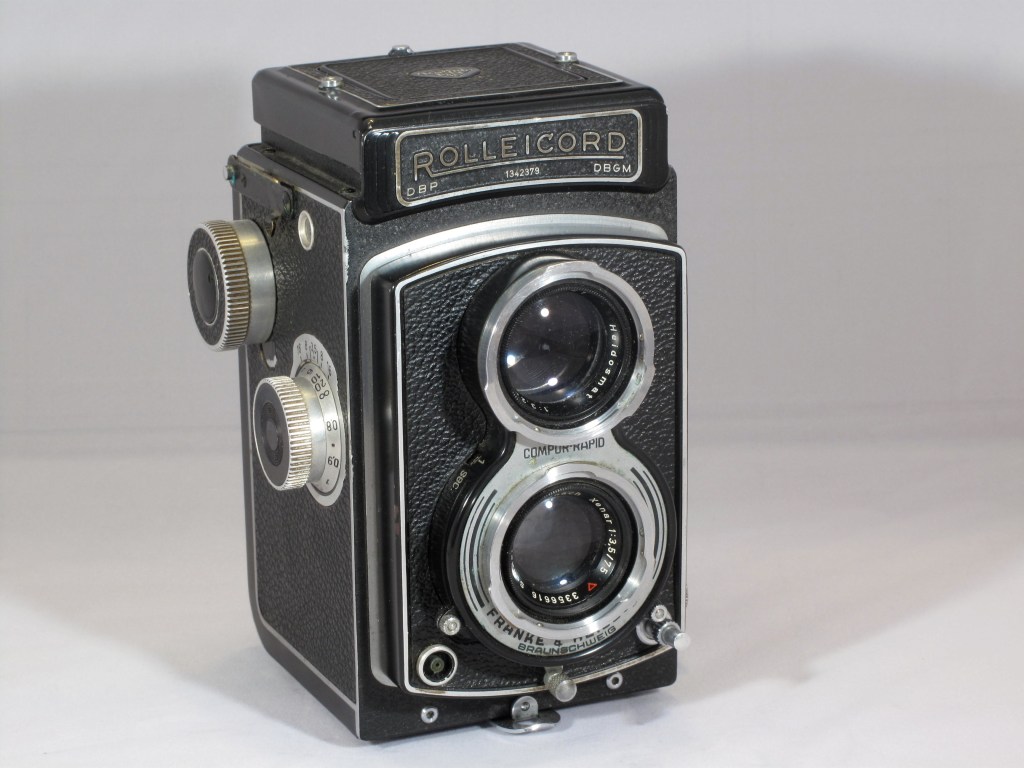
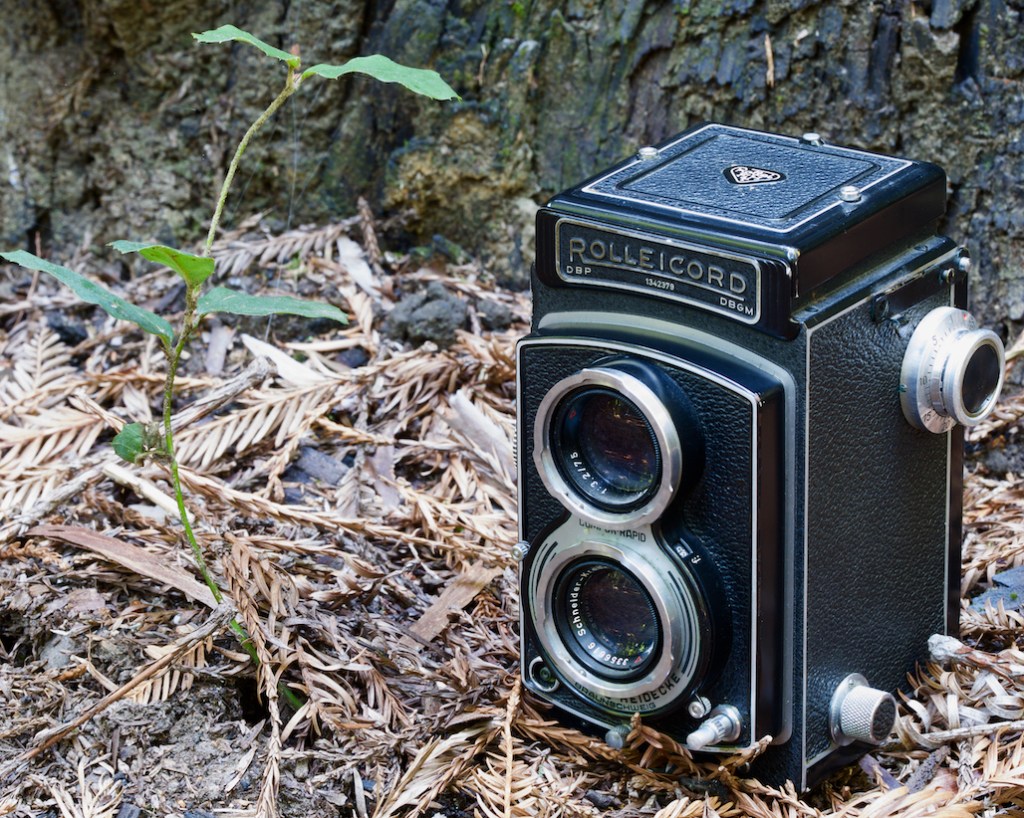
Rolleicord III – Made in Braunschweig, West Germany; purchased new in Indonesia in 1953 by Hans; 120 film; 75mm Schneider-Kreuznach Xenar triplet lens (Serial No. 3356616), accompanied by 75mm Heidoscop-Anastigmat viewing lens (Serial No. 266821); Compur-Rapid X/CR001 leaf shutter; 1 to 1/250 plus B; f3.5 – f22; reversed image.
This was a gift from Hans (I had just met him). Along with a borrowed Yashica Mat EM, it was my introduction to medium format.
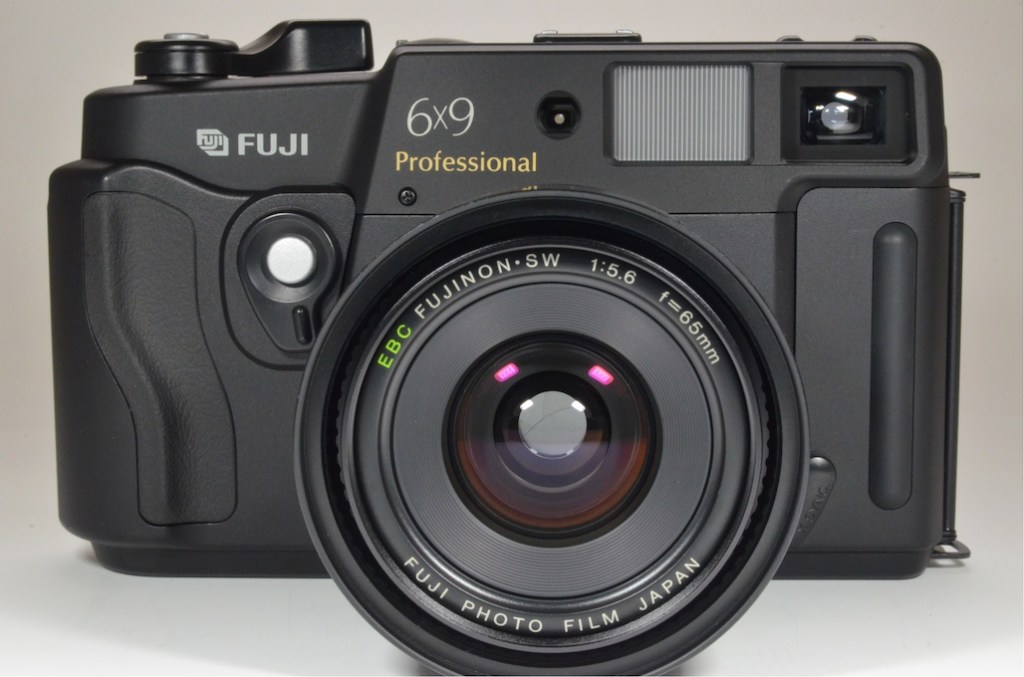
Fuji GW670III – This model was made in Japan from 1992 through ????; I bought mine new sometime in the mid-1990’s; fixed lens medium format rangefinder; 10 6×7 cm images on 120 film (provision for 5 exposure 120 and 20 exposure 220); 90mm EBC Fujinon 5-element lens; minimum focusing distance one meter; No. 0 interlens shutter; 1 to 1/500 sec plus T; f3.5 to f32; built-in lens shade; bubble leveI.
This has been my go-to medium format camera, and pretty much put me off 35mm for two decades. Its companion is a Fuji GSW690III (6×9 cm image, wide angle).
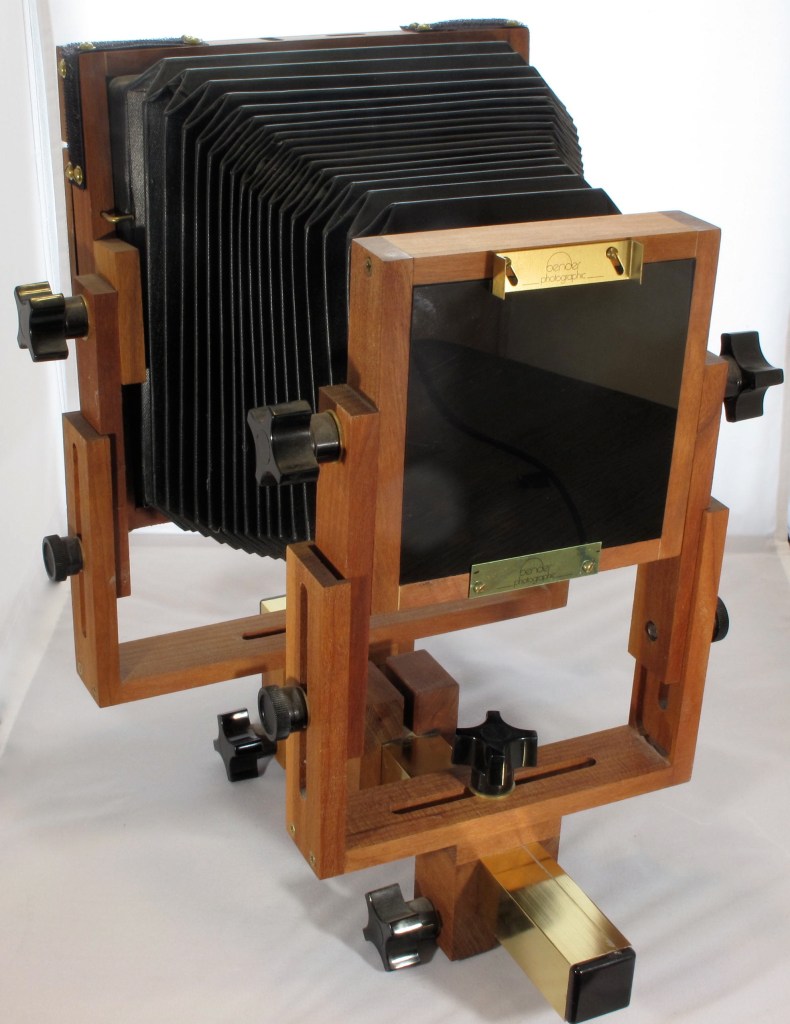
Bender 4×5 – The kit for building a 4×5 monorail was available from the 1970’s through 2008; I built mine in the late 1990’s; front and rear movements; Caltar II-N 150mm lens (Serial No. 10698645) in a Copal No. 0 leaf shutter; 1 to 1/500 sec plus B and T; f5.6 to f64 continuously adjustable.
Building this camera taught me far more about large format than the several books I had read. It quickly became evident that the Bender lacked precision and repeatability in its movements, significantly influencing my later purchase of a Sinar F1.
Minolta CLE with Minolta M-Rokkor 40mm lens – Made in Japan from 1980 until 1985; purchased used in 2015; upgraded version of the Leica CL from 1973, a joint venture of Minolta and Leica (but the CLE was all-Minolta); compatible with Leica-mount lenses; 35mm film; electronic cloth focal-plane shutter; 1 to 1/1000 plus B with +/- 2-stop compensation in half-stop increments; f2 to f16 in half-stop increments; TTL aperture priority metering; minimum focusing distance 2.5 feet; self-timer; 2 S76 batteries (all functions).
After reading James Tocchio’s glowing review I had to get one of these. Not only did it give me one of my favorite all-time photos but it also opened the door for the rediscovery of some of my older Minolta and Canon 35mm cameras.
Other than an apparently factual error in Chapter 6 – she used an “old Leica” in 1918 – this Dorothea Lange historical fiction was fascinating. The story fit into what I know about her actual life, focusing on her time as a portrait photographer in San Francisco, with the historically vague “Ah-yee” or “Chinese Mission Girl” fleshed out as “Caroline Lee”. It seemed a little hurried when it raced past the Migrant Mother episode to Dorothea’s and Caroline’s closure meeting in Paris years later, and I would have liked a little film/developer information (or at least speculation) to go along with the frequent references to her Graflex. Four out of five f-stops. (A new Lange bio has just been release and I’m sure I will be reading it soon.)
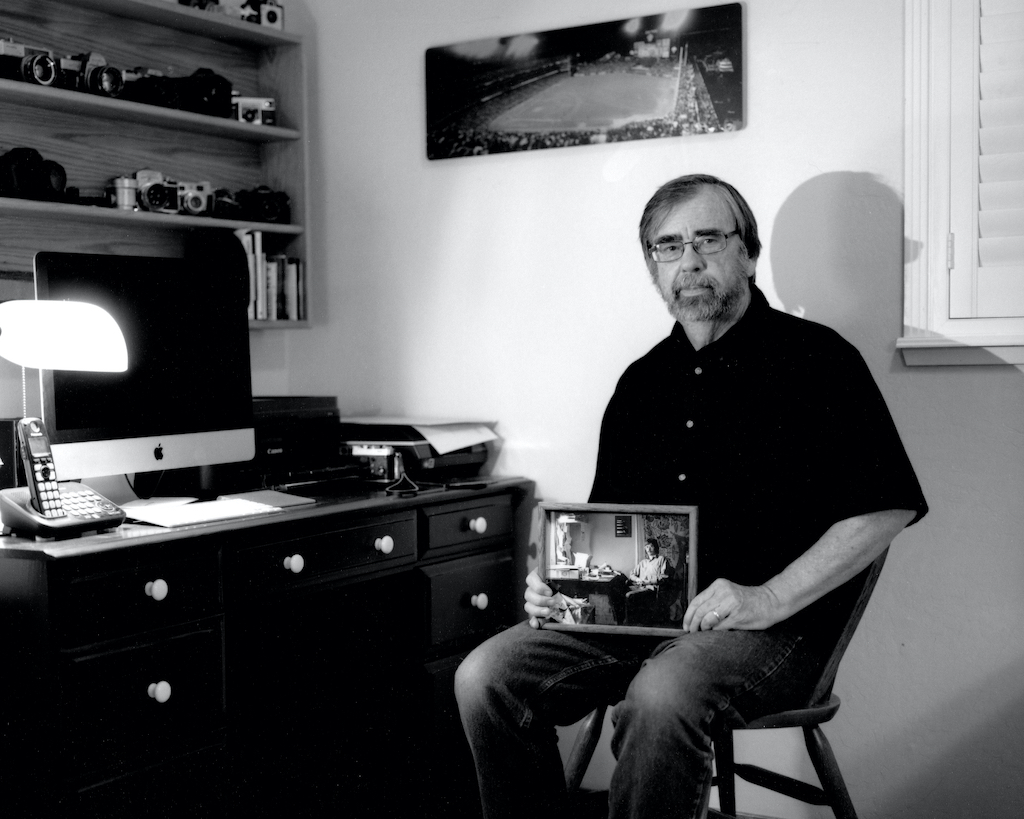
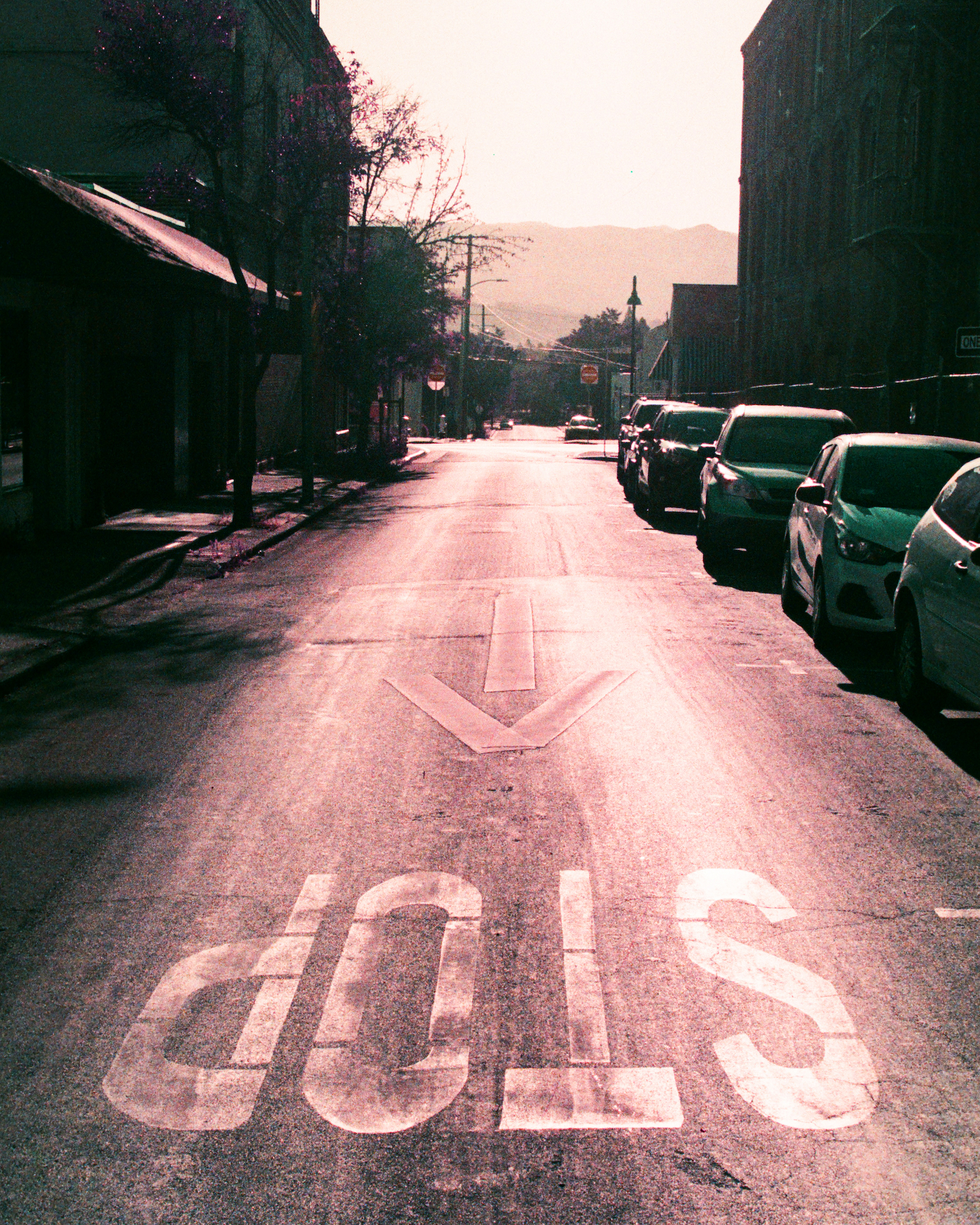
Along with baseball and jazz, photography is my passion. I love shooting film with classic cameras and spending the day in my darkroom pursuing the perfect print (yet to be achieved), but I also go digital when convenience or airport security dictate. Landscapes and architectural details catch my eye, and oh do I wish there were trains in Ukiah. This year’s photos are mostly pre-pandemic, including one that is literally the last I took before the shutdown and a couple that are reach-backs reimagined.
Secondly, what? Everything? Only Minolta? Old? (well, of course). Duplicates? Buy? Trade? Receive out of nowhere (“I’ve got this old camera – do you want it?). Decorations? Shooters? It’s about the photo, not the camera, stupid! And why are cameras black so they show all of the dust?
The stories – oh, the stories. My dad’s Balda Jubilette, me squinting into the sun waiting f-o-r-e-v-e-r for him to take the picture. My Mom’s Kodak Brownie Hawkeye, which produced only tilted photos; the Rolleicord later owned by a member of the Dutch resistance in World War II; my first SRT-101.
My first camera was a Kodak Brownie Super 27, a Christmas gift from my parents when I was 13 years old in 1963. What really appealed to me was the flash compartment for AG-1 bulbs (this was pre-flashcubes) with a pop-open door, much like the hidden Corvette headlights which I also thought were very cool at the time. The Super 27 was a viewfinder camera taking square images on 127 film (hence the “27” in its name). It was made in the USA from 1961 through 1965. The Kodar lens had only two apertures – “SUNNY” / “FLASH” (f13.5) and “CL’DY BR’T” (f8). There were two focus zones, “CLOSE-UPS” (3.5-6 feet) and “BEYOND 6FT”. The shutter had two speeds, 1/80 when the flash door was closed and 1/40 when open. Winding the film cocked the shutter, preventing double-exposures. I only used black & white film because color was too expensive for my allowance – until my family took a vacation to Crater Lake and I was amazed by the deep blue of the water, so I had to go to the gift shop for some color film. I did my first panorama, two shots that I later overlapped in my photo album, which I still have. The camera disappeared sometime after I started shooting 35mm. Years later I found a Super 27 at a garage sale and it holds a proud place in my camera collection.
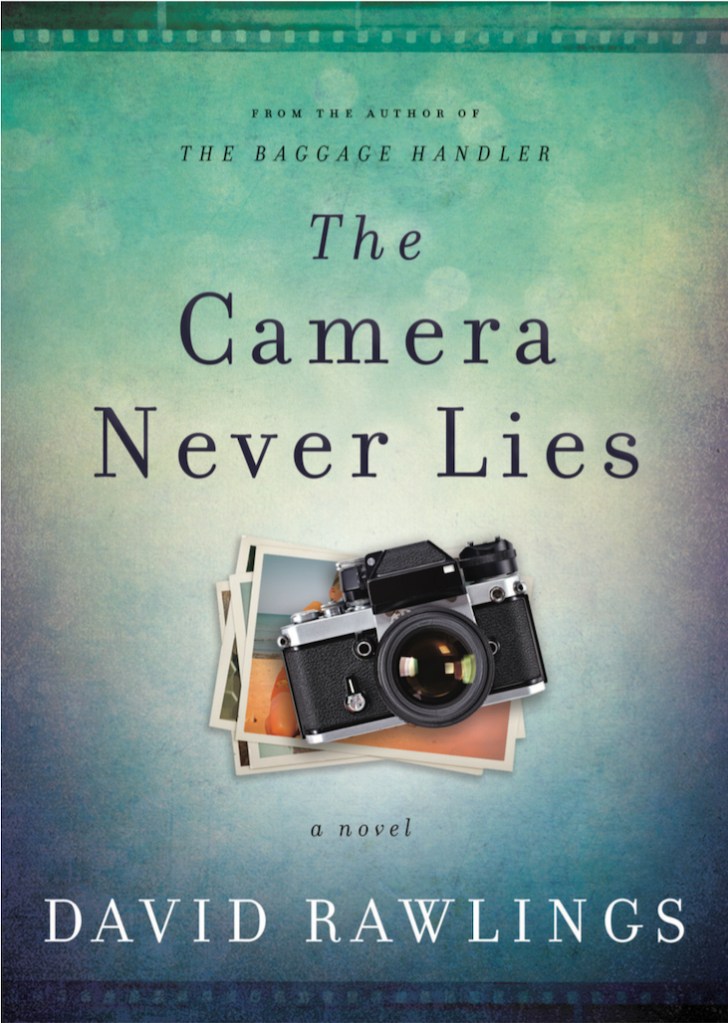
This could have been better. The first problem came before I even opened the book – a cover photo of a Nikon F2 (with the logo erased) representing what we soon find out is an Olympus Infinity HS-10 (not a real camera, as far as I can tell, although there were lots of Olympus Infinity cameras with various words, letters, and/or numbers, all plastic point-and-shoots, not “heavy, black, and silver” as described here). And what’s with all the talk of “clarity” (not sharpness, not contrast, not saturation) before anything is established about the magical qualities of the camera. And how does a 35mm cassette show that it came from an old, not a new, camera? The editor must have been daydreaming when he passed over all of the Old Spice references – one would have been enough. The story concept is intriguing, how “the camera never lies” but the author overplayed his hand when the pictures started changing, sometimes right before the characters’ eyes, like something from Harry Potter or Back to the Future. One f-stop (out of five).
I’m holding a roll of Plus-X in its original unopened box, dated Oct. 1953. Unopened until . . . now! I had to find out if it was in one of those cool yellow cans . . . it is! But what’s this? The cap is light brown. And the film canister is dark brown with yellow lettering. Nowhere is there any indication of film speed (it would have been ASA back then) other than “fast” (my memory of Plus-X from the 1970’s is 125). The canister is more robust than current models. If I shot this (it probably should go in the Argus C3 that I’ve never used) I would guess at some combination of increased exposure and development. For now, though, it will go back on the shelf, definitely next to the C3.
Here’s my Rollei story. My wife was a nurse in a medical office. Although I’m sure she treated all patients with kindness and professionalism, one gentleman in his 90’s was her favorite. He always had stories of his adventures, first as a member of the Dutch resistance during World War II and then as a professional photographer across many continents and decades. He often invited her to drop by his home and to bring her husband (me) whom he knew was interested in photography. She finally took him up on his offer. We arrived on a Saturday morning and he was a gracious host. At some point he pulled out a Rolleicord III, his personal camera (he used a Leica for work). He handed the Rollei to me and explained the buttons and knobs and answered all of my questions. When I gave it back to him he said “No, you keep it”. I told him I couldn’t possibly do that – we had just met. He insisted (I suspect it had something to do with Suzanne being his favorite nurse) and I ended up leaving with the camera. He was an avid sailor (still, at that age) so the only way I could think of to repay him was to make a nautical photograph with the Rollei and then present it to him (the photograph, I now know, wasn’t very good, and besides, it was a fishing boat). The camera reminds me of a life well-lived. I need to shoot it again (dim viewfinder and all). I know the ‘flex has more prestige than the ‘cord, but I wouldn’t make that trade.
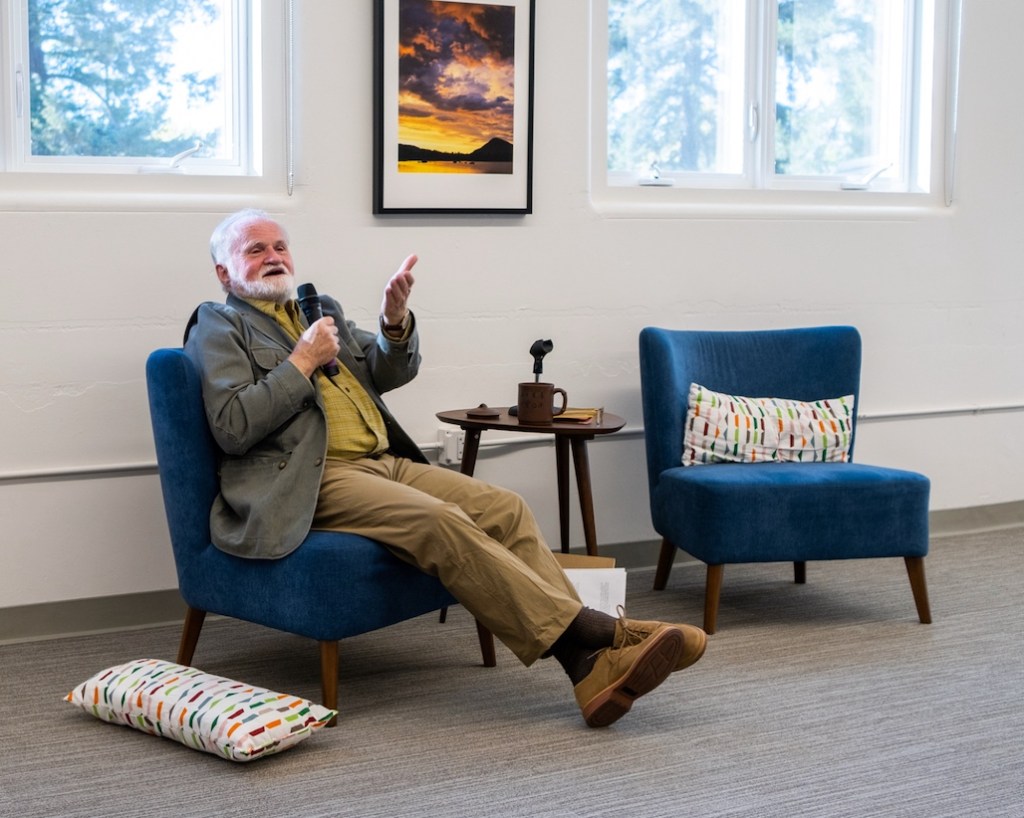
This past Sunday Martin J. Venhoeven spoke at his “Contemplative Photography” exhibit, showing through November 30, 2019 at Dharma Realm Buddhist University. Nary a word about f-stops or shutter speeds. I heard “Nikon” and “Leica” once each, and someone in the audience mentioned “post-processing”. What Mr. Venhoeven discussed, quite eloquently, was his connection to nature, particularly the nature of a lake in Maine, and how that connection informed his photography. He enlivened his talk with numerous references to poetry and meditation (including a particularly humorous – and insightful – story about “standing meditation”). His photographs were as much about him as about the lake – calm, respectful, and direct.
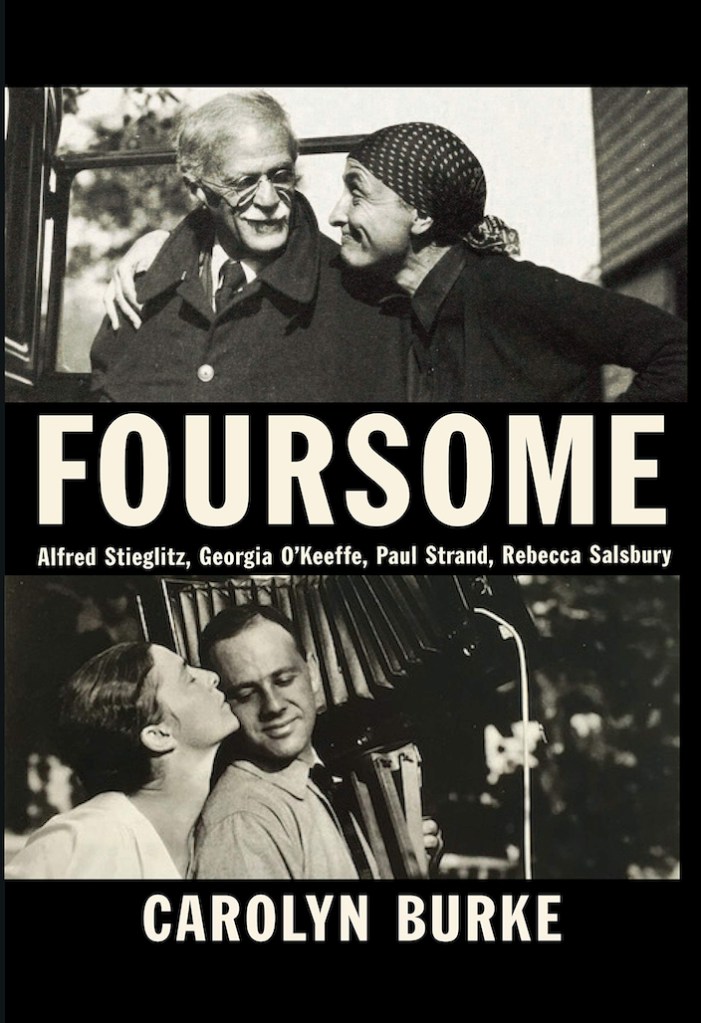
Extensive. Detailed. Probing. Complex. That’s the book (my rating: four out of five f-stops). The artists? Full of themselves, but maybe justified by the enormity of their talent (well, certainly O’Keefe, probably Stieglitz, not sure about the other two). I was in the presence of an O’Keefe at the DeYoung years ago – stunning (a flower, of course). Don’t know if I’ve seen anything by the others, but an original Stieglitz would be worth the effort.
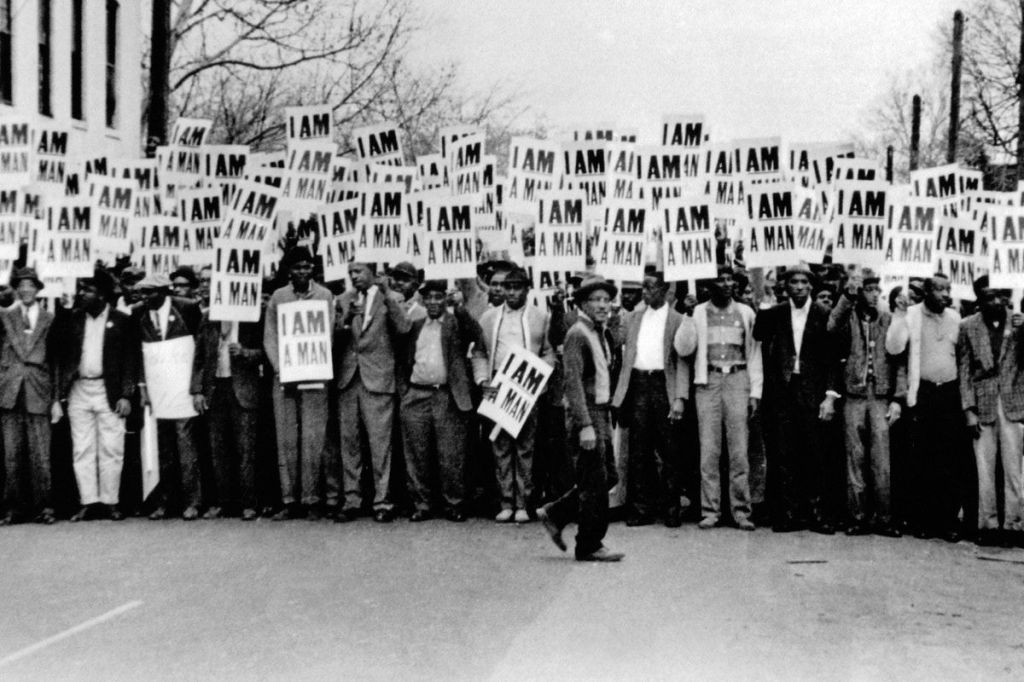
Not sure about this one. First of all, I have to admit that I had never heard of Ernest Withers, and, while some of his photos looked familiar, none of them had previously grabbed my attention. Then again, his “I Am a Man” image is striking, especially with the back story of the sticks. Withers photographed the civil rights movement, especially around Memphis (Bluff City) but was simultaneously secretly providing information to the FBI. His spying appears to have at times provided cover and safety to the participants and at other times thwarted their objectives. Withers’s motives remain unclear but seem to be at least in part his need to make a buck. He left behind a treasure trove of historic (and at times artistic) photographs, now being protected and promoted by his family. The book includes references to his Rolleiflexes but no film/developer/darkroom data. Three f-stops (out of five).
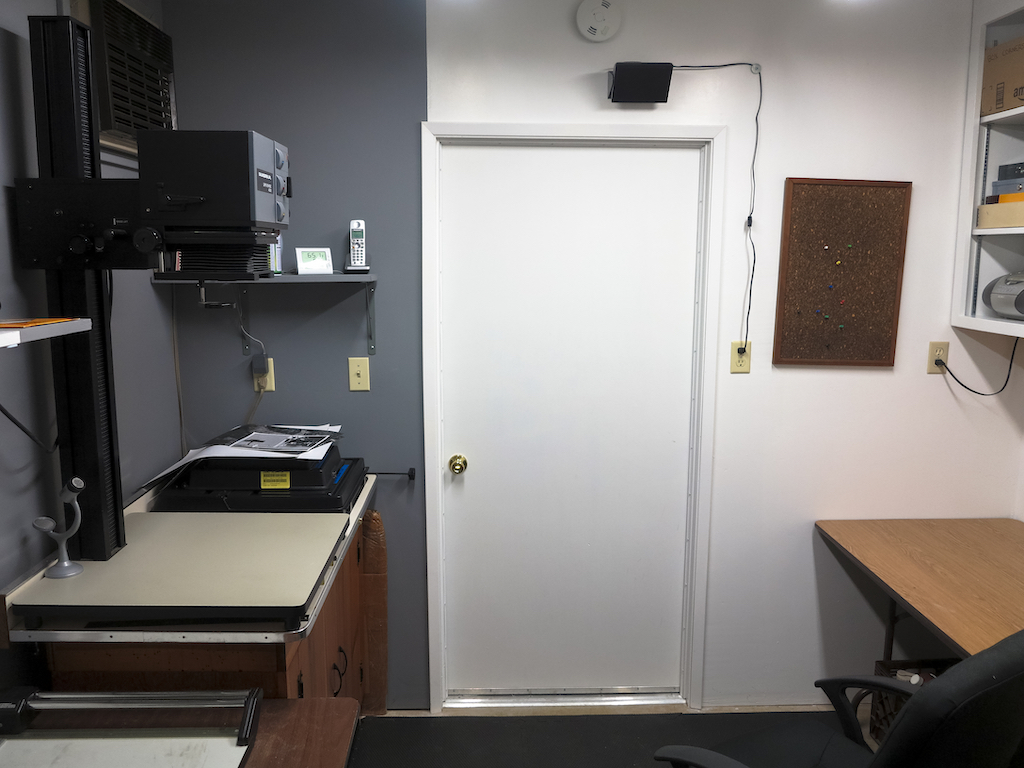
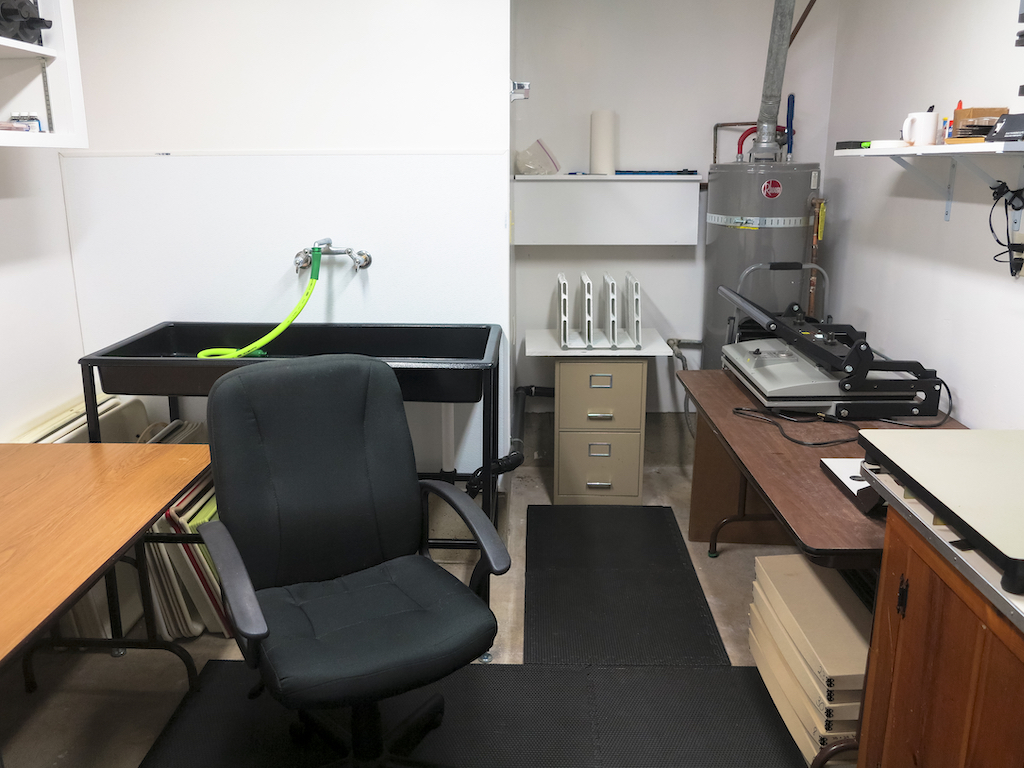
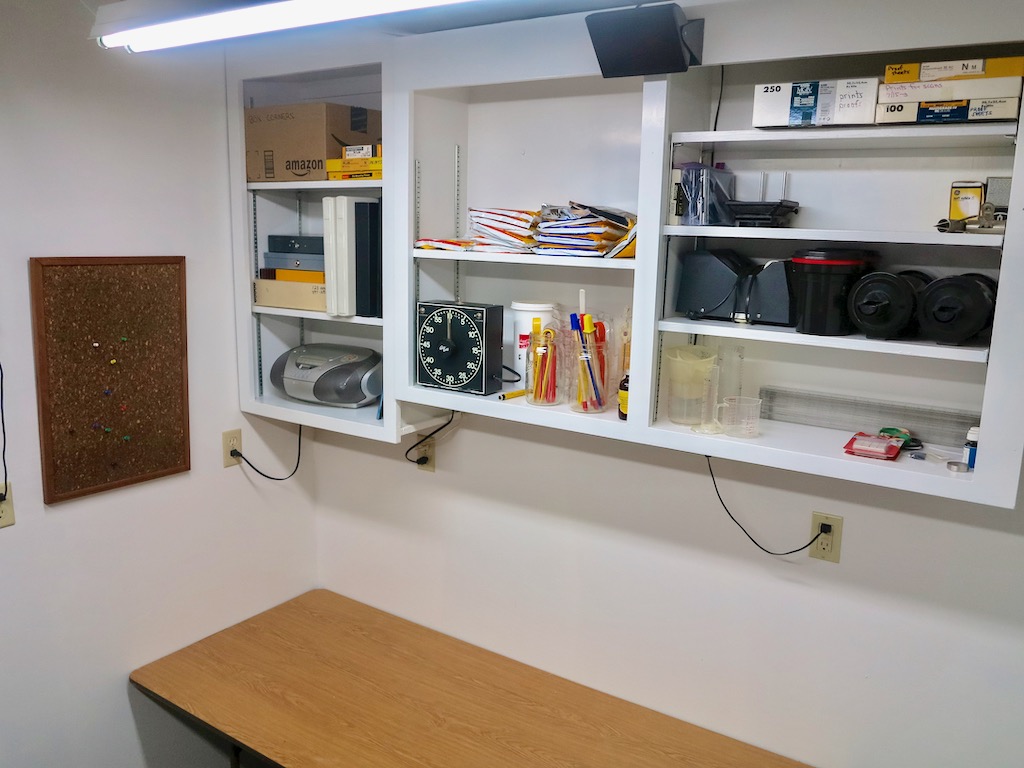
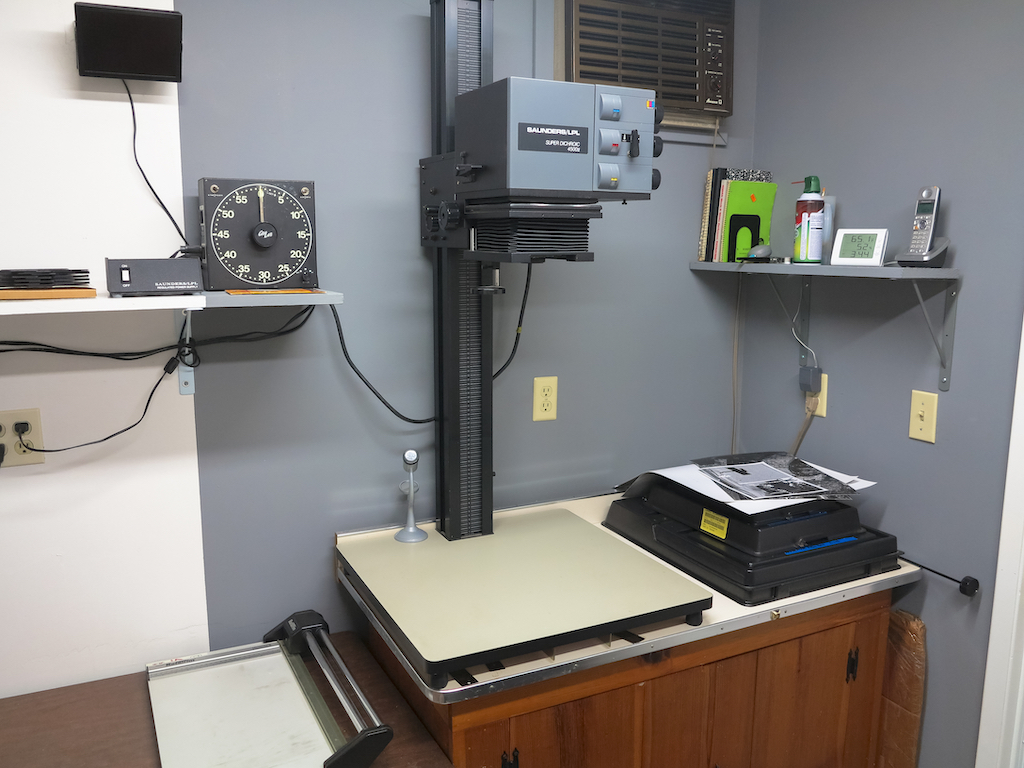
Thanks to Craig of Greg Hoyt Construction for my beautifully remodeled darkroom. The sink is large enough for 20×24 prints and the layout is much more efficient than my previous setup. I can’t wait to get in there and develop the hell out of my next roll of film!
My darkroom is currently being remodeled. I needed a bigger, better sink, then upgraded electrical, then more insulation, a more efficient layout, more _____, better _____. In the meantime I am darkroomless. How do people live like this? My New Year’s resolution is to get back in there and make the perfect print.
I’m assuming this desert island has a fully supplied darkroom, but no computers, so the basic premise (film) is a good one. I’m also assuming that by some quirk of the supply chain batteries cannot be delivered, so fully manual is required (Sunny 16 would almost always work). The island would have a lot of sand, so I don’t want interchangeable lenses. Desert islands being on the small size, I’d need a wide-angle lens (I don’t want to stand out in the water to photograph the palm trees and get eaten by sharks). So my camera would be . . . the Fuji GSW690III!
If you agree that every good photograph tells a story, then I have a book for you – only, however, if you find Alexander McCall Smith’s tales “charming”, not if they strike you as “corny”. The author took five vintage photographs, snapshots really, of ordinary people doing ordinary things, taken from early- to mid-twentieth century, and wrote a short story for each. If you are familiar with his work (No. 1 Ladies Detective Agency and others) you know that pretty much everyone lives happily-ever-after, or at least learns a valuable lesson. The photos were all from an age when a photograph was not a photograph unless it was a print, which begs the question of whether a hundred years from now our only-on-a-screen photos will inspire similar stories. I give this book four f-stops (out of five).
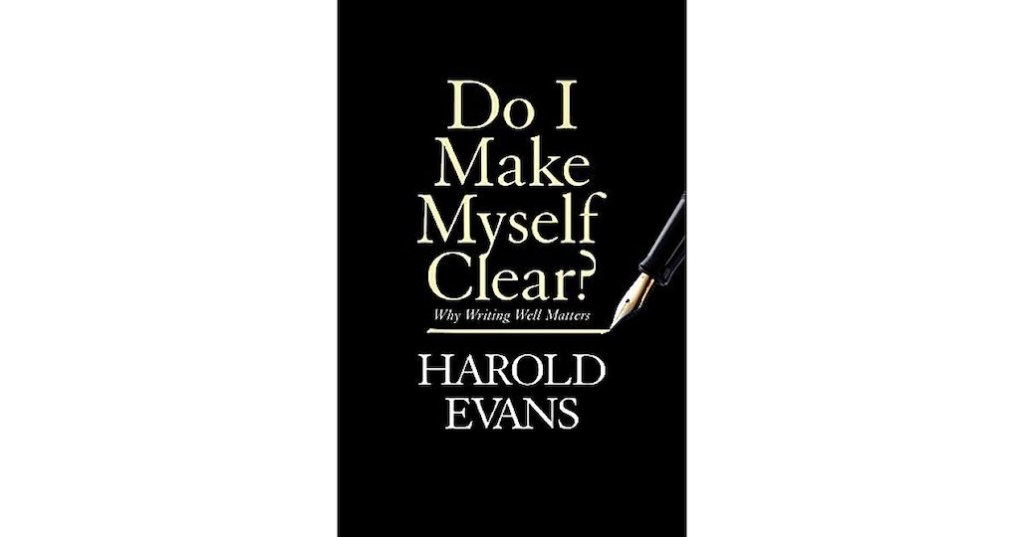
“Writers generally set out with good intentions, but something happens along the way. We don’t really know what we want to say until we try to write it, and in the gap between the thought and its expression we realize the bold idea has to be qualified or elaborated. We write more sentences. Then more. We are soon in the territory defined by the French mathematician Blaise Pascal (1623-1662) but associated with others, too: “I would have written something shorter, but I didn’t have time.”
I’d like to think of myself as an intelligent, insightful resource for all things photographic, especially classic manual-focus film cameras. I’d like to think that, so please don’t disturb my fantasies. In the meantime, if you really are into that intelligent, insightful stuff, I recommend you visit James Tocchio’s Casual Photophile. He’s primarily responsible for my acquisition of a Minolta CLE (sorry, I didn’t buy it from your on-line store, F Stop Cameras, but you did sell me an MD Rokkor-X 45mm that is perfect for my Minolta XG-M – which means I have to agonize over which camera gets the next roll of Tri-X – damn you James Tocchio!). He does this very cool live-stream take-apart-a-camera piece by piece by piece, but I can’t seem to keep track of the schedule (is there a schedule?). Recent articles have included one on the Voightlander Bessa R and another on the Minolta XD (or XD11 in the United States) (as Mike Krukow would say, “IwannagetthatIwannagetthatIwannagetthat!”). James and his stable of writers understand the joys of shooting manual, shooting film, and shooting classic. Check them out.
After one successful roll of film, the meter on my new XG-M no longer worked. It wouldn’t be worth the bother to complain to the eBay seller about a $22 camera, so I figured it was one more body on the collection shelf. Two days later a fellow member of the Ukiah Photography Club gave me two cameras that had been laying around collecting dust – a Pentax K1000 and (of course) a Minolta XG-M! I was back in business. The Gordy’s strap and a recently purchased Minolta MD Rokker-X 45mm f2 found a new home. The photography gods (perhaps Eos, Nanahuatzin, or Ekhi) were smiling down on me.
A far more detailed account than the movie Finding Vivian Maier, Pamela Bannos’s book debunks some of the popular myths that have grown around this posthumous celebrity. Foremost among these is the idea that Maier was a nanny who took pictures – Bannos sees her as a photographer who conveniently supported herself as a nanny. Maier’s secretive, elusive mystique – while undoubtedly partially fueling her “success” (original prints selling for up to $10,000) – is replaced by extensive details of her life, including her early years in New York and Chicago, with forays to Los Angeles, San Francisco, and Vancouver, and a trip around the world. For classic camera geeks there is information about her Leicas and Rolleiflexes, as well as perspective on her place in the history of street photography. Bannos addresses the still murky arena of Maier’s copywrite protection and, without really taking sides, whether it is ethical or even legal for others to be making money off of her art. The author, a professor of photography at Northwestern University, does not pull punches on her opinion of John Maloof’s Finding movie (nominated for an Academy Award), which she finds full of omissions and distortions. Vivian Maier: A Photographer’s Life and Afterlife is a compelling tale of a unique photographic talent and is highly recommended. Five out of five f-stops.
Since my April post (Fuji X-T5) I made one film keeper. This was with a Minolta X-570 with a MD Rokkor-X 45mm f2, loaded with Lomochrome Purple XR 100-400, which is, no, not slide film, and, yes, purple (well, it leans toward). It did not involve any darkroom (small “d”) work, as the film was developed and scanned by The Darkroom (large “D”) and then minimally manipulated on my computer.
I shot a couple of rolls of very old T-Max 100 with a Fuji GW670III and its Fujinon* 90mm (45mm equivalent) f3.5, using a KEKS EM-01 meter, with disappointing results, so much so that I threw out the rest of my 2013 batch and still need to do a controlled test on 2016 (all of the film had been refrigerated). I’m thinking that a more positive outcome could help to steer me back to film. Additional disappointment would mean tossing 2016 and then digging into the freezer or just giving up entirely.
*All Fuji lenses are Fujinon, so I won’t repeat it.
But the telling incident is this: another trip, to Colorado, in the car, which always used to mean film. What did I bring? The Fuji X-T5, the XF 16mm (24 mm equivalent) f2.8, and the XF 90mm (135mm equivalent) f2. I didn’t expect to have time for photography (drive drive drive to get through five states in three days, three days to visit with our oldest daughter and deliver some dishes that prevented us from flying, then drive drive drive to get home), but you never know. I took a few shots at the lake near her house, got one snapshot of her and her husband, but nothing that would end up on my website or on the wall.
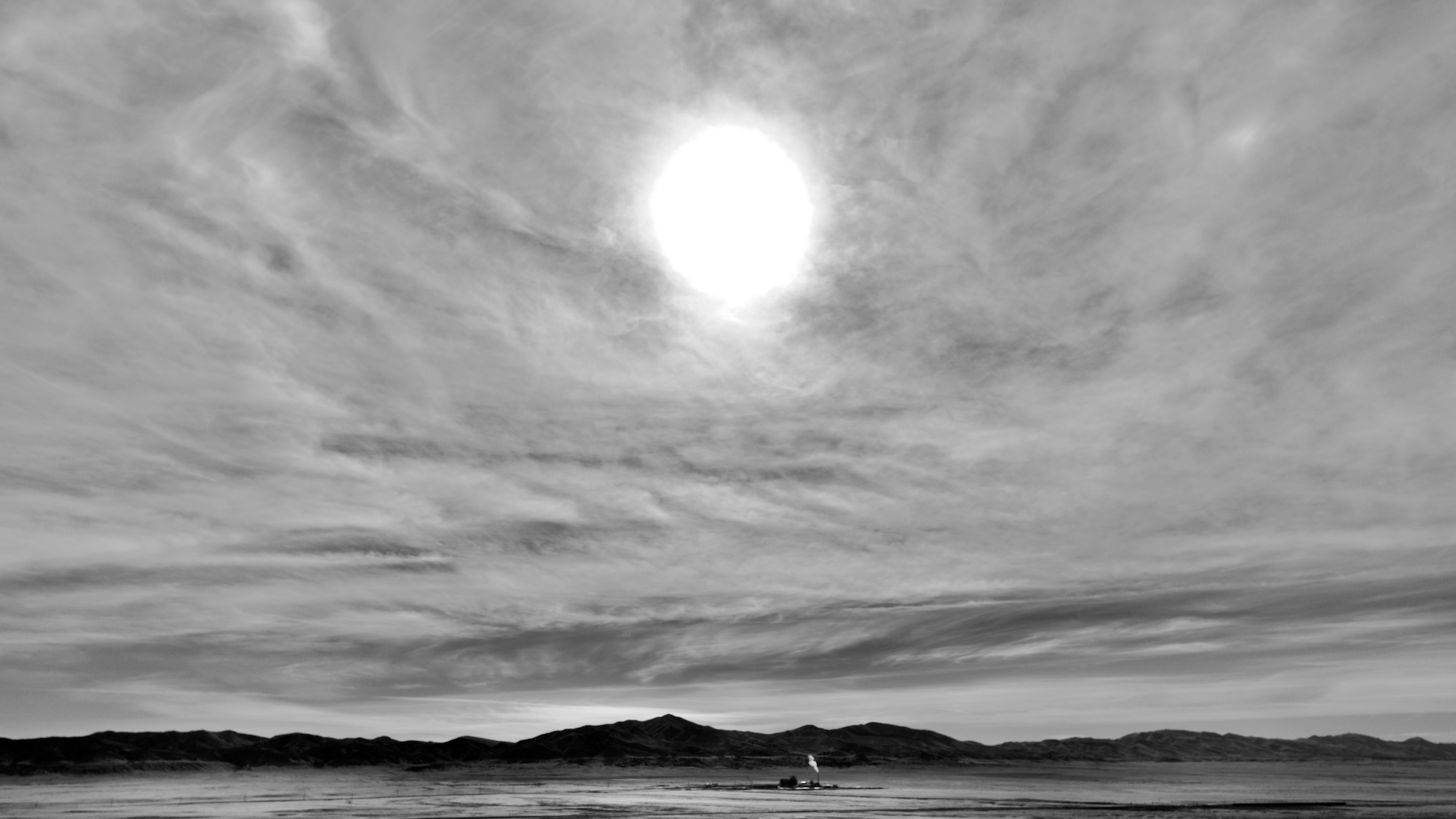
Then, on the way home, this:
Roadside rest area on I-80 in Utah, looking south, away from the restrooms, tiny smokestack in the distance contrasting with the expansive landscape (the “tiny” and the “expansive” enhanced by the wide-angle lens), a fine lace of clouds that obscured the sun enough to prevent lens flare, several shots (sun on the left, sun in the center, sun on the right), my visualization telling me that this would be black & white and that it would have a desolate, other-worldly look, later work in Apple Photos pumping up the contrast and suppressing the highlights – this is my favorite photo of the year!
Could I have done this with film? Maybe. I would have needed my Fuji GSW690III with its 65mm (35mm equivalent) f5.6 – not as wide, so the “tiny” and “expansive” would have been less so, and of course I would have needed confidence in the film. Then there would be the question of replicating the same dynamic range with my enlarger. Maybe not.
We are contemplating moving – downsizing. We won’t find a house with a darkroom, and likely not with a space to build one.
The writing seems to be on the wall (“Which wall?” you say – “old house or new?”). I love the film process, including (or maybe especially) the uncertainty and lack of immediate feedback, but I also want the final product. Did my latest favorite photograph push me further from film?
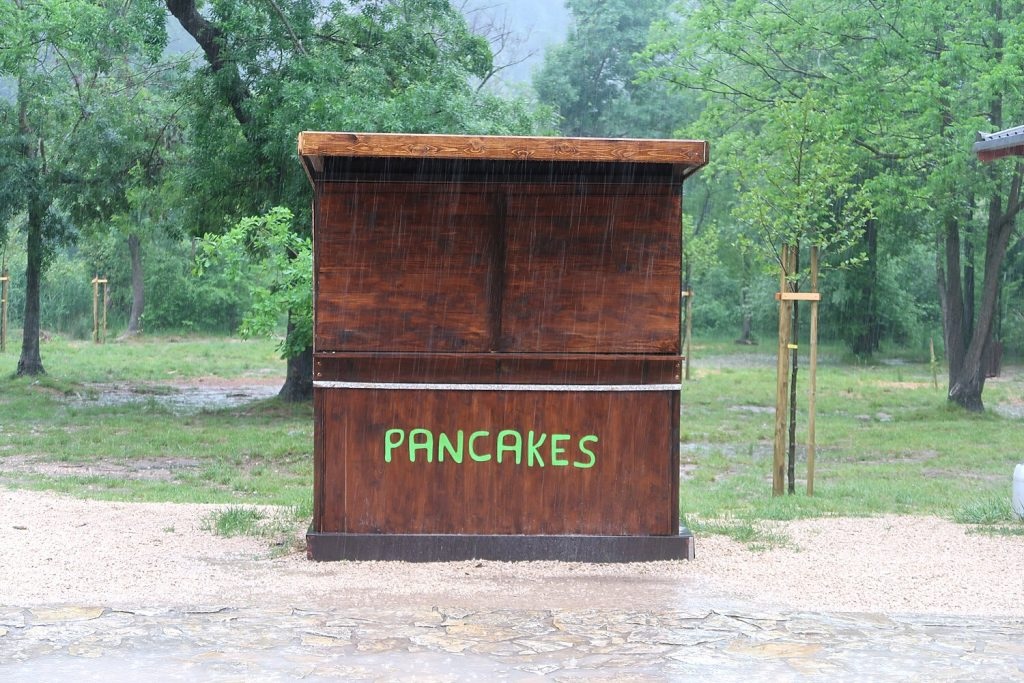
Pancakes Stand, Krka National Park, Croatia, by Cathy Tideswell
Wes Anderson is an American filmmaker with a distinctive visual style. His films (two recent examples, Asteroid City and The Wonderful Story of Henry Sugar) lean heavily into static, symmetrical shots with an apparently deliberately limited color palette that mimics (sometimes) faded Kodachrome. Accidentally successfully copies this look.
The images here are not by the author, Wally Koval, who wrote the descriptions of these mostly architectural scenes, but rather by an improbably large team of over 100 photographers. It is not clear from the text whether the photos were found or commissioned.
I am intrigued by symmetry. A quick check of my website finds maybe 50 examples of varying degrees of left mirroring right, although I try to break up that symmetry with low-angle early-morning light (usually from the left – not sure why). And, except for one recent exception, I prefer true (albeit within a narrow range) color or black & white.
Should a photographer, or any artist, have such a distinctive style that the source is immediately apparent? It’s not hard to identify a previously unseen Georgia O’Keefe, and it takes only a few notes from Pat Metheny to know who is playing the guitar. If critics start complaining about my photographs then I’ll consider whether to worry about being too predictable.
Although many of the photos are of recognizable buildings, I particularly like the ones of more obscure subjects: “Pancakes Stand” by Cathy Tideswell, “Ice-Fishing Shacks” by Stephan Graveline, “Viewfinder” by Savannah Sher, and others. I give Accidentally Wes Anderson five f-stops (out of five), although it seems like it should be called Intentionally Wes Anderson.
My copy was from the public library in Ukiah, CA.
More AWA can be found here, and a new book, Accidentally Wes Anderson: Adventures will be published in October 2024.






 Tom Raymondson Photography