Tom Raymondson photography
The Making of a Photograph: A process.
My most satisfying photographs are planned. These come from the chilly mornings waiting for the sun to rise, or the trips to the coast to capture the predicted high waves, or the search for circles or closed businesses (my most recent typologies) or arrows and open signs (the ones I’m stalled on right now).
Retirement and shelter-in-place have given me new opportunities for planned photographs (even while restricting or eliminating the waiting, the trips, and the searches). Here’s the story of my most recent planned photo:
Most people are familiar with “Lunch atop a Skyscraper” . . .
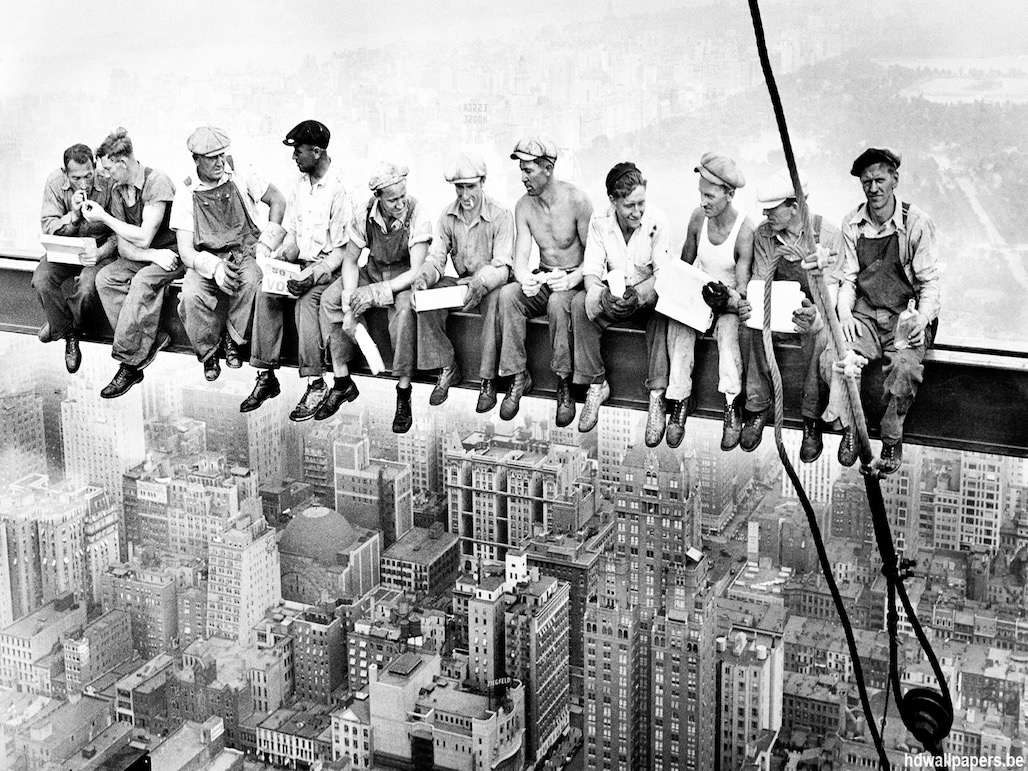
This iconic photo was shot in 1932, most likely by Charles Ebbets, although it has been attributed to several others. It was taken on the 69th floor of the under-construction RCA building (later renamed Rockefeller Center) in New York City and was posed, not found.
A couple of years ago I replicated the photo with Legos for a photography class at Mendocino College (I’m sure I wasn’t the first to do this). I tried to position the figures to align with the men in the original, making sure the right ones were wearing hats and adjusting their arms and legs within the limits imposed by the lack of elbows and knees, but that is as far as I went with the details. I used a Fuji X100F with its 35mm equivalent lens, ISO 400, f2, 1/100 second, on a tripod. Light was from two desk lamps, with black mat board in the background. My oldest daughter saw the photo and wanted a print (these were Legos left over from her childhood) . . .
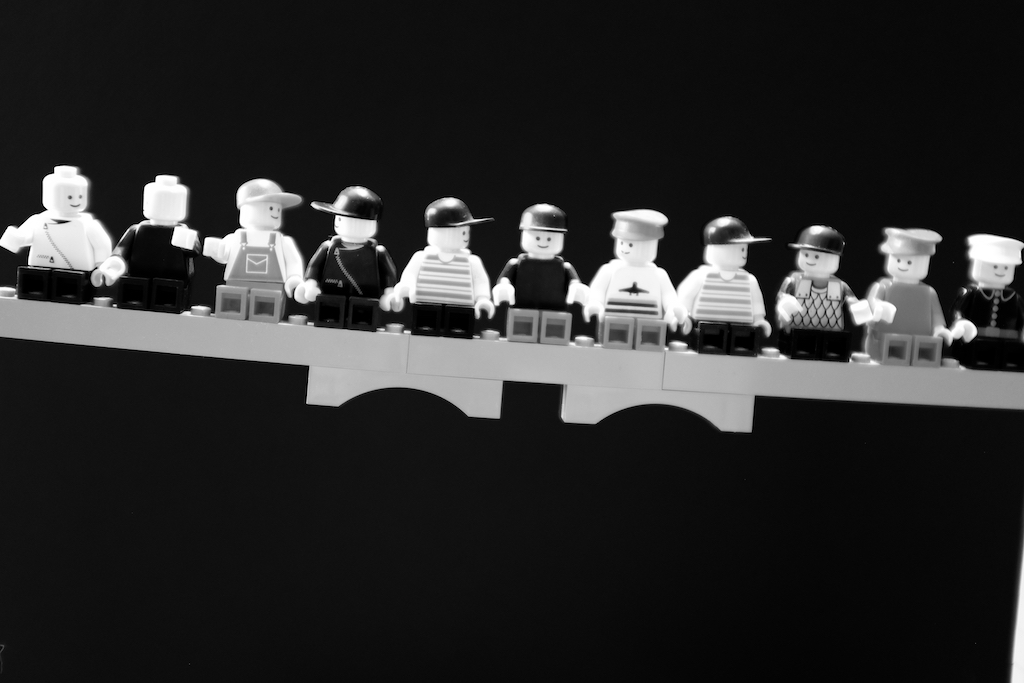
When I went back to the photo I realized that it had some issues. There were a lot of other details I could have included, the focus was soft on the right, there was a sliver of something intruding in the lower right corner, and the background needed work. I decided to reshoot.
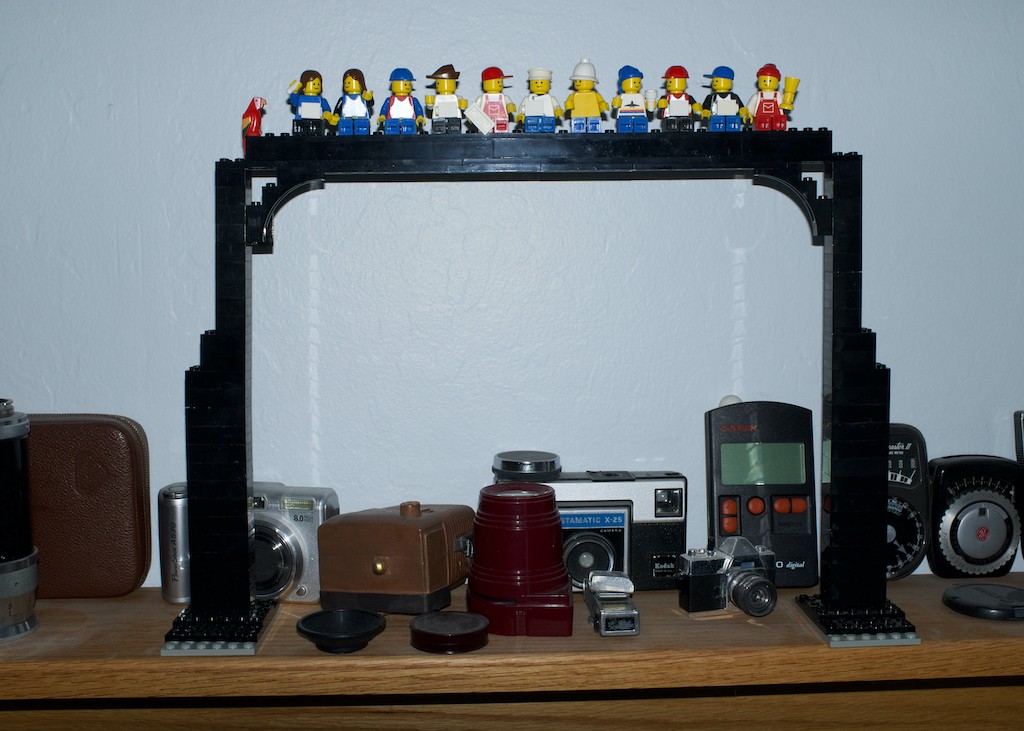
I rebuilt the girder and positioned the workers, paying more attention to the details. The hats are closer in appearance to the originals, the two hatless men have hair, the clothing is a better match, the shirtless guy’s body is the same yellow as his face, the fellow on the left is holding a cigarette, several men have their lunches on their laps (one lunch is hanging down), and the fourth man from the right has what could be a coffee mug. I didn’t have a bottle for the far right so I went with a goblet. I even added the parrot (who’s to say there wasn’t one). I decided to shoot straight on rather than at an angle like the original because of the difficulty of altering the focus plane without view camera movements. I also decided to ignore the cable that cuts across the right side . . .
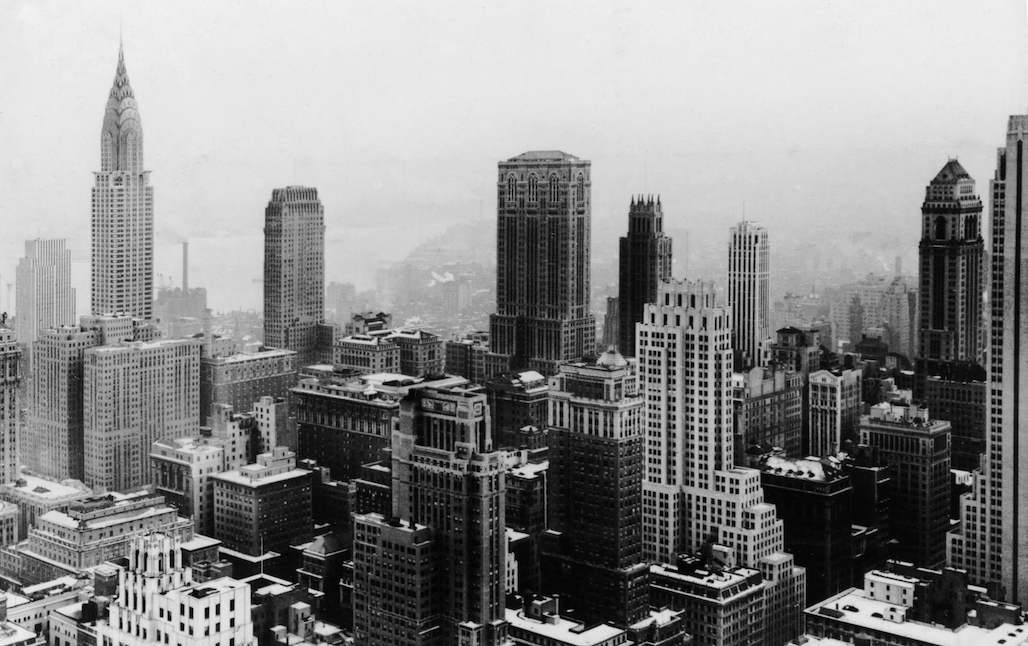
Next I searched the internet for an image of the New York skyline from the 1930’s. I couldn’t find anything with Central Park receding into the distance, but that part of the original is indistinct and I doubt whether most viewers even notice it, so I chose a more generic old skyscraper look. My plan was to place a print behind the Legos, but my printer wasn’t behaving, so instead I set up in front of the computer screen with the image cropped to exclude the very recognizable Chrysler Building on the left. As long as the lights didn’t reflect off the screen this would give me a good look . . .
This time I shot with a Fuji X-Pro2, with a 135mm equivalent lens, on a tripod, ISO 100, f11, 1/2 second. I was careful to aim straight on, which would, along with the small aperture, keep the entire subject plane in focus. I expected that I would need to experiment with the distance between the figures and the screen to throw the skyline slightly out of focus and to obscure the pixels, but I nailed it on the first attempt (about five inches). I used a fairly bright modeling light on each side. This was going to be all black & white . . .
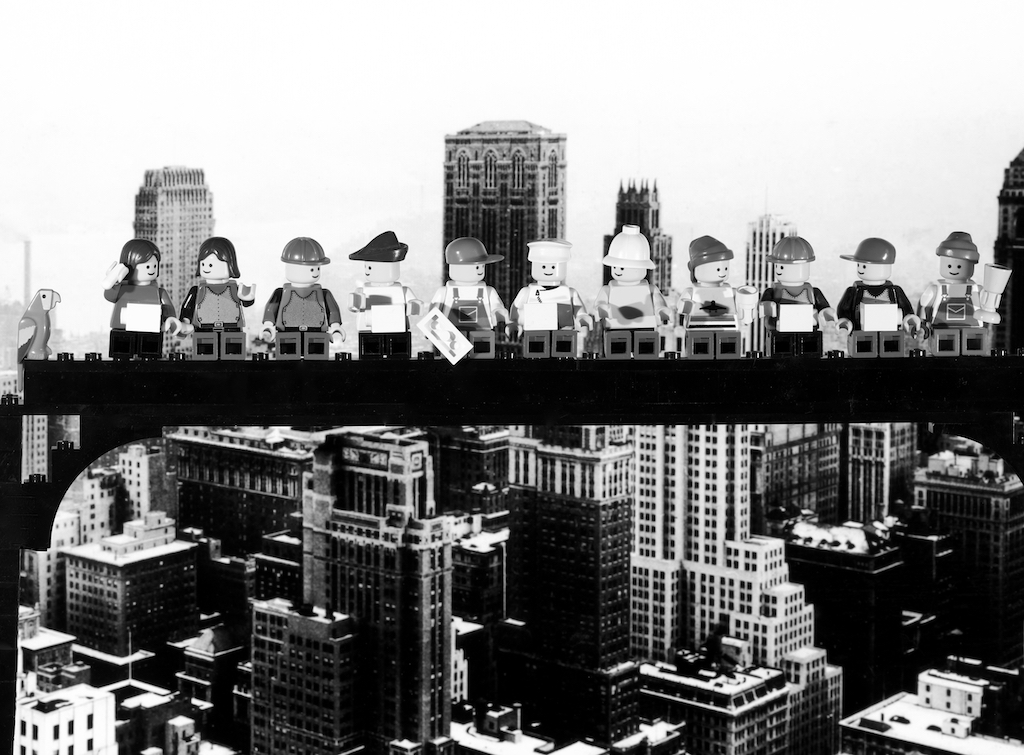
. . . but keeping the brightly colored figures, adjusted in Apple Photos (contrast and saturation) further increased the sense of depth established by the out-of-focus buildings . . .
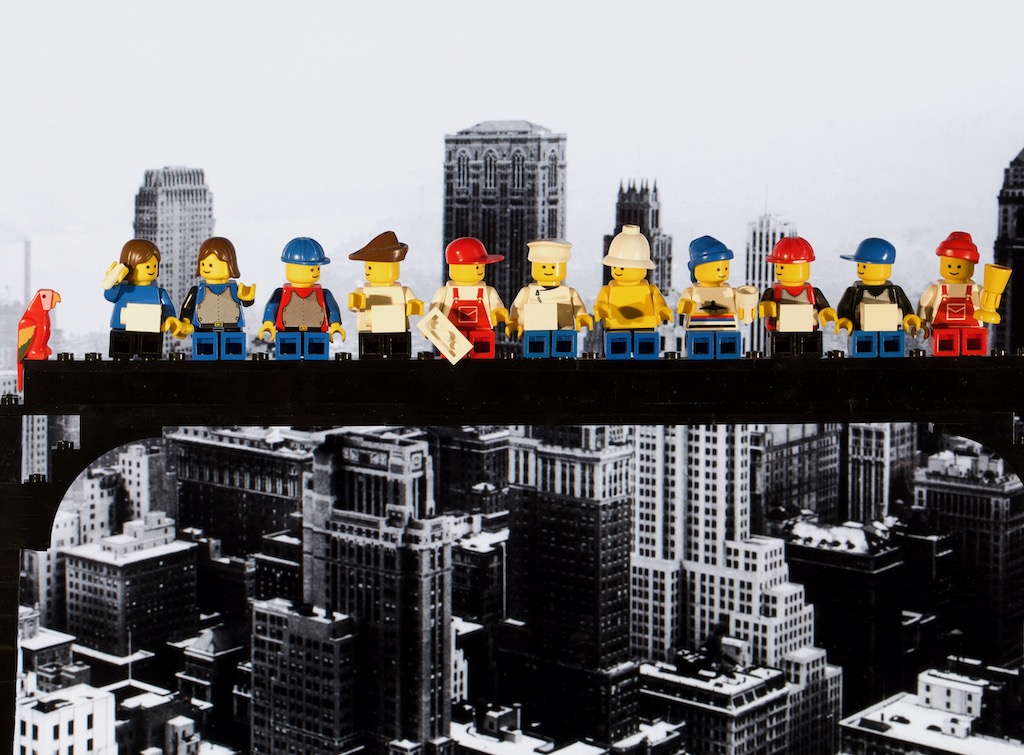
My version of “Lunch atop a Skyscraper” was as much about the process as the product. I’ve already found a couple of things I could have done differently, so maybe the process will continue.
 Tom Raymondson Photography