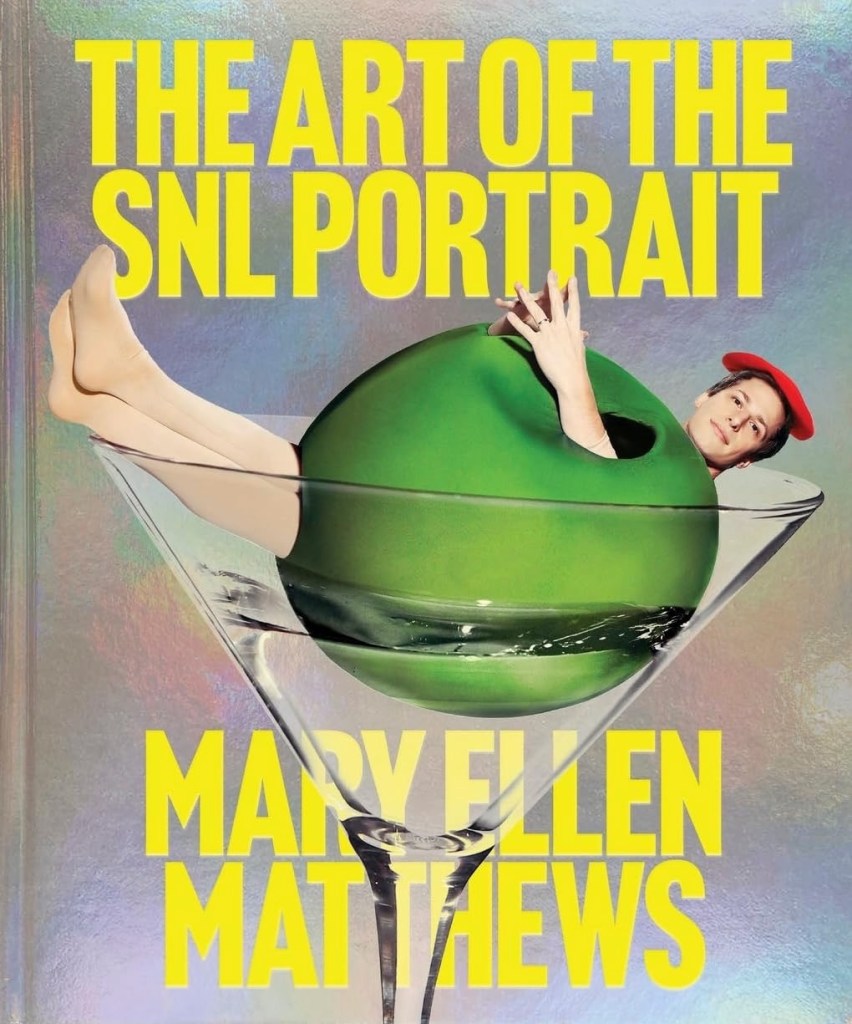
The Art of the SNL Portrait by Mary Ellen Matthews
Book review.
First, a confession: about this collection of celebrity portraits, which were shown as “bumpers” (for three seconds before commercials) on Saturday Night Live – well, mostly these are people I’ve never heard of. Mick Jagger – check; Martin Short – check; Steve Martin – check. Who the hell is Bad Bunny? I’d have to comb through the rest to find a handful that, maybe, left some fleeting imprint on my consciousness. Must have something to do with the fact that 11:30 is way past my bedtime. The pictures are stunning – but, remember, I’m not a fan of digital manipulation and these images absolutely scream Photoshop. The photographer is Mary Ellen Matthews and she has a crew for god’s sake. A few favorites: Alec Baldwin (oh – I know him) as the Godfather; some guy and his dog raising their paws; some gal as Gilda Radner; a The Birds spoof. No camera info or other technical information and not even an acknowledgement that at some point the photographers (initially Edie Baskin) must have switched from film to digital. I get the feeling that I was not the target audience for this book. Two f-stops (out of five).
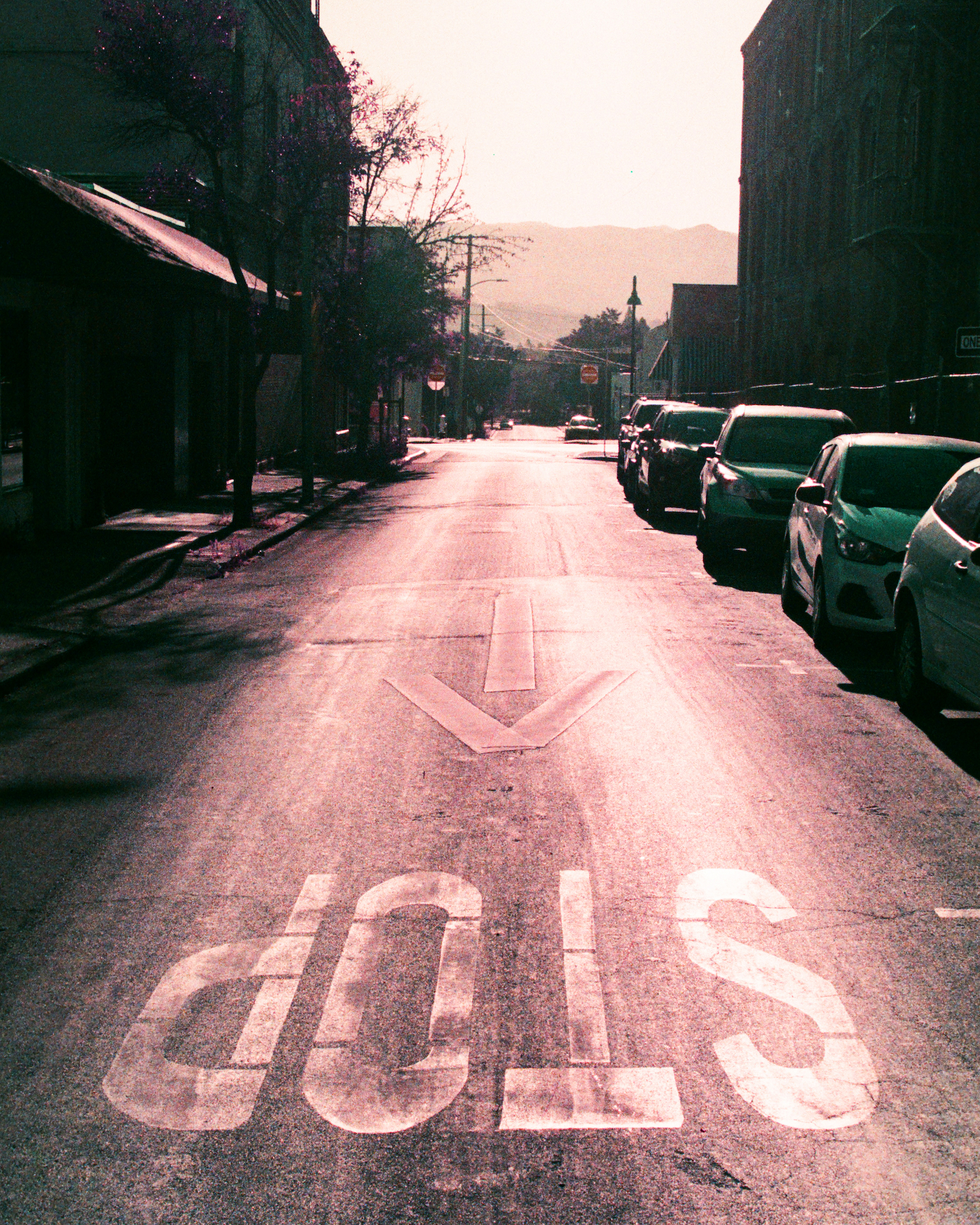
Since my April post (Fuji X-T5) I made one film keeper. This was with a Minolta X-570 with a MD Rokkor-X 45mm f2, loaded with Lomochrome Purple XR 100-400, which is, no, not slide film, and, yes, purple (well, it leans toward). It did not involve any darkroom (small “d”) work, as the film was developed and scanned by The Darkroom (large “D”) and then minimally manipulated on my computer.
I shot a couple of rolls of very old T-Max 100 with a Fuji GW670III and its Fujinon* 90mm (45mm equivalent) f3.5, using a KEKS EM-01 meter, with disappointing results, so much so that I threw out the rest of my 2013 batch and still need to do a controlled test on 2016 (all of the film had been refrigerated). I’m thinking that a more positive outcome could help to steer me back to film. Additional disappointment would mean tossing 2016 and then digging into the freezer or just giving up entirely.
*All Fuji lenses are Fujinon, so I won’t repeat it.
But the telling incident is this: another trip, to Colorado, in the car, which always used to mean film. What did I bring? The Fuji X-T5, the XF 16mm (24 mm equivalent) f2.8, and the XF 90mm (135mm equivalent) f2. I didn’t expect to have time for photography (drive drive drive to get through five states in three days, three days to visit with our oldest daughter and deliver some dishes that prevented us from flying, then drive drive drive to get home), but you never know. I took a few shots at the lake near her house, got one snapshot of her and her husband, but nothing that would end up on my website or on the wall.
Then, on the way home, this:
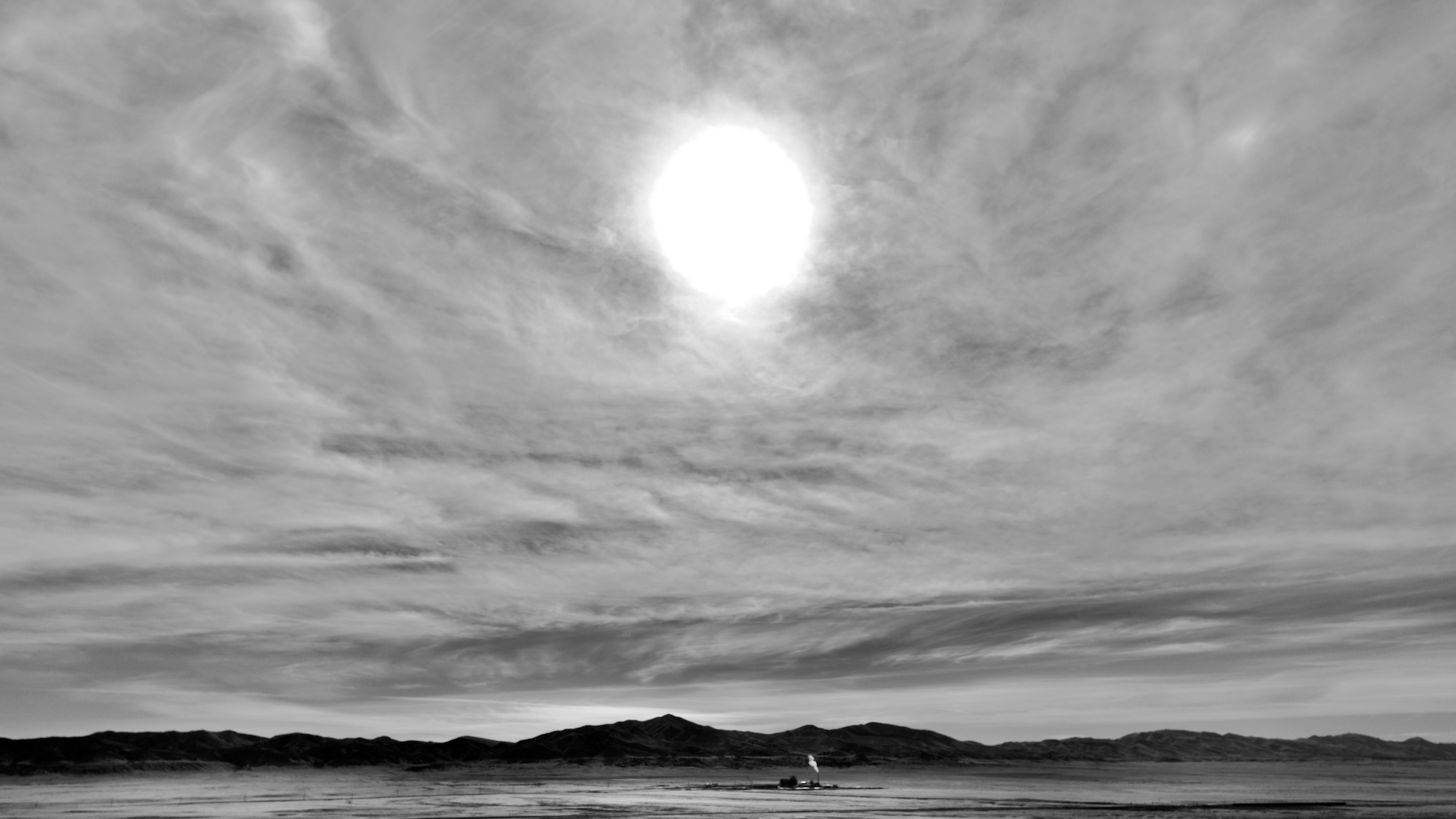
Roadside rest area on I-80 in Utah, looking south, away from the restrooms, tiny smokestack in the distance contrasting with the expansive landscape (the “tiny” and the “expansive” enhanced by the wide-angle lens), a fine lace of clouds that obscured the sun enough to prevent lens flare, several shots (sun on the left, sun in the center, sun on the right), my visualization telling me that this would be black & white and that it would have a desolate, other-worldly look, later work in Apple Photos pumping up the contrast and suppressing the highlights – this is my favorite photo of the year!
Could I have done this with film? Maybe. I would have needed my Fuji GSW690III with its 65mm (35mm equivalent) f5.6 – not as wide, so the “tiny” and “expansive” would have been less so, and of course I would have needed confidence in the film. Then there would be the question of replicating the same dynamic range with my enlarger. Maybe not.
We are contemplating moving – downsizing. We won’t find a house with a darkroom, and likely not with a space to build one.
The writing seems to be on the wall (“Which wall?” you say – “old house or new?”). I love the film process, including (or maybe especially) the uncertainty and lack of immediate feedback, but I also want the final product. Did my latest favorite photograph push me further from film?
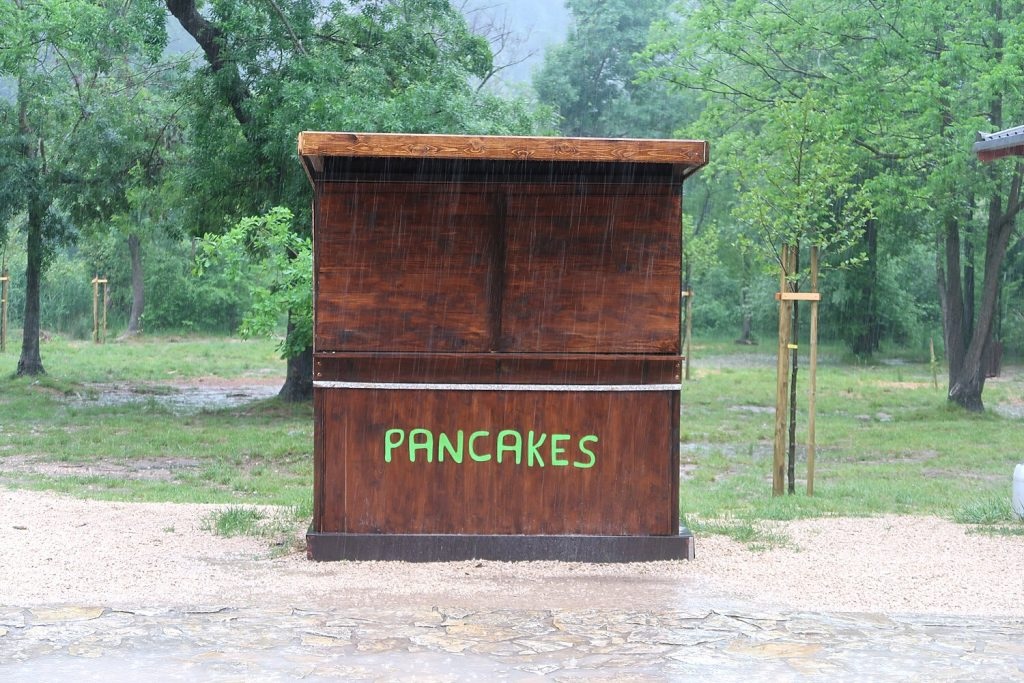
Pancakes Stand, Krka National Park, Croatia, by Cathy Tideswell
Wes Anderson is an American filmmaker with a distinctive visual style. His films (two recent examples, Asteroid City and The Wonderful Story of Henry Sugar) lean heavily into static, symmetrical shots with an apparently deliberately limited color palette that mimics (sometimes) faded Kodachrome. Accidentally successfully copies this look.
The images here are not by the author, Wally Koval, who wrote the descriptions of these mostly architectural scenes, but rather by an improbably large team of over 100 photographers. It is not clear from the text whether the photos were found or commissioned.
I am intrigued by symmetry. A quick check of my website finds maybe 50 examples of varying degrees of left mirroring right, although I try to break up that symmetry with low-angle early-morning light (usually from the left – not sure why). And, except for one recent exception, I prefer true (albeit within a narrow range) color or black & white.
Should a photographer, or any artist, have such a distinctive style that the source is immediately apparent? It’s not hard to identify a previously unseen Georgia O’Keefe, and it takes only a few notes from Pat Metheny to know who is playing the guitar. If critics start complaining about my photographs then I’ll consider whether to worry about being too predictable.
Although many of the photos are of recognizable buildings, I particularly like the ones of more obscure subjects: “Pancakes Stand” by Cathy Tideswell, “Ice-Fishing Shacks” by Stephan Graveline, “Viewfinder” by Savannah Sher, and others. I give Accidentally Wes Anderson five f-stops (out of five), although it seems like it should be called Intentionally Wes Anderson.
My copy was from the public library in Ukiah, CA.
More AWA can be found here, and a new book, Accidentally Wes Anderson: Adventures will be published in October 2024.
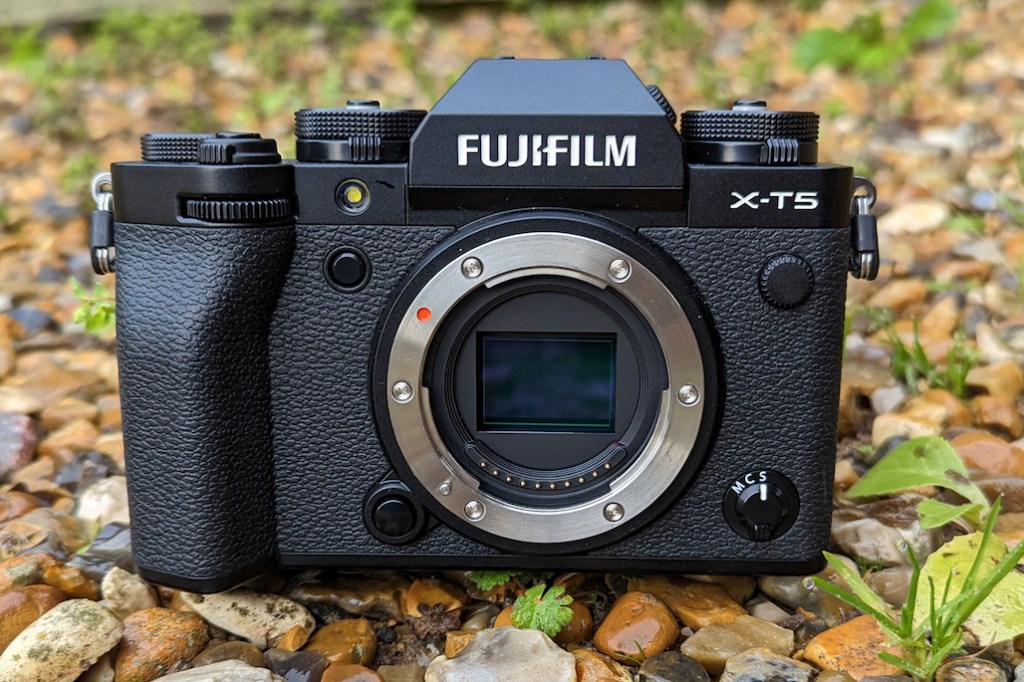
The Fujifilm X-T5, a 40mp APS-C, may be one of the most significant cameras I have ever used: I can feel it pulling me away from film photography.
How did I get here? It started with my favorite film camera, the Fuji GW670III, and its sibling, the GSW690III. These medium format rangefinders have given me some of my very best photographs and pretty much put me off 35mm. Even after the disappointing GF670, I had a continuing interest in cameras from this company that eventually led me to the X100F, a fixed-lens compact, which (I thought) would be merely my digital backup when convenience or airport security intervened. It served that purpose well until our 2019 European trip called for more versatility than I could achieve with only a 35mm-equivalent lens, so I purchased an X-Pro2 with a 135mm-equivalent. It was a great match – same sensor, same battery, same controls, same menus. It was very much not a step toward system-building – I would definitely (I again thought) stick with just the one lens. Still, in the back of my mind I realized that a wide-angle lens would make the X100F superfluous.
But then the bird shots from members of the Ukiah Photography Club, along with a nice used discount from KEH, enticed me into a 600mm-equivalent zoom, and suddenly I was system building. A 45mm-equivalent macro soon followed, and I realized that I had been sucked in like so many years ago with Minolta. Still, I continued to see myself as primarily a film photographer.
It crept up on me slowly, so at first I didn’t really notice: I was shooting less film. Carrying a tripod and standing in the darkroom became more of a burden as my back didn’t always cooperate. Image stabilization would solve the tripod problem and processing on a computer didn’t involve standing. And then there was that dormant GF670 with pretty high resale value. Add in my two digital cameras and I could cover the cost of the X-T5 plus a wide-angle, this one a 24mm-equivalent. Now I did have a complete system.
The X-T5 is a wonderful camera: dials and buttons where God intended them to be, solid construction, superb image quality.
What do you do when you have an expensive new toy? You play with it! On our recent Arizona trip – car, no plane: in the past that would certainly mean film – I shot only digital, and with a little click click click I had some great photos.
Is film dead? I hope not. I have an extraordinary darkroom plus a lot of film in the frig and the freezer. I have beautiful classic cameras, both 35mm and medium format (not to mention large format, but that’s a different story). I’ll be going digital on our upcoming Texas trip (flying), but after that I need to make a concerted effort to shoot film.
The first step of the solution is color. Not sure what I have (most of my film is in Fort Bragg). I’m thinking there’s a roll of Portra 400 35mm. Something along the coast. Tripod close to the car (or maybe, if I’m using a short lens, skip the tripod). Send it off to The Darkroom and then finish on the computer. I can do this.
After that, some T-Max 100 in one of the Fuji rangefinders. I can do this.
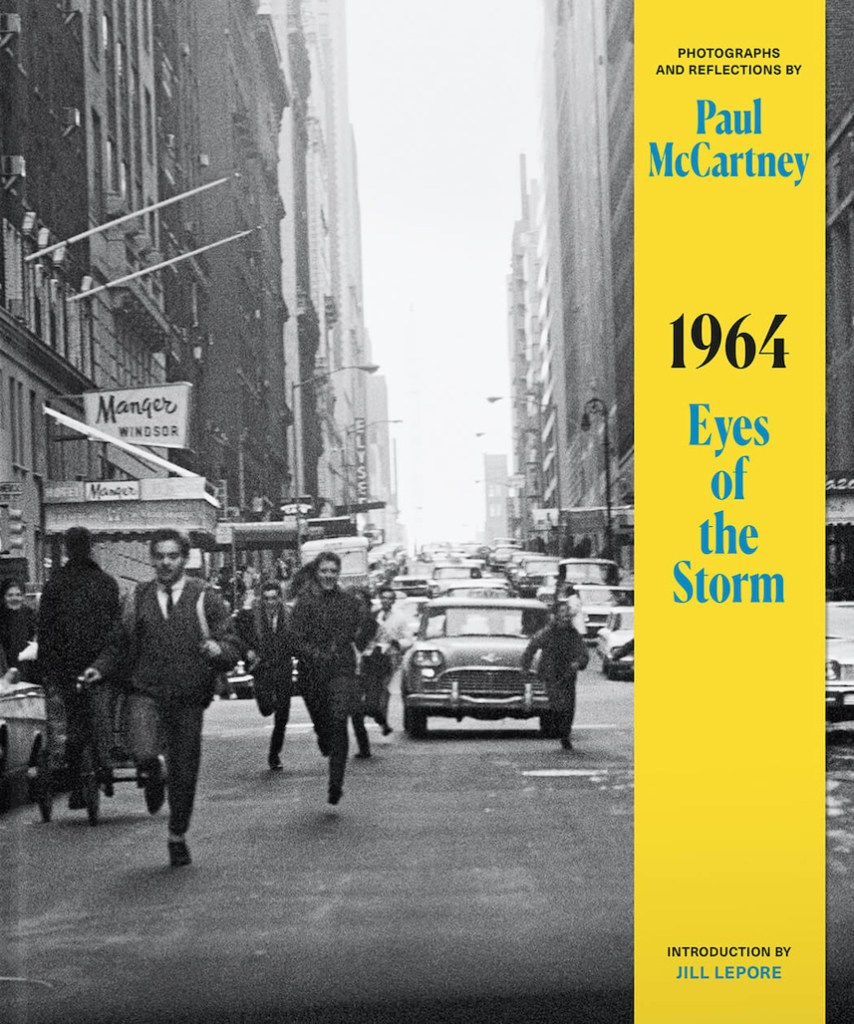
1964, Eyes of the Storm:Photographs and Reflections
By Paul McCartney (2023)
Paul McCartney took some snapshots and he gets a book and an exhibit. Right. But hold on . . . these are more than snapshots. These photographs from, despite the title, 1963 and 1964 are . . . pretty good! This is looking out when we (those of us of a certain age) were looking in: well-chronicled events – the Beatles arriving in New York, the crazy crowds, Ringo and his drums precariously perched for the Ed Sullivan Show; but also what we didn’t see – John in his pre-John Lennon glasses, the views from within the cars and trains and planes, the tedium of the hotel rooms. It’s a fun look at the fashions and hairstyles of the time (their hair was considered long – really?). Everybody smoked. They were so young – early twenties, but they looked like teenagers.
There are numerous references to Paul’s Pentax, but not the specific model. It must have been an unmetered pre-Spotmatic. Also, no mention of the lens, but 50mm was pretty much standard back then. He would ask the professional photographers for advice on settings – they were apparently helpful because the proof sheets all look properly exposed. He shot Kodak Tri-X with its distinctive grain and Ilford HPS Hypersensitive Panchromatic (never heard of that one before). In Miami he broke out the Kodachrome.
Could Paul McCartney have been a visual artist instead of a musical artist? These photos show that he had an eye for composition and light. There are frame-in-frame and rule-of-thirds shots, some striking spotlight performance images, and pre-Vivian Maier mirror pictures. Yes, I think he could have, probably as a street photographer, but I also think he made the right choice.
Particularly intriguing are the photographs of the photographers, who are pretty evenly split between shooting Rolleis and Nikons, with the occasional Leica. (One fan held a Polaroid camera with the print coming out the bottom. No phones.)
The strength of these photos is their cumulative narrative – excitement, sometimes chaos, and everything new new new. That said, a few individual images stand out: George poolside with a ciggie, a drink, and a girl; New York buildings and billboards with vertical verticals achieved without camera movements; and the one that Paul said deeply disturbed him, the extremely sharp and ungrainy (must have been the Ilford film) police officer’s gun and ammo, something he had never seen in England.
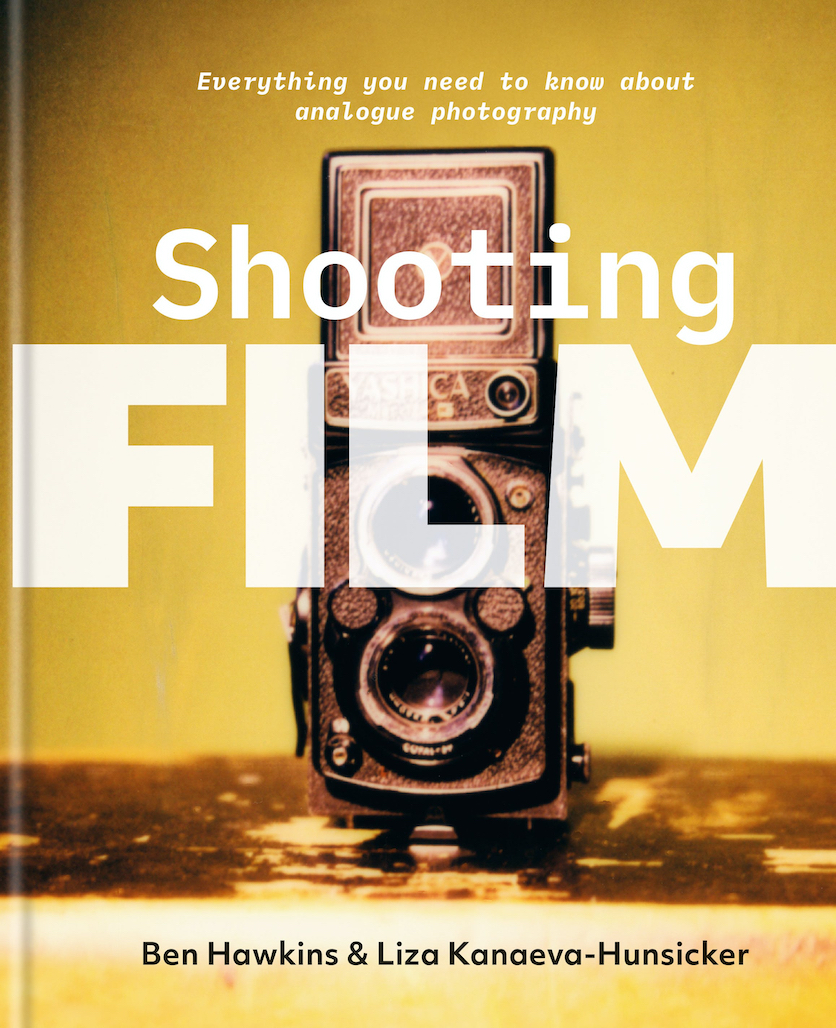
Shooting Film: Everything You Need to Know About Analogue Photography, by Ben Hawkins (2022)
This sounded like a fun diversion for me – a new book about film photography written, apparently, for younger people who have discovered film as a new . . . diversion? Maybe it would remind me of some finer points that I have overlooked, but more likely just confirm what I already know. I was not expecting so many curious choices, partial or inadequate explanations, and outright errors – nothing that would ruin someone’s photography, but enough to suggest that the book needed amore attentive editor. To wit . . .
Am I the only person annoyed by “analogue”? How about “film”?
The cover photo is out-of-focus and off-color. This is apparently a nod to Lomography, the embrace of, well, out-of-focus and off-color. Must be a generational thing.
On page 19 the author implies that Leica only makes digital cameras (but on page 44 he makes it clear that they also still make film cameras).
Page 20 – A Canon AE-1 Program is labeled as a Canon AE-1.
Page 25 – No, on most large format cameras the dark slide does not take the place of a shutter.
Page 35 – No, the Minolta X-700 was not the last Minolta manual focus camera (maybe he meant the last major Minolta manual focus camera). The X-700 was introduced in 1981, the X370s in 1995.
Page 38 – Maybe this is an Englishism – what he calls back-to-front I would call left-to-right (talking about a TLR viewfinder).
Page 45 – No, the Minolta CLE was not made in collaboration with Leica. The earlier CL was, but by the time of the CLE the two companies had ended their partnership.
Page 56 – This is a really bad look – holding a negative with a thumb planted in the surface. The author should read his own book – on page 158 he cautions to only handle negatives by the edges.
Page 70 – Titanium scissors? I’ve cut negatives for over half a century with any available pair of scissors – never a problem.
Page 102 – No, for Sunny 16 its the reciprocal of the film speed, not the film speed.
Page 118 – Advice to permanently leave a UV filter on your lens omits the possible downsides, image degradation and increased flare.
Page 118 – This is very much my opinion, but I would say that if you have one black & white filter it should be orange. Yellow doesn’t make enough difference to make a difference.
Page 132 – Creative light flaws – no thanks.
Page 142 – “Deving” for “developing”? Is that how the kids talk these days?
Page 143 – The author failed to mention that the reel that comes with the Paterson Super System 4 is inferior to third-party reels with a larger lip.
Page 143 – No, film drying clips are expensive photo-specific pieces of equipment that can be replaced by much cheaper bulldog clips from an office supply store.
Page 146 – The author fails to mention that an enlarger is incomplete without a lens, which is typically a separate purchase and may have more influence on print quality than the enlarger.
Page 148 – It is not necessary to leave a small border around the print. There are borderless easels that work just fine, a drying rack is more efficient than hanging prints (at least for RC paper, which most beginners would be using), and prints can be handled by the edges or with cotton gloves to avoid fingerprints.
Page 149 – The author fails to mention the dry-down effect. That first print may turn out to be a disappointment.
Page 189 – The author fails to distinguish between match-needle metering and truly manual control.
The author recommends a 50mm lens for portraits. Something in the 80mm range would be better (we’re talking 35mm cameras here).
And finally, the input from several photographers, particularly Liza Kanaeva-Hunsicker, was not helpful. Most of the photographs were unappealing.
A list of what the author got right would obviously be longer than this error list. I give the book two f-stops (out of five), mostly for the good intentions.
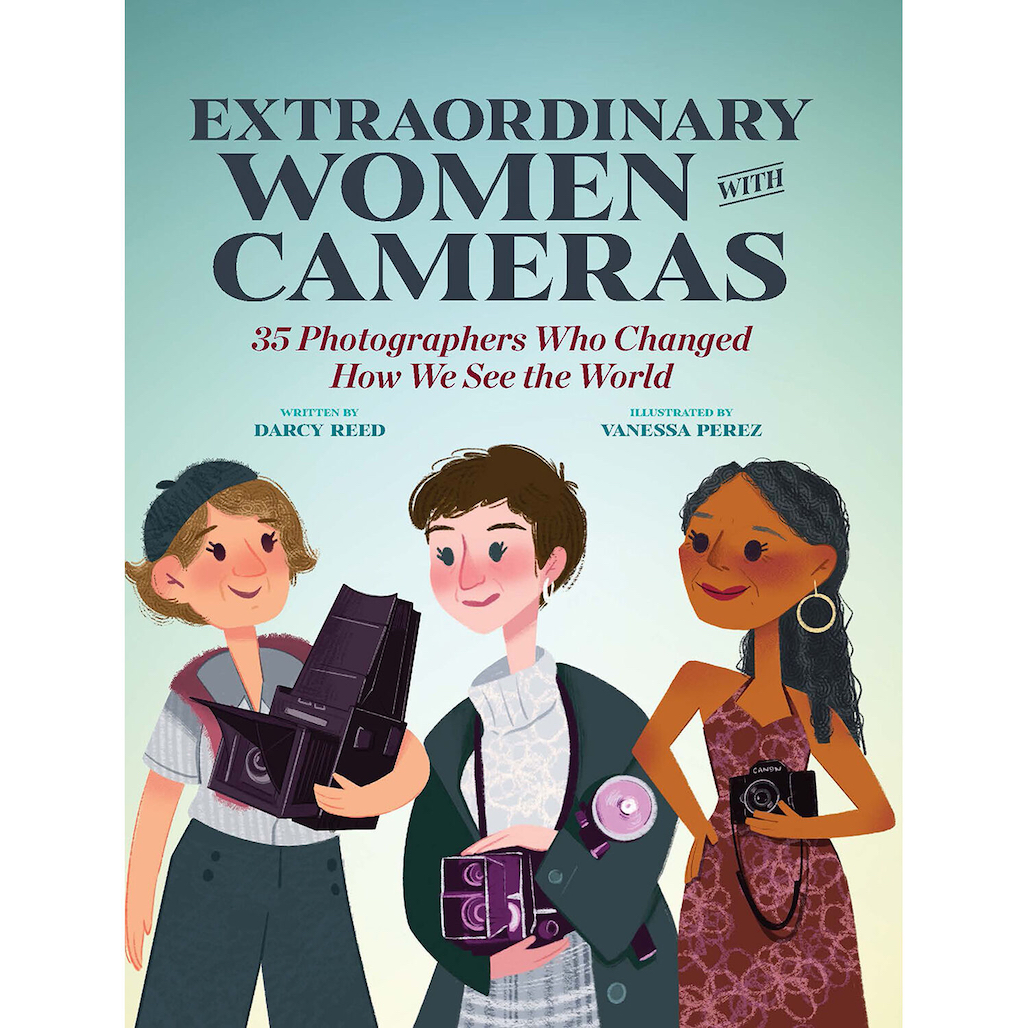
Extraordinary Women with Cameras: 35 Photographers Who Changed How We See the World, by Darcy Reed (2022)
I picked this up because it looked like a good recommendation for members of the Ukiah Photography Club who have granddaughters. It’s aimed at children ages 8 to 12. Here we have the obvious candidates – Dorothea Lange, Vivian Maier, Annie Leibovitz – but also others I’ve never heard of – Coreen Simpson? Rinko Kawauchi? Especially intriguing are the illustrations by Vanessa Perez – caricatures that emphasize Lange’s Graflex, Maier’s Rollei, and Leibovitz’s long blond (once) hair. I’ll show these to club members and see if they can identify them. [Later note: Maier and Leibovitz were easy, several recognized Lange but couldn’t come up with the name.]
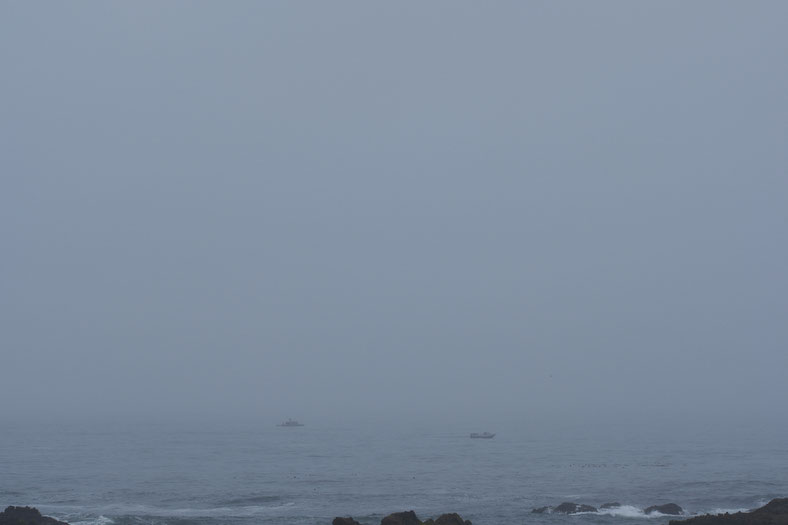
A photograph is usually thought of as an instant in time. But sometimes it can be part of a progression, a step in a series of decisions and actions that lead to the final image. This is my attempt to capture a “minimalist” photo for the Ukiah Photography Club’s August 2022 theme. Distant boats through the fog, with rocks in the foreground to add context. Meh.
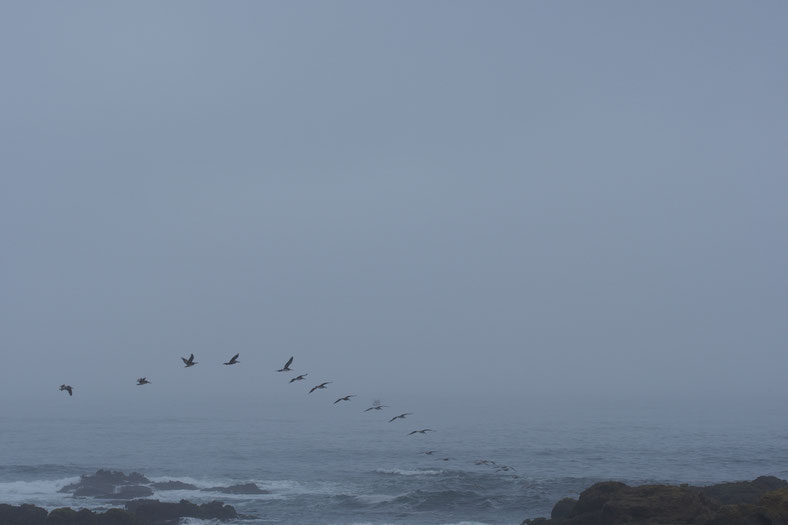
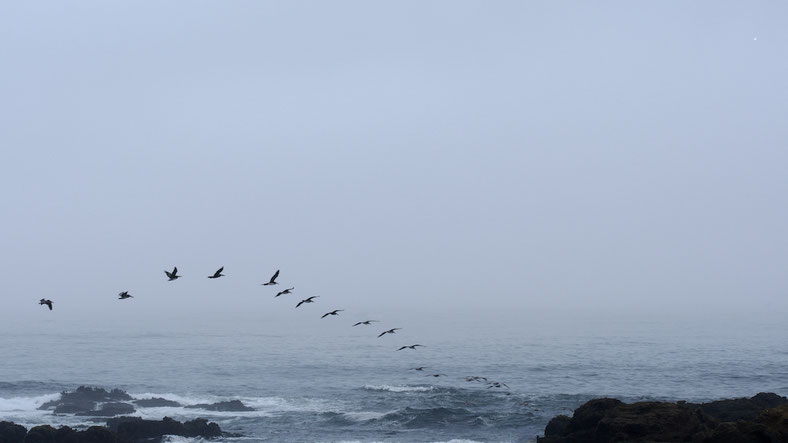
Then nature intervened – a flock of pelicans! Less minimalist but maybe more interesting. The boat behind the birds – distracting. The film photographer in me says it’s my fault, but this is digital, which has its own morality.
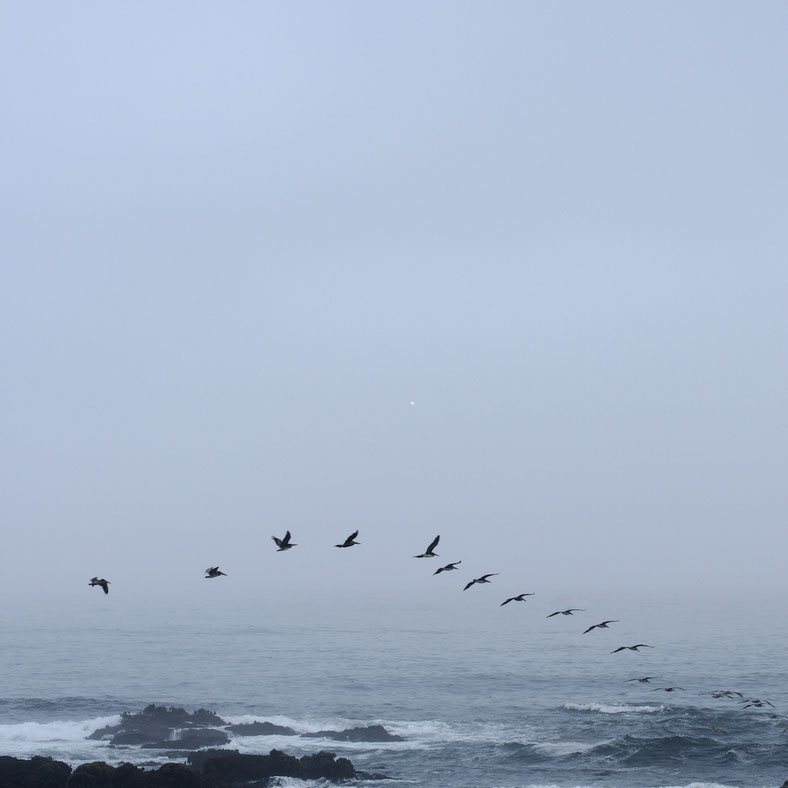
A little post-processing. Square to emphasize the vastness of the sky and because . . . square! Get rid of that boat. Lighten it up a little. A masterpiece!
Maybe not. It looks like there is a pelican missing on the left. Crop it tighter. Nice balance with the dark rocks on the left and the dark waves on the right. I like the way the water fades into the sky. I’ll show this to the Club.
The “artist” in the group, the one with “talent” who claims to be from “Germany”, isn’t crazy about the square – too static, the birds lack a sense of movement. The consensus is that the crop is too tight. Maybe they’re right. Back to the drawing board (computer).
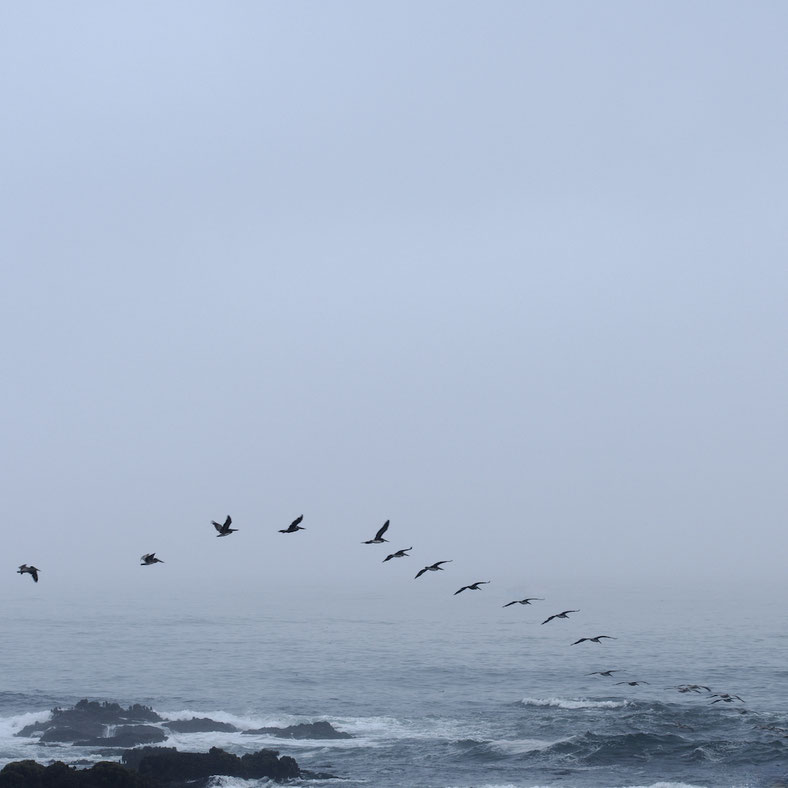
The left pelican no longer uncomfortably close to the edge. Flight with an apparent destination. The 16:9 aspect ratio stretches it out. The “artist” likes it!
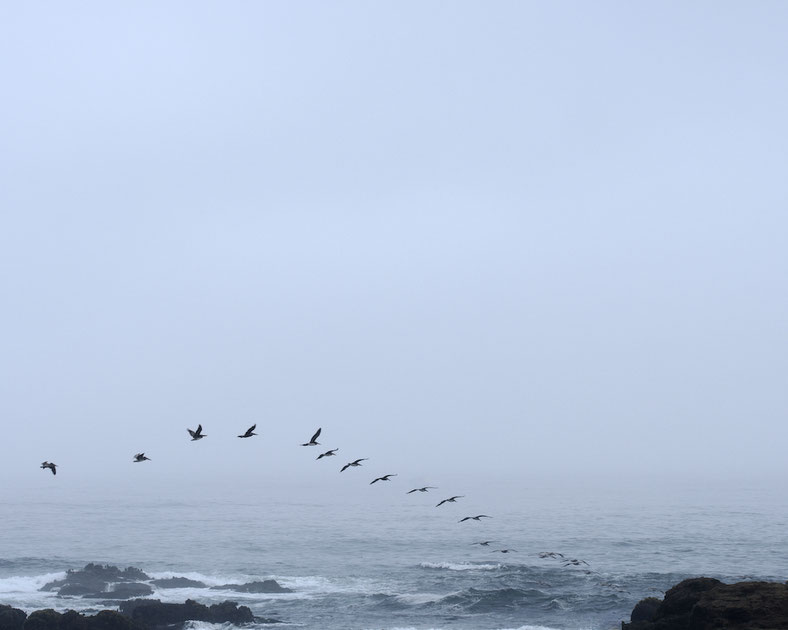
Who has the last say here? The dark chunk of rock on the right is too much. I still want the expansive sky. A more conventional 8×10 reduces rock and adds sky. Now the balance is between the dark rocks on both sides.We maintain the movement and the indistinct horizon. One more thing. Brighten it up a little more but maintain the cold coastal feeling. This is the final final (until I change it again).
 Tom Raymondson Photography